




Fibronectin (FN): A "Jack-of-All-Trades" in the Microcosmic World of Life


Fibronectin is a natural cell adhesion factor. Its main functions are manifested in cell migration during wound healing and development processes, regulating cell growth and differentiation, as well as in the processes of hemostasis and thrombus formation.
- Recent Advances
- Product Information
The Structure and Classification of Fibronectin
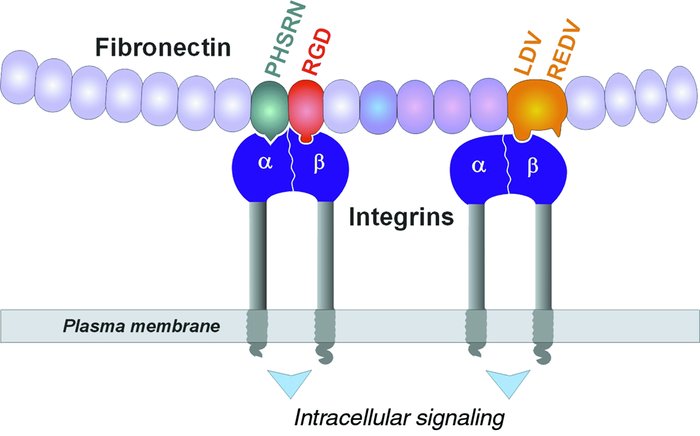
Fibronectin is a high-molecular-weight glycoprotein widely distributed in blood, body fluids, and various tissues. It is composed of two 220 ku subunits connected by interchain disulfide bonds to form a dimer. The overall structure is in a unique V shape, and there are six dense globular bodies on the subunits. This structure endows fibronectin with special functions. It is like a bridge connecting cells with the extracellular matrix (ECM), participating in the construction and maintenance of the stability of tissue structures.
According to the differences in its distribution and functions, fibronectin is mainly divided into three subtypes: plasma fibronectin (PFN), cellular fibronectin (CFN), and fetal fibronectin (FFN). Different subtypes perform their respective functions in the human body. For example, FFN can serve as an important indicator reflecting the maturity of the cervix, which is of great significance for predicting the success of induced labor.
The Functions of Fibronectin
Fibronectin plays a crucial role in the process of hemostasis. When a wound occurs, platelets release fibronectin, which can promote platelet aggregation and adhesion to the damaged endothelial surface. It crosslinks with fibrin to form a fibrin-fibronectin network, that is, a temporary matrix, effectively preventing further bleeding of the wound. Fibronectin continues to play a role at different stages of wound repair. In the middle stage, it acts as a chemotactic factor for fibroblasts, guiding fibroblasts to move towards the wound area and promoting wound healing. In the stage of granulation tissue maturation, fibroblasts and keratinocytes will phagocytize the collagen or tissue fragments wrapped by FN, accelerating the wound repair process.
Fibronectin has various functions in regulating cell activities. It can promote cell migration and, in coordination with hyaluronic acid, collagen heparin, etc., guide the orderly movement and differentiation of cells in the body. At the same time, as a growth factor, fibronectin is beneficial for wound healing. It can enhance the cell metabolic rate, increase the cell adhesion rate and confluence rate, and maintain a good morphological structure of cells. In addition, it also participates in non-specific immune regulation, assisting phagocytes in phagocytizing Gram-positive bacteria and enhancing the body's immune defense ability.
The periodic changes of hair follicles affect hair growth, and fibronectin plays an important role in this process. Studies have found that during the anagen (growth phase) of hair follicles, FN is uniformly expressed in the hair papilla, basement membrane, and connective tissue sheath of hair follicles; the expression decreases during the catagen (regression phase); and there is almost no expression during the telogen (resting phase). This indicates that FN may act as a signaling molecule, participating in the interaction between dermal cells of hair follicles, and thus regulating the periodic changes of hair follicles, providing a new direction for the research on promoting hair growth.
In vitro cell experiments, zebrafish embryo tail fin repair experiments, and human skin repair efficacy experiments have all confirmed that the freeze-dried powder of fibronectin has low cytotoxicity. It can significantly promote the proliferation and migration of HaCaT cells, accelerate the repair of zebrafish tail fins, and also has a good effect on repairing the facial skin barrier of the human body, fully demonstrating its potential in skin repair.
Fibronectin and Other Ingredients
Compared with collagen, collagen mainly plays a filling role. In contrast, fibronectin can stimulate the skin cells themselves to produce collagen, fundamentally restoring the elasticity of the skin. It can also directly act on the damaged area, mobilize macrophages to reduce inflammation, and stimulate cell activity.
Compared with epidermal growth factor (EGF), fibronectin has obvious advantages. In terms of compliance, FN has been included in the cosmetics raw material catalog, while EGF is not. Oligopeptide-1 is not the same substance as EGF, and EGF is an illegal raw material for cosmetics addition. In terms of molecular weight, although the molecular weight of FN is as high as 500,000 daltons, which is less likely to be absorbed compared with EGF, it has a good therapeutic effect on damaged skin. In terms of safety, EGF may stimulate the disorderly growth of cells, leading to skin problems, while FN can promote cell regeneration in an orderly manner and also prevent the migration of tumor cells. In terms of the depth and comprehensiveness of repair, EGF can only repair superficial cells and only achieve structural repair, while FN can repair not only superficial cells but also deep cells and tissues, achieving comprehensive repair of both structure and function.
Prospects for the Future
With the continuous in-depth study of fibronectin, its application prospects in the fields of regenerative medicine and skin care will be broader. In regenerative medicine, scientists will further explore how to optimize the application method of fibronectin, improve the effect of wound repair, and reduce scar formation. At the same time, the potential applications of fibronectin in other fields, such as tissue engineering and drug delivery, are also worthy of in-depth research and exploration.
This article is reviewed and published by the technical expert team of UA
Disclaimer: This article partially utilizes artificial intelligence assistance in its creation. If any content involves copyright or intellectual property issues, please let us know and we promise to verify and remove it as soon as possible.
Purchase recombinant protein, choose Nanjing UA-Bio
UA protein focuses on providing various protein reagents, raw materials, and services required for drug research and development, cell therapy, gene therapy, and basic scientific research, including drug target proteins, immune checkpoint proteins, cytokines, tool enzymes, customized protein expression, and full-length transmembrane protein development. Youai is committed to providing customers with high-quality products and professional services, and building a High-tech Biological Enterprise with International Competitiveness.







 Business license (three certificates in one)