




An In - depth Look at Recombinant Human Fibronectin


Recombinant human fibronectin is a multifunctional extracellular matrix protein and a high - molecular - weight glycoprotein. It is capable of binding to a wide variety of components on the cell surface and within the extracellular matrix, such as collagen, fibrin, heparin, DNA, and actin.
- Recent Advances
- Product Information
Recombinant human fibronectin is a multifunctional extracellular matrix protein and also a high - molecular - weight glycoprotein. It can bind to a variety of components on the cell surface and in the extracellular matrix, including collagen, fibrin, heparin, DNA, and actin, etc.
Structure of Recombinant Human Fibronectin
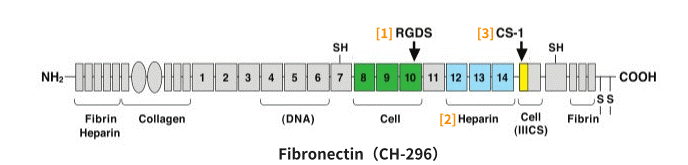
The recombinant human fibronectin fragment is constructed by 574 amino acids, with a molecular weight of approximately 63 kDa. It mainly consists of three functional domains, each with a unique mission. The C - Domain, as the cell adhesion region, has a crucial RGD sequence. It can precisely bind to the receptors on the cell surface and play a core role in the interactions between cells. The H - Domain provides a site for virus adhesion and has non - negligible value in virus - related research and applications. The CS - 1 site also shoulders the responsibility of cell adhesion and cooperates with the C - Domain to stabilize the connection between cells.
Gene Therapy and Cell Engineering
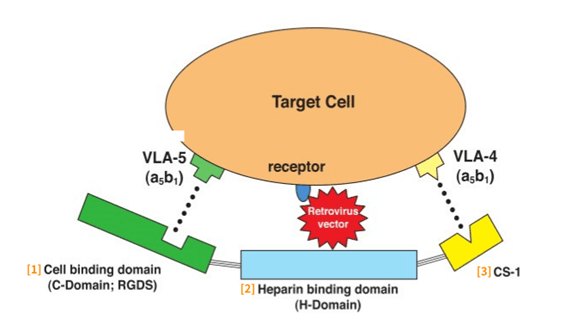
In the fields of gene therapy and cell engineering, recombinant human fibronectin can be regarded as a "magic wand" for enhancing transfection efficiency. VLA - 4 and VLA - 5 on the cell surface bind tightly to the CS - 1 site and C - Domain on the fibronectin respectively, while the retroviral vector "docks" on the H - Domain. When the surface of the culture vessel is coated with fibronectin, cells and virus vectors co - exist in high concentration. This ingenious arrangement greatly improves the transfection efficiency of the virus, which can reach 30 - 70%, providing powerful impetus for gene therapy and cell modification. For example, in the gene therapy research of some rare diseases, fibronectin is used to improve transfection efficiency, enabling the virus carrying the therapeutic gene to enter cells more effectively and bringing hope for conquering difficult diseases.
Cell Culture
Cell adhesion and proliferation are the basis of life activities, and recombinant human fibronectin performs outstandingly in this regard. When it serves as the substrate for cell culture, it can increase the adhesion rate of various cells to over 90%, while that of the control group is only 10%. In this environment, cells have a good morphological structure and full metabolic activity. The synthesis rates of DNA, RNA, and proteins are increased by about 5 - fold, the cell colony - forming rate is increased several - fold, the survival rate of primary culture is significantly improved, and the growth time is greatly shortened. Moreover, it can stimulate cells to achieve thousands - fold proliferation. It works with anti - CD3 antibody, binds to VLA and TCR on T lymphocytes respectively, activates tyrosine kinase pp125FAK, and stimulates the proliferation and differentiation of T cells through the Ras pathway, injecting new vitality into the research and application of immune cells. In tumor immunotherapy, fibronectin is used to promote the proliferation of T cells, enhance the attack power of immune cells against tumor cells, and open up new ways for cancer treatment.
Scientific Research Field
In addition, in the scientific research field, recombinant human fibronectin can increase the cell fusion rate and shorten the fusion cycle. It plays a key role in cell hybridoma technology, helping researchers to prepare monoclonal antibodies more efficiently. When it is coated on microsphere carriers, it becomes an excellent medium for large - scale cell production, not only saving space and raw materials but also laying a solid foundation for the production of new drugs using cell culture technology, promoting the continuous development of the biopharmaceutical industry.
With the continuous in - depth research, the potential value of recombinant human fibronectin is still being continuously explored.
This article is reviewed and published by the technical expert team of UA
Disclaimer: This article partially utilizes artificial intelligence assistance in its creation. If any content involves copyright or intellectual property issues, please let us know and we promise to verify and remove it as soon as possible.
Purchase recombinant protein, choose Nanjing UA-Bio
UA protein focuses on providing various protein reagents, raw materials, and services required for drug research and development, cell therapy, gene therapy, and basic scientific research, including drug target proteins, immune checkpoint proteins, cytokines, tool enzymes, customized protein expression, and full-length transmembrane protein development. Youai is committed to providing customers with high-quality products and professional services, and building a High-tech Biological Enterprise with International Competitiveness.







 Business license (three certificates in one)