




Functional Mechanisms of GM-CSF Protein and Research Advances in Inflammatory Diseases


GM-CSF protein is a glycoprotein, initially defined as a hematopoietic growth factor, capable of stimulating the differentiation of bone marrow precursor cells into granulocytes and macrophages.
- Recent Advances
- Product Information
1. Biological Characteristics of GM-CSF Protein
GM-CSF protein is a glycoprotein initially defined as a hematopoietic growth factor that stimulates the differentiation of bone marrow precursor cells into granulocytes and macrophages. With further research, its multiple functions in immune regulation and inflammatory responses have been gradually revealed. In healthy human blood, GM-CSF protein levels are extremely low and often undetectable. In the alveolar microenvironment, this protein serves as a key homeostatic factor, maintaining the development and long-term survival of alveolar macrophages at low levels. When GM-CSF protein is deficient or dysfunctional, it can lead to pulmonary alveolar proteinosis, accompanied by impaired macrophage function and an increased risk of pulmonary infections.
2. Sources of GM-CSF Protein and Receptor Expression
GM-CSF protein is secreted by various cells, including epithelial cells and leukocytes, with specific T helper cell subsets being a major source. The receptor for this protein is primarily expressed on the surface of myeloid cells, consisting of an α chain and a β chain, where the β chain is shared by GM-CSF, IL-3, and IL-5. This receptor distribution determines the cellular specificity of GM-CSF protein, primarily targeting myeloid cell populations such as monocytes, macrophages, dendritic cells, and granulocytes. By binding to its receptor, GM-CSF protein activates downstream signaling pathways, mediating its diverse biological functions.
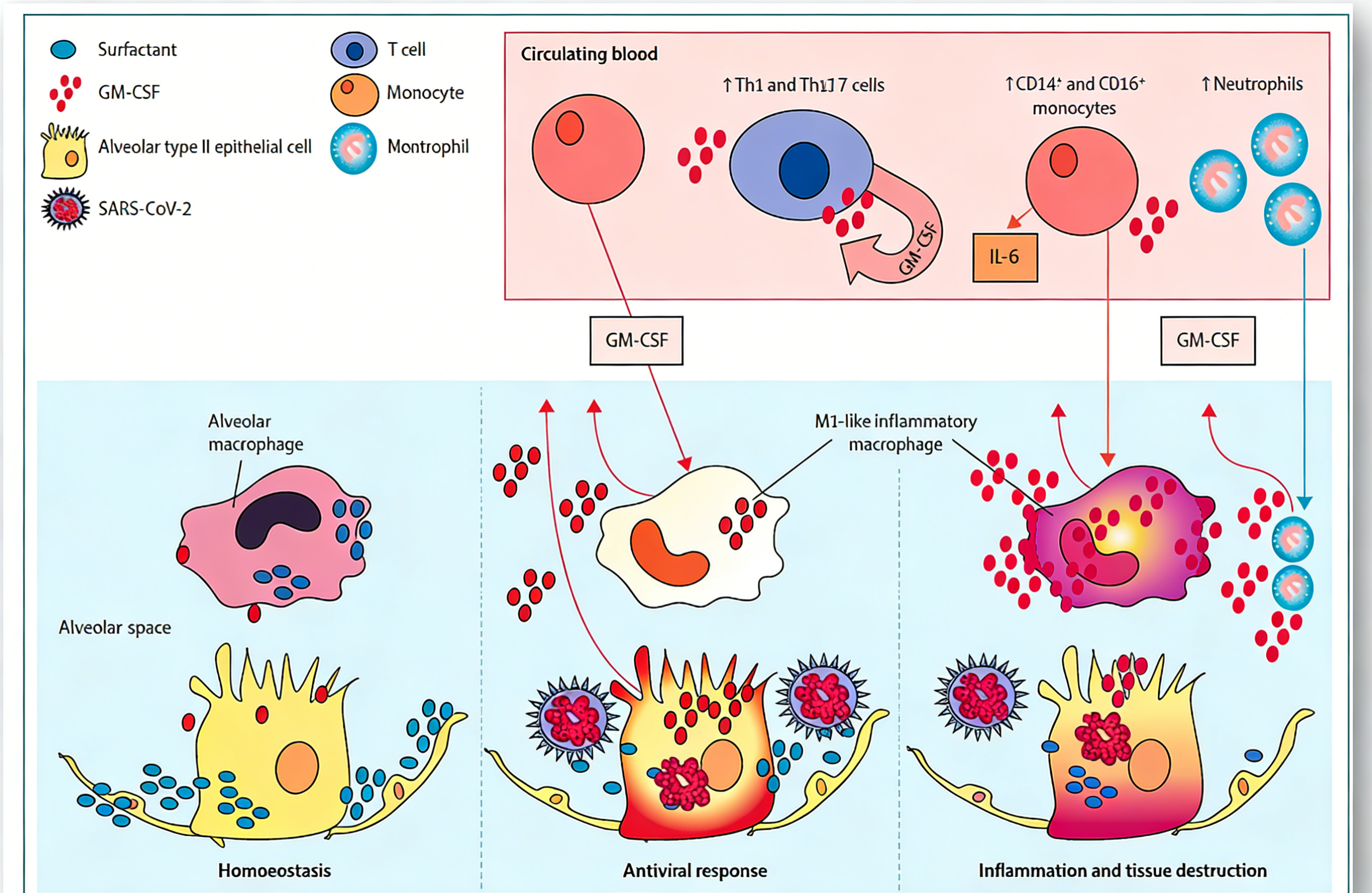
3. Dual Roles of GM-CSF Protein in Immune Responses
GM-CSF protein plays dual roles in immune responses. In paracrine and autocrine functions, it polarizes mature myeloid cells into pro-inflammatory phenotypes, enhancing their inflammatory response capabilities. In endocrine functions, GM-CSF protein controls emergency myelopoiesis, promoting the differentiation of progenitor cells into myeloid cells and mobilizing them to inflammatory sites. Activated myeloid cells secrete reactive oxygen species, upregulate pro-inflammatory cytokines such as IL-1, IL-6, and TNF, and produce chemokines like CCL2, IL-8, and CCL17, which attract monocytes, neutrophils, and lymphocytes to the inflammatory site. T helper cells producing GM-CSF protein amplify the overall immune response by activating pro-inflammatory myeloid cells and recruiting them to inflammatory sites. Based on this regulatory network, GM-CSF protein is considered a critical mediator between lymphoid and myeloid cells in inflammatory responses.
4. Inflammatory Network Regulated by GM-CSF Protein and Disease Associations
Abnormal expression of GM-CSF protein can lead to excessive inflammatory responses, manifesting as tissue damage, pain, amplified chemokine cascades, and the production of other pathogenic cytokines. The inflammatory network formed by GM-CSF protein is a positive feedback loop involving mutual secretion of GM-CSF protein and pro-inflammatory cytokines among monocytes, macrophages, T helper cells, and neighboring cell populations. The most prominent cytokines in this network include IL-1, IL-6, and TNF, which have become key intervention targets in various inflammatory diseases. The pro-inflammatory effects of GM-CSF protein are involved in a range of inflammatory conditions, including graft-versus-host disease, hemophagocytic lymphohistiocytosis, cardiovascular diseases, and autoimmune disorders.
5. Role of GM-CSF Protein in COVID-19-Related Inflammatory Responses
Approximately 20% of COVID-19 patients may progress to acute respiratory distress syndrome (ARDS), a critical condition. In this process, cytokine storm is a key pathological mechanism, with significantly elevated GM-CSF protein levels playing an important role. During inflammation, inflammatory myeloid cells, particularly monocytes, macrophages, and neutrophils, infiltrate the lungs extensively, forming pathological changes resembling macrophage activation syndrome. GM-CSF protein drives the cytokine cascade by regulating myeloid cell activation, contributing to the development of ARDS. Clinical studies have found that GM-CSF protein levels in severe patients correlate with disease severity, highlighting its pivotal role in inflammatory storms.
6. Research Progress on GM-CSF Protein as a Therapeutic Target
Given the central role of GM-CSF protein in inflammatory networks, intervention strategies targeting this protein have garnered attention for various inflammatory diseases. By regulating myeloid cell activation and pro-inflammatory cytokine production, GM-CSF protein participates in disease pathogenesis, making it a potential target for modulating excessive immune responses. Compared to single-cytokine targeting strategies, targeting GM-CSF protein can more broadly influence inflammatory cascades, suppressing the production of multiple downstream pro-inflammatory cytokines and chemokines. In autoimmune diseases and cytokine release syndrome, GM-CSF-targeted strategies have shown therapeutic potential. As understanding of GM-CSF protein's mechanisms in inflammatory diseases deepens, research will continue to expand its applications across different disease areas.
7. Which Companies Provide GM-CSF Protein?
Nanjing UA-Bio Technology Co., Ltd. (UA-Bio) has independently developed "GM-CSF Protein, Mouse", a high-quality recombinant protein reagent specifically designed for mouse immune cell culture, dendritic cell differentiation, and tumor immunology research. This protein is a murine granulocyte-macrophage colony-stimulating factor (GM-CSF) that efficiently activates GM-CSF receptor signaling pathways, promoting the proliferation and differentiation of granulocytes, macrophages, and dendritic cells. It provides a stable and reliable standardized tool for hematopoietic development studies, cell therapy, and vaccine development in mouse models.
| Core Product Advantages |
|---|
| High Purity and Full Biological Activity: The product employs an internationally leading recombinant expression system and highly standardized purification processes, validated through multidimensional quality control to ensure >95% purity, correct native conformation, and complete biological functionality. The protein efficiently binds to the murine GM-CSF receptor complex, faithfully simulating GM-CSF-mediated myeloid cell differentiation, dendritic cell maturation, and immune regulatory signaling under physiological conditions. |
| Excellent Batch Consistency and Stability: Strict management is implemented throughout gene construction, protein expression, and purification quality control, combined with a comprehensive release testing system, ensuring stable biological activity, consistent purity, and outstanding long-term stability for each batch. This provides solid and reliable quality assurance for long-term and continuous mouse immune cell culture and mechanistic research. |
| Ideal Tool for Multiple Applications: This protein performs excellently in various application systems, including in vitro induction of mouse dendritic cell (DC) differentiation, macrophage polarization studies, bone marrow-derived cell culture, immune cell therapy, and vaccine development. It is widely applicable to mouse DC vaccine preparation, myeloid cell function research, signaling pathway analysis, and preclinical efficacy evaluation. |
| Low Endotoxin and High Batch Consistency: The product undergoes multi-step chromatography purification and endotoxin removal processes, resulting in extremely low endotoxin levels (<0.1 EU/μg), meeting stringent requirements for cell culture and animal experiments. A rigorous quality control system ensures high consistency in protein activity and purity across different batches. |
| Complete Solutions and Professional Support: We provide thoroughly validated standard experimental protocols, typical biological activity data, and detailed product analysis certificates to help you quickly establish stable and reproducible experimental workflows. Nanjing UA-Bio's professional technical team offers comprehensive and expert technical consultation and support for your research design, experimental optimization, and data analysis. |
Nanjing UA-Bio Technology Co., Ltd. is committed to providing cutting-edge, high-quality core reagents and tools for immunology, cell therapy, and innovative drug development. For detailed technical parameters, validation data, or specific application inquiries regarding "GM-CSF Protein, Mouse" (Catalog No.: UA040056), please feel free to contact us.
This article is reviewed and published by the technical expert team of UA
Disclaimer: This article partially utilizes artificial intelligence assistance in its creation. If any content involves copyright or intellectual property issues, please let us know and we promise to verify and remove it as soon as possible.
Purchase recombinant protein, choose Nanjing UA-Bio
UA protein focuses on providing various protein reagents, raw materials, and services required for drug research and development, cell therapy, gene therapy, and basic scientific research, including drug target proteins, immune checkpoint proteins, cytokines, tool enzymes, customized protein expression, and full-length transmembrane protein development. Youai is committed to providing customers with high-quality products and professional services, and building a High-tech Biological Enterprise with International Competitiveness.







 Business license (three certificates in one)