





PCSK9 is a serine protease synthesized by the liver that regulates protein activity, first reported in 2003. In 2004, animal studies showed that PCSK9 overexpression reduced LDL-R and increased LDL-C levels. In 2005, research identified that loss-of-function mutations in PCSK9 could lower LDL-C levels in humans. A 2011 preclinical study found that patients with PCSK9 loss-of-function exhibited a 28% reduction in LDL-C and an 88% lower risk of coronary heart disease. LDL-R on hepatocyte surfaces binds to LDL and is internalized via clathrin-coated vesicles, integrating LDL-C into cells while LDL-R recycles back to the cell surface. PCSK9 binds to LDL-R on hepatocytes, forming a PCSK9/LDL-R complex that undergoes endocytosis and lysosomal degradation, reducing LDL-R availability on hepatocyte surfaces and increasing blood LDL-C levels. The TR-FRET PCSK9(D347Y)/LDLR detection kit enables quantitative measurement of PCSK9-LDLR binding activity, providing a technical tool for studying this protein's biological functions.
Statins lower intracellular cholesterol levels by competitively inhibiting HMG-CoA reductase, the rate-limiting enzyme in endogenous cholesterol synthesis, thereby reducing serum LDL-C. Patents for original statin drugs have expired, leading to a competitive generic drug market. Statins have clinical limitations, with some patients experiencing "statin intolerance" manifested as myositis, myalgia, rhabdomyolysis, or liver damage. Some patients fail to achieve satisfactory lipid-lowering effects even at maximum doses. These limitations have driven the development of novel lipid-lowering drugs, with PCSK9 inhibitors emerging as a key research direction.
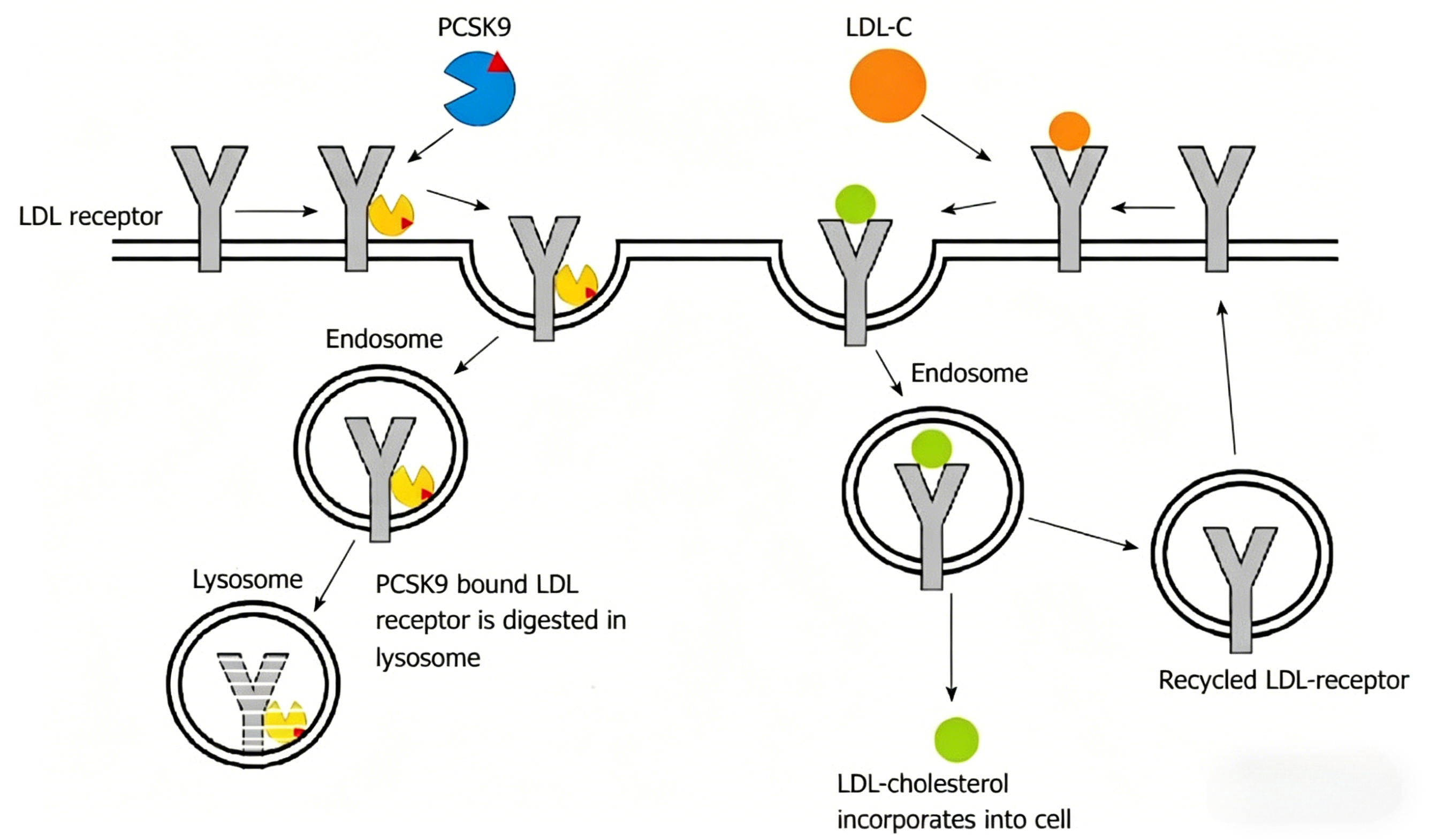
Based on PCSK9's mechanism, inhibiting its activity or reducing its levels can increase LDL-R availability on hepatocytes and enhance LDL-C clearance. Two main strategies exist for developing PCSK9-targeting lipid-regulating drugs: 1) blocking PCSK9-LDL-R binding using monoclonal antibodies, peptide mimetics, or antibody-like proteins; and 2) suppressing PCSK9 expression or secretion via siRNA, antisense oligonucleotides, or small molecule inhibitors. In 2012, the New England Journal of Medicine reported Phase I clinical trials of PCSK9 monoclonal antibodies demonstrating significant LDL-C reduction in healthy volunteers and familial hypercholesterolemia patients. TR-FRET technology can screen molecules that block PCSK9-LDLR binding and evaluate their blocking efficiency.
PCSK9 monoclonal antibodies target plasma PCSK9, with evolocumab and alirocumab being widely used clinically. The FOURIER study evaluated evolocumab in 27,564 ASCVD patients, showing a 15% reduction in MACE risk and 20% lower ischemic stroke risk after 48 weeks. The ODYSSEY OUTCOMES study assessed alirocumab in 18,924 ACS patients, with subgroup analysis revealing reduced ischemic stroke risk in patients with prior stroke after 78 weeks. The GLAGOV study demonstrated atherosclerotic plaque regression in 64% of patients after 76 weeks of statin-PCSK9 inhibitor combination therapy. These studies confirm the efficacy and safety of PCSK9 monoclonal antibodies.
The siRNA drug inclisiran induces PCSK9 mRNA degradation, preventing protein translation for long-term effects. Phase I trials showed significant LDL-C and PCSK9 reduction lasting up to 6 months with single or multiple doses. Phase III ORION-10 and ORION-11 trials demonstrated 52.3% and 49.9% LDL-C reduction at 510 days, with only mild/moderate adverse events. Its biannual subcutaneous administration offers convenient treatment. The TR-FRET PCSK9(D347Y)/LDLR detection kit can evaluate these drugs' indirect effects on PCSK9-LDLR binding to validate their mechanism.
As novel lipid-lowering agents, PCSK9 inhibitors differ from statins in mechanism and clinical positioning. They provide important alternatives for statin-intolerant patients or those failing to achieve lipid targets with statins. Clinical studies confirm PCSK9 inhibitors significantly reduce LDL-C and cardiovascular event risk. However, subcutaneous administration and high costs limit widespread use. New formulations like siRNA drugs may improve compliance by reducing dosing frequency. The TR-FRET PCSK9(D347Y)/LDLR detection kit is valuable for drug development and quality control, offering high-throughput, sensitive binding activity measurements.
Nanjing UA-Bio Technology Co., Ltd. has independently developed the "UniOne® TR-FRET Human PCSK9(D347Y)/LDLR Assay Kit" (Catalog No.: UA086124), a high-performance analysis platform specifically designed for studying the interaction between pathogenic PCSK9 mutant (D347Y) and LDL receptor (LDLR). Based on time-resolved fluorescence resonance energy transfer (TR-FRET) technology, this kit accurately and efficiently evaluates binding activity between human PCSK9 D347Y mutant protein and LDLR, providing standardized, reliable solutions for hypercholesterolemia mechanism research, lipid-lowering drug screening, and functional evaluation of genetic mutations.
| Core Product Advantages | Detailed Parameters / Functional Description |
|---|---|
| High Purity & Complete Bioactivity | Core components feature high-purity, bioactive human PCSK9 D347Y mutant and LDLR proteins validated by multi-dimensional QC. Both maintain native conformation and full binding function, with D347Y mimicking pathogenic gain-of-function (GOF) mutation's high affinity, accurately reflecting enhanced PCSK9-LDLR interaction for reliable, reproducible, physiologically relevant data. |
| Excellent Lot Consistency & Stability | International-standard protein expression platforms and standardized production processes, combined with strict QC release systems, ensure superior long-term stability and lot-to-lot consistency, providing solid quality assurance for continuous drug screening and mechanism research. |
| Ready-to-Use Flexible Platform | This homogeneous TR-FRET kit features a simple "add-incubate-read" workflow without washing steps. Its optimized formulation supports 96/384-well automated platforms for high-throughput screening of PCSK9 inhibitors/antibodies, mutation-specific affinity assays, competitive binding studies, and biosimilar activity evaluation. |
| Complete Solutions & Professional Support | We provide validated protocols, standard dose-response curves, and detailed interpretation guides to help establish stable, reproducible workflows. Nanjing UA-Bio's expert team offers full technical consultation for study design, optimization, and data analysis. |
Nanjing UA-Bio Technology Co., Ltd. specializes in providing cutting-edge, high-quality core reagents and tools for immunology, cell therapy, and innovative drug development. For detailed technical parameters, validation data, or application consultations regarding the "UniOne® TR-FRET Human PCSK9(D347Y)/LDLR Assay Kit" (Catalog No.: UA086124), please contact us anytime.








