





The human immune system performs immune surveillance, immune defense, and immune homeostasis. Its functions of defending against pathogen invasion and eliminating malignant mutations and senescent cells are primarily achieved through innate immunity (composed of macrophages and basophils) and adaptive immunity (mediated by T lymphocytes and B lymphocytes). Relying on immune cells and active substances like cytokines secreted by other cells, immune responses involve interactions among immune cells, between immune cells and molecules, and between the immune system and other bodily systems, forming a coordinated and regulated network. B lymphocytes execute adaptive immune functions mainly by secreting antibodies and acting as antigen-presenting cells to deliver antigen peptides to T cells.
CD19 is a CD molecule expressed on the surface of B lymphocytes, belonging to the immunoglobulin superfamily. It is expressed in all B-cell lineages (except plasma cells), malignant B cells, and follicular dendritic cells. CD19 is an important membrane antigen involved in B-cell proliferation, differentiation, activation, and antibody production, and it also enhances signal transduction of the B-cell receptor complex. CD19, together with CD21 and CD81, forms the B-cell co-receptor complex, which amplifies antigen-stimulated signals transmitted intracellularly by the B-cell receptor, lowering the threshold for B-cell activation and promoting antigen recognition and B-cell activation. After antigen binds to the B-cell receptor, the resulting signal is transmitted intracellularly via Igα/β and CD19, providing the first signal for B-cell activation. PE-labeled CD19 His-tagged protein can be used to quantitatively measure the binding activity of CD19 molecules with antibodies, serving as a technical tool for immunotherapy research.
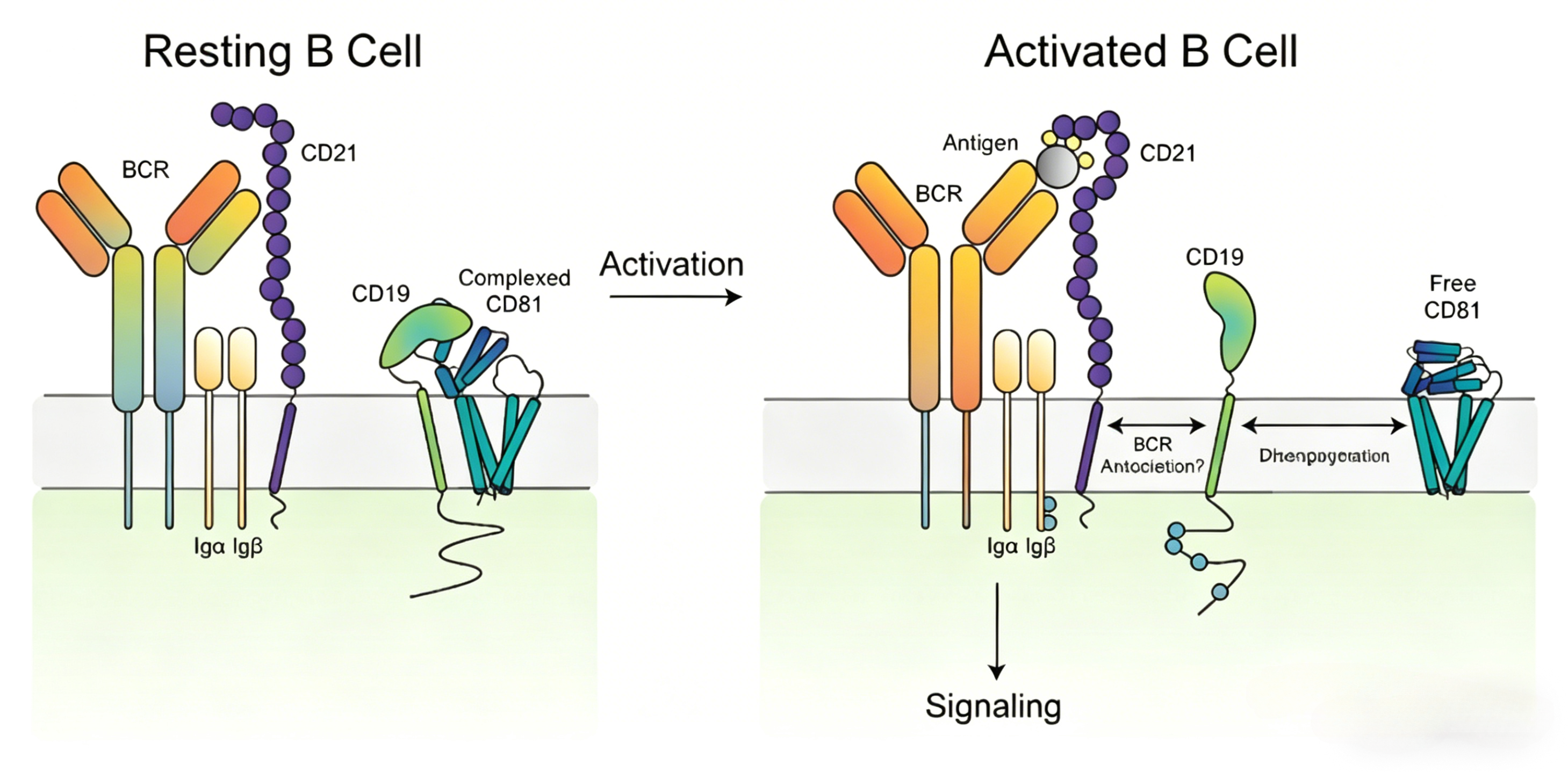
CD19, as a receptor for specific signal transduction on B-cell surfaces, is present at all stages of B-cell maturation and is also abnormally expressed on many malignant B cells, such as in leukemia. Since antibody-mediated immune killing relies on other immune cells, the mechanism by which antibodies bind to highly expressed molecules on tumor surfaces to activate immune cells makes CD19 an important target for immunotherapy. CD19 antibodies primarily kill tumor cells by specifically recognizing CD19 molecules and presenting antigens to recruit immune cells (e.g., T cells) capable of killing tumor cells to B cells, leading to indiscriminate elimination of both normal and malignant B lymphocytes. The advantage of CD19 as a target lies in its broad expression across the B-cell lineage and its persistent presence in most B-cell malignancies, making it an ideal therapeutic target.
Chimeric antigen receptor T-cell (CAR-T) therapy is one of the most prominent CD19-targeted immunotherapies. This technology involves linking the antigen-binding region of an antibody recognizing tumor antigen CD19 with the intracellular portion of CD3-ζ chain or FcεRIγ in vitro to form a chimeric protein, which is then transduced into the patient's T cells via gene transfer, enabling them to express the chimeric antigen receptor. After reprogramming, the patient's T cells generate a large number of tumor-specific CAR-T cells. These CAR-T cells can recognize and kill CD19-expressing tumor cells independently of major histocompatibility complex (MHC) restrictions. Upon expansion in vivo, CAR-T cells exert sustained cytotoxic effects on tumor cells. PE-labeled CD19 His-tagged protein can be used to evaluate the binding capacity of CAR-T cells to CD19 antigens and validate their functional activity.
CD19-targeted therapies have achieved significant progress in treating B-cell malignancies. CD19 CAR-T cell therapy has demonstrated high remission rates in relapsed/refractory B-cell acute lymphoblastic leukemia, diffuse large B-cell lymphoma, and mantle cell lymphoma. The advantage of this therapy lies in its mechanism of action, which is independent of tumor cell antigen presentation, enabling it to overcome certain immune evasion mechanisms. However, CD19-targeted therapies also have limitations, including indiscriminate killing of normal B cells leading to B-cell aplasia, as well as adverse effects such as cytokine release syndrome and neurotoxicity in some patients. Additionally, CD19-negative relapse remains a clinical challenge.
PE-labeled CD19 His-tagged protein plays a critical role in the development and quality control of CD19-targeted therapies. During CAR-T cell development, this labeled protein can be used to detect CAR molecule expression levels, assess transduction efficiency, and evaluate binding activity. Through flow cytometry, incubating PE-labeled CD19 His-tagged protein with CAR-T cells enables quantitative measurement of CAR-positive cell proportions and binding affinity. In quality control, the labeled protein facilitates batch-to-batch consistency evaluation, ensuring the stability and reliability of CAR-T cell products. Compared to traditional anti-idiotype antibody detection methods, PE-labeled CD19 His-tagged protein directly assesses the antigen-binding function of CAR molecules, better reflecting the biological activity of the product. Additionally, this labeled protein can measure soluble CD19 levels in serum, providing insights for disease monitoring.
Nanjing UA-Bio Technology Co., Ltd. (UA-Bio) has independently developed "PE-Labeled CD19 His Tag Protein, Human" (Catalog No.: UA011320), a high-performance fluorescent labeling reagent specifically designed for B-cell flow cytometry analysis and CAR-T cell therapy research. This protein is a human CD19 with a His tag and PE fluorescent labeling, capable of efficiently binding CD19-targeting molecules (e.g., anti-CD19 antibodies or CAR molecules). It serves as a stable and reliable standardized tool for applications such as CAR-T cell positivity rate detection, B-cell immune monitoring, and targeted drug screening.
| Core Advantages | Detailed Parameters / Functional Description |
|---|---|
| High Purity and Intact Bioactivity | The product employs an advanced eukaryotic expression system and highly standardized purification processes, validated through multi-dimensional quality control to ensure >95% purity and correct native conformation. The PE labeling process is optimized to maintain high labeling efficiency while preserving high-affinity binding of CD19 to target molecules, accurately simulating the antigen recognition process of CD19 on B-cell surfaces under physiological conditions. |
| High-Brightness PE Labeling | An optimized PE labeling ratio ensures stable fluorescence dye conjugation per CD19 protein molecule, emitting bright orange-red fluorescence (peak emission ~575 nm) under 488 nm excitation. This makes it ideal for flow cytometry (FACS) detection, providing reliable quantification of CAR-T cell positivity rates. |
| Excellent Batch-to-Batch Consistency and Stability | Strict quality control is implemented throughout protein expression, labeling, and purification, combined with comprehensive release testing, ensuring consistent binding activity, uniform fluorescence intensity, and superior long-term stability. This guarantees reliable quality for long-term and continuous CAR-T cell research. |
| Versatile Tool for Multiple Applications | This protein performs exceptionally in CAR-T cell positivity rate detection, B-cell subset analysis, anti-CD19 antibody/antagonist screening, competitive binding assays, and immune monitoring. It is widely applicable to CAR-T cell therapy development, tumor immunology research, and drug activity evaluation. |
| Comprehensive Solutions and Professional Support | We provide validated standard protocols, representative flow cytometry data, and detailed interpretation guidelines to help establish stable and reproducible CAR-T cell detection workflows. Nanjing UA-Bio's technical team offers end-to-end professional consultation and support for research design, optimization, and data analysis. |
Nanjing UA-Bio Technology Co., Ltd. is committed to providing cutting-edge, high-quality core reagents and tools for immunology, cell therapy, and innovative drug development. For detailed technical specifications, validation data, or application inquiries regarding "PE-Labeled CD19 His Tag Protein, Human" (Catalog No.: UA011320), please feel free to contact us.








