

In-depth analysis of target GDF-8: Core pathways linking muscle atrophy and lipid metabolism disorders


GDF-8, also known as myostatin (MSTN), belongs to the TGF-β superfamily and is a key negative regulatory factor in skeletal muscle proliferation and differentiation, as well as lipid and glucose metabolism in the body. It participates in physiological processes such as muscle development, adipocyte differentiation, and tissue fibrosis through the ActRIIA/B-Smad2/3 pathway, making it a current hot research target for muscle atrophy and metabolic disorders.
- Recent Advances
- Product Information
In-Depth Analysis of Target GDF-8: Core Pathways Linking Muscle Atrophy and Lipid Metabolism Disorders
Target Introduction
GDF-8, also known as myostatin (MSTN), belongs to the TGF-β superfamily and is a key negative regulator of skeletal muscle proliferation, differentiation, and lipid/glucose metabolism. It participates in physiological processes such as muscle development, adipocyte differentiation, and tissue fibrosis through the ActRIIA/B-Smad2/3 pathway, making it a hot research target for muscle atrophy and metabolic disorders.
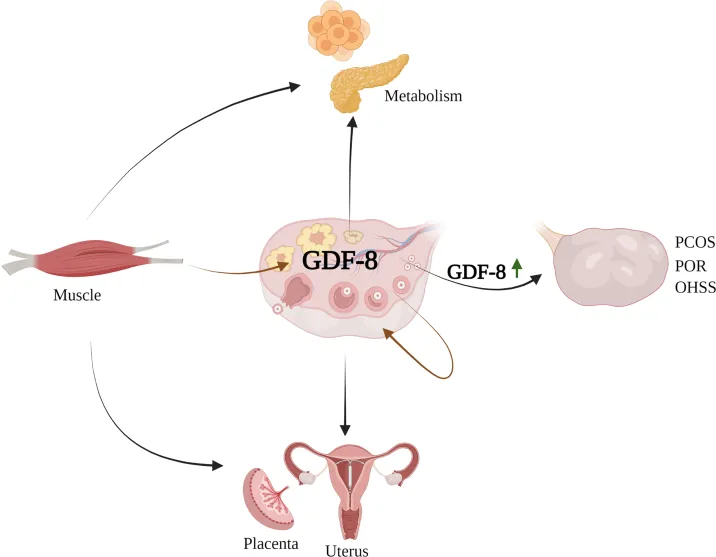
https://doi.org/10.3389/fendo.2022.878069
Signaling Pathway
Receptor Binding and Membrane Receptor Activation
Mature GDF-8 homodimers specifically recognize and bind to type II receptors ActRIIA and ActRIIB on the cell membrane, inducing conformational changes that recruit and phosphorylate type I receptors ALK4/ALK5, initiating membrane surface signaling.
Intracellular Smad Signal Transduction
Activated type I receptors catalyze the phosphorylation of intracellular Smad2 and Smad3. Phosphorylated Smad2/3 forms heteromeric complexes with the common mediator Smad4, which translocate into the nucleus.
Nuclear Transcriptional Regulation
The complexes bind to promoter regions of target genes in the nucleus, regulating downstream gene transcription and participating in various physiological processes such as cell proliferation, differentiation, lipid/glucose metabolism, and tissue fibrosis.
Product Recommendation
UloveBio's high-activity GDF-8 protein supports cutting-edge research on muscle and metabolic targets!
Universal GDF-8 Recombinant Protein: Human/Mouse/Rat GDF-8 Protein (UA040576)
Activity: Determined by its ability to inhibit the proliferation of MPC-11 cells. The expected IC50 for this effect is 40-53 ng/ml.
Purity: >95% as determined by RP-HPLC.
Application Scenarios
1. Drug Development: Screening GDF-8 neutralizing antibodies, ActR receptor inhibitors, and peptide-based candidate molecules.
2. Biomarkers: Cell/animal model construction for evaluating the efficacy of myostatin pathway interventions.
3. Signaling Mechanisms: Investigating Smad pathway regulation, muscle satellite cell differentiation, and lipid metabolic reprogramming.
4. Model Construction: In vitro cell induction, mouse muscle atrophy/obesity modeling, and functional phenotype validation.
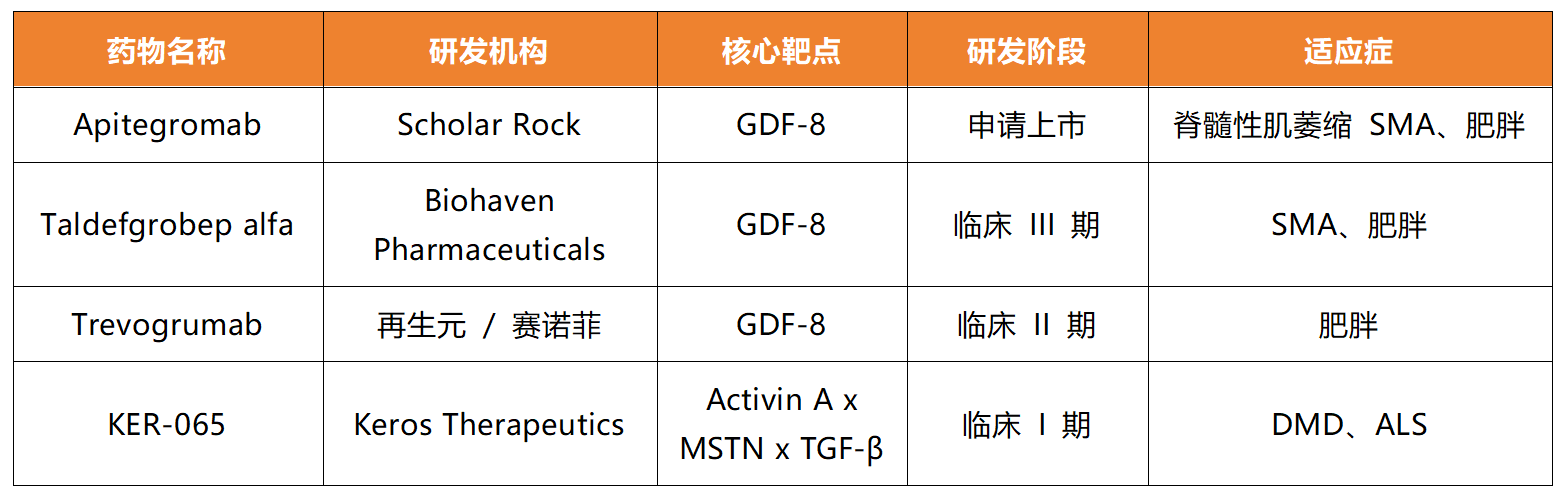
Drug Development Status
Summary
GDF-8, as a core negative regulator of skeletal muscle growth in the TGF-β superfamily, involves multi-level fine-tuning of its signaling pathway, including ligand activation, receptor complex formation, and Smad-dependent/independent signal transduction. It is a critical target in muscle development, metabolic regulation, and tissue fibrosis research. UloveBio's universal GDF-8 recombinant protein (UA040576), covering human, mouse, and rat species, has been validated for bioactivity in MPC-11 cell proliferation inhibition assays with >95% purity. It effectively supports ligand-receptor binding analysis, neutralizing antibody screening, and cellular functional validation across species. Complementary pathway proteins (ActRIIA/IIB, ALK4/ALK5) and activity detection kits provide a comprehensive toolkit for studying GDF-8-mediated signal transduction mechanisms, from target binding to phenotypic evaluation.
This article is reviewed and published by the technical expert team of UA
Disclaimer: This article partially utilizes artificial intelligence assistance in its creation. If any content involves copyright or intellectual property issues, please let us know and we promise to verify and remove it as soon as possible.
Purchase recombinant protein, choose 
UA protein focuses on providing various protein reagents, raw materials, and services required for drug research and development, cell therapy, gene therapy, and basic scientific research, including drug target proteins, immune checkpoint proteins, cytokines, tool enzymes, customized protein expression, and full-length transmembrane protein development. Nanjing Univ is committed to providing customers with high-quality products and professional services, and building a High-tech Biological Enterprise with International Competitiveness.







 Business license (three certificates in one)