Th2 Cell Polarization: A Comprehensive Analysis from Basic Mechanisms to In Vitro Experimental Protocols
Author: Senior Product Manager of UA Views:94 


Helper T cell 2 (Th2) is a crucial functional subset of CD4⁺ T cells, playing a central role in humoral immune responses, allergic reactions, and anti-parasitic infections. Naive CD4⁺ T cells (Th0) can differentiate into Th2 cells under the guidance of specific cytokine signals, a process known as "Th2 polarization." Whether studying allergic diseases such as asthma and atopic dermatitis, exploring anti-parasitic immune mechanisms, or developing novel immunotherapies, mastering in vitro Th2 cell polarization techniques is essential.
- Recent Advances
- Product Information
Recent Advances
Th2 Cell Polarization: A Comprehensive Guide from Basic Mechanisms to In Vitro Experiments
Helper T cells type 2 (Th2) are a crucial functional subset of CD4⁺ T cells, playing a central role in humoral immune responses, allergic reactions, and anti-parasitic infections. Naïve CD4⁺ T cells (Th0) can differentiate into Th2 cells under the guidance of specific cytokine signals, a process known as "Th2 polarization." Whether studying allergic diseases such as asthma and atopic dermatitis, exploring anti-parasitic immune mechanisms, or developing novel immunotherapies, mastering in vitro Th2 cell polarization techniques is essential.
1. Th2 Cells: Core Coordinators of Humoral Immunity
Th2 cells are specialized core coordinators responsible for humoral immune responses, characterized by the secretion of cytokines such as IL-4, IL-5, and IL-13. They are the "chief engineers" of allergic immunity, meticulously regulating antibody class switching and eosinophil responses to establish a defense network against parasitic infections while also serving as key drivers of allergic diseases. Th2 cells primarily participate in humoral immune responses, promoting B cells to produce antibodies against extracellular parasites and certain bacteria.
The differentiation of Th2 cells is precisely regulated. Naïve CD4⁺ T cells recognize the MHC class II molecule-antigen peptide complex on antigen-presenting cells through the T cell receptor to receive the first signal, while costimulatory molecules such as CD28 provide the second signal, completing dual-signal activation. The polarization direction is then determined by the types of cytokines in the microenvironment.
2. Molecular Mechanisms of Th2 Polarization: The IL-4/STAT6/GATA3 Signaling Axis
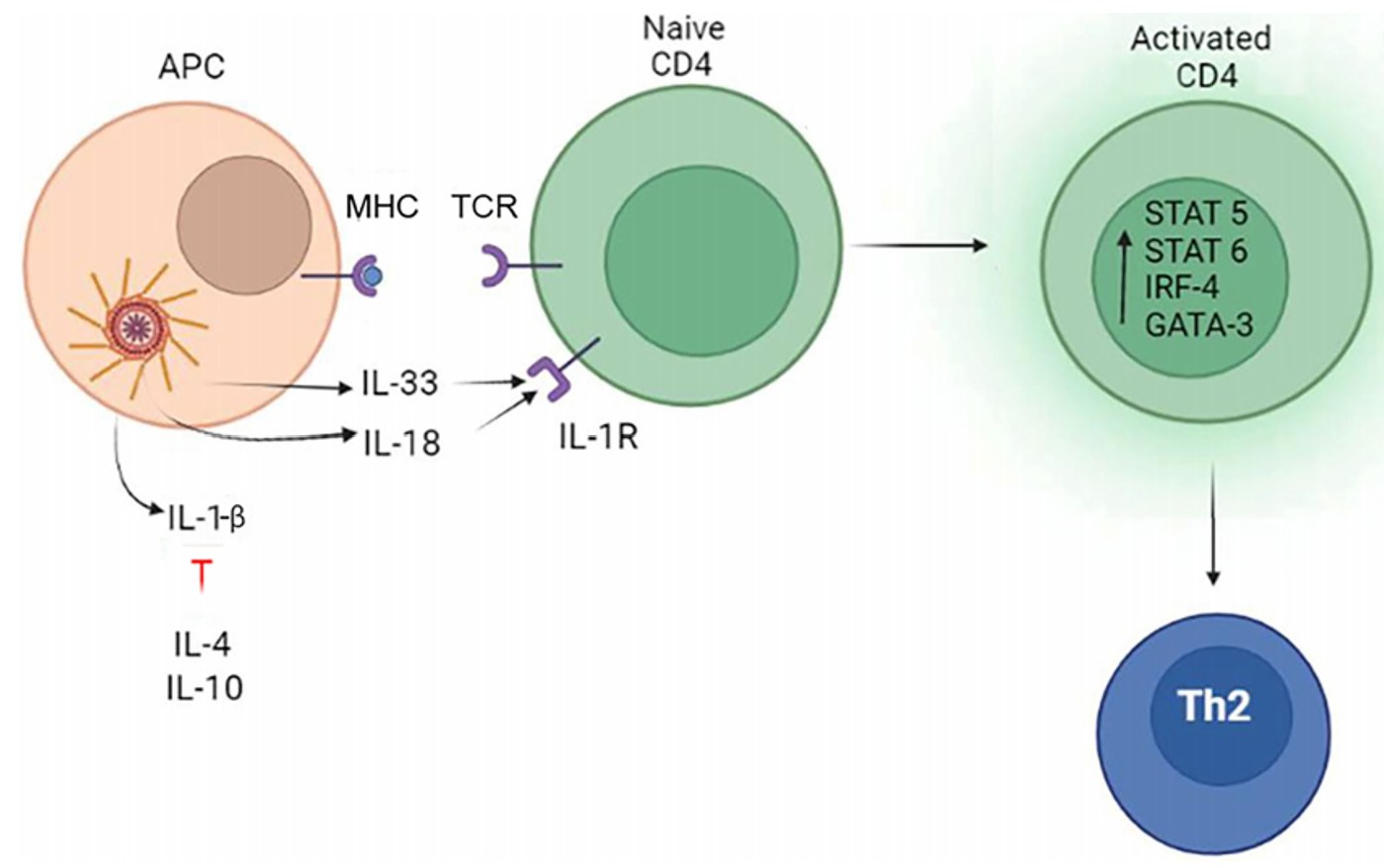
Source: doi: 10.3389/fmicb.2022.851835
The molecular mechanisms of Th2 differentiation have been well elucidated, with polarization conditions based on precise regulation of key signaling pathways. IL-4 is the decisive signal guiding naïve CD4⁺ T cells to differentiate into Th2 cells. IL-4 activates the STAT6 signaling pathway, inducing the expression of the key transcription factor GATA3, thereby initiating the Th2-specific gene expression program.
In addition to the IL-4/STAT6 core pathway, Th2 polarization requires the synergistic coordination of the following signals:
- TCR activation signal: Provided by anti-CD3/CD28 antibodies to deliver the first signal required for T cell activation
- IL-2 synergy: As a T cell growth factor, enhances cell proliferation and differentiation efficiency
- Antibody blocking strategy: Uses anti-IFN-γ and anti-IL-12 antibodies to eliminate Th1 differentiation interference and ensure polarization purity
- IL-2 synergy: As a T cell growth factor, enhances cell proliferation and differentiation efficiency
- Antibody blocking strategy: Uses anti-IFN-γ and anti-IL-12 antibodies to eliminate Th1 differentiation interference and ensure polarization purity
Th1 and Th2 exhibit mutual inhibition, maintaining immune balance. Th1 is induced by IL-12, relies on the transcription factor T-bet, secretes IFN-γ, and mediates cellular immunity; whereas Th2 is induced by IL-4, depends on GATA3, secretes IL-4/5/13, and mediates humoral immunity. Disruption of this balance is often closely related to the development of allergic diseases and autoimmune disorders.
3. Application Value of In Vitro Th2 Polarization
Why perform in vitro Th2 polarization? Its primary application value is reflected in the following three aspects:
1. Mechanism decoding: In-depth analysis of the core role of the IL-4/STAT6 signaling pathway in Th2 differentiation
2. Disease modeling: Obtain functional Th2 cells for constructing models of allergic diseases such as asthma and atopic dermatitis
3. Therapy development: Provide an experimental foundation for targeted treatments of allergic diseases and immune modulation strategies
2. Disease modeling: Obtain functional Th2 cells for constructing models of allergic diseases such as asthma and atopic dermatitis
3. Therapy development: Provide an experimental foundation for targeted treatments of allergic diseases and immune modulation strategies
4. UA-Bio Th2 Polarization Solution
To meet the research needs of Th2 polarization, UA-Bio provides a complete solution. This kit uses an optimized cytokine combination designed to efficiently and stably drive CD4⁺ T cells to differentiate into functionally mature Th2 cells.
Mouse Th2 Polarization Protocol
Step 1—Plate Coating: Coat the cell culture plate overnight with 10 µg/mL anti-mouse CD3ε monoclonal antibody and 2 µg/mL anti-mouse CD28 monoclonal antibody.
Step 2—Cell Seeding: After washing and blocking the plate, add CD4⁺ T cells isolated using CD4 Nanobeads, mouse.
Step 3—Polarization Induction: Use RPMI-1640 medium supplemented with the following components:
- 10 ng/mL IL-2
- 25 ng/mL IL-4
- 55 µM β-mercaptoethanol
- 10% FBS
- 10 ng/mL IL-2
- 25 ng/mL IL-4
- 55 µM β-mercaptoethanol
- 10% FBS
Step 4—Expansion Culture: After 72 hours, gently resuspend and collect the cell suspension, adjust the cell density to 1×10⁶ cells/mL, and reseed into a new plate. Monitor cell concentration every 12 hours. If the cell density is too high, perform a half-medium change or split the cells into new wells at an appropriate ratio, supplementing with fresh Th2 polarization complete medium until day 6.
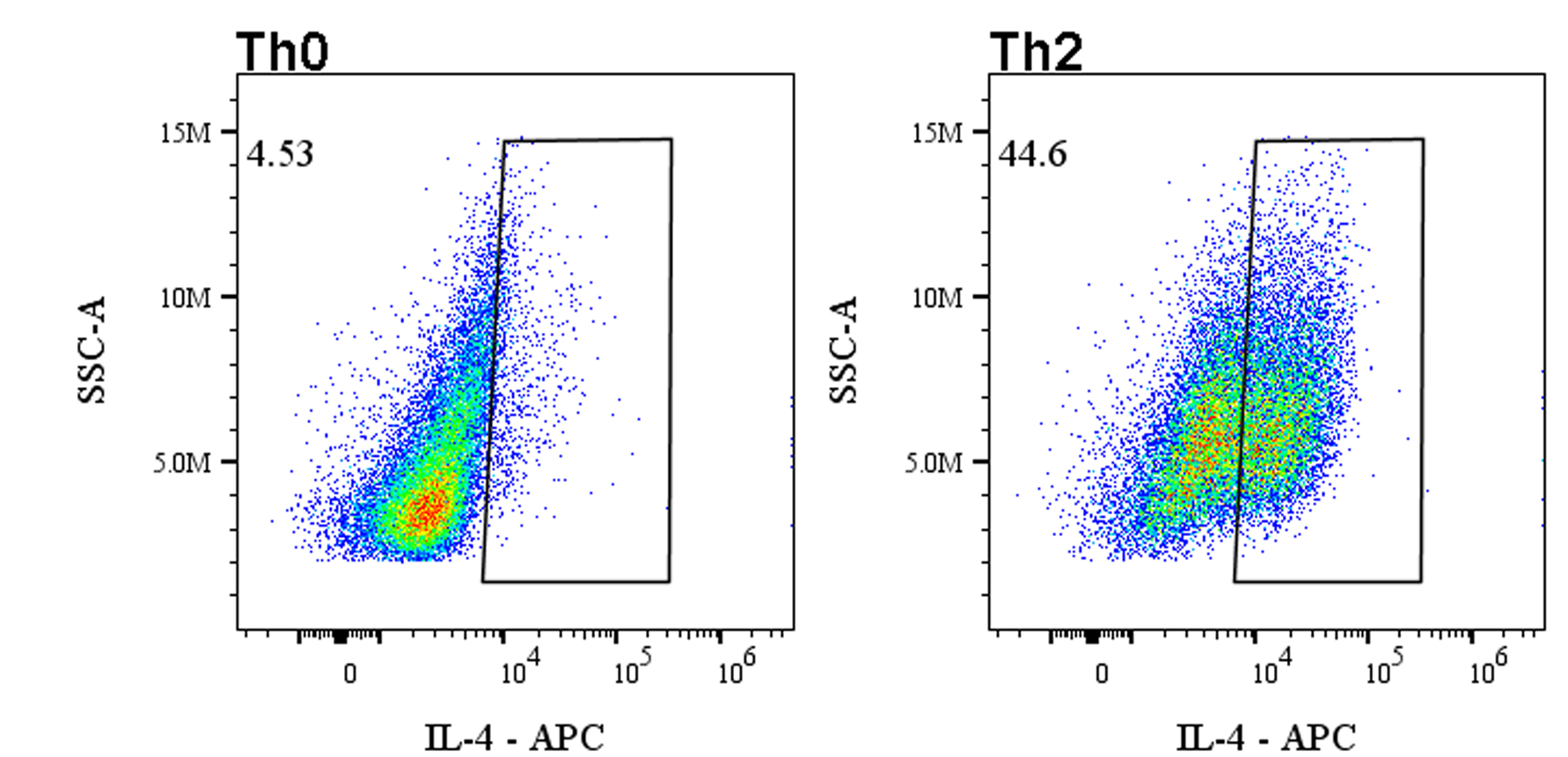
Step 5—Flow Cytometry Analysis: Collect the cells, treat with PMA + ionomycin + Brefeldin A for 5 hours, and then perform intracellular staining for identification using flow cytometry antibodies (e.g., PAPC anti-mouse IL-4).
Negative Control (Th0 Cells): To verify polarization efficiency, set up Th0 cells as a negative control. The culture conditions for Th0 cells are: Use Th0 maintenance medium, composed of RPMI-1640 basal medium supplemented with 10% FBS, 55 µM β-mercaptoethanol, 2 ng/mL recombinant mouse IL-2, 10 µg/mL anti-mouse IFN-γ, and 10 µg/mL anti-mouse IL-4 functional antibodies.
Result Data:
Human Th2 Polarization Protocol
According to UA-Bio's standardized protocol, the core steps for human Th2 polarization are as follows:
Step 1—Plate Coating: Coat the cell culture plate overnight with 5 µg/mL anti-human CD3 mAb.
Step 2—Cell Seeding: After washing and blocking the plate, add CD4⁺ T cells isolated using CD4 Nanobeads, human.
Step 3—Polarization Induction: Use RPMI-1640 medium supplemented with the following components:
- 40 ng/mL IL-2
- 30 ng/mL IL-4
- 10 µg/mL Anti-Human IFN-γ
- 55 µM β-mercaptoethanol
- 1 µg/mL anti-human CD28 mAb
- 10% FBS
- 40 ng/mL IL-2
- 30 ng/mL IL-4
- 10 µg/mL Anti-Human IFN-γ
- 55 µM β-mercaptoethanol
- 1 µg/mL anti-human CD28 mAb
- 10% FBS
Step 4—Expansion Culture: After 48 hours, monitor cell concentration every 12 hours. If the cell density is too high, split the cells into new wells (without additional CD3/CD28 antibody stimulation) and continue culturing for 5 days.
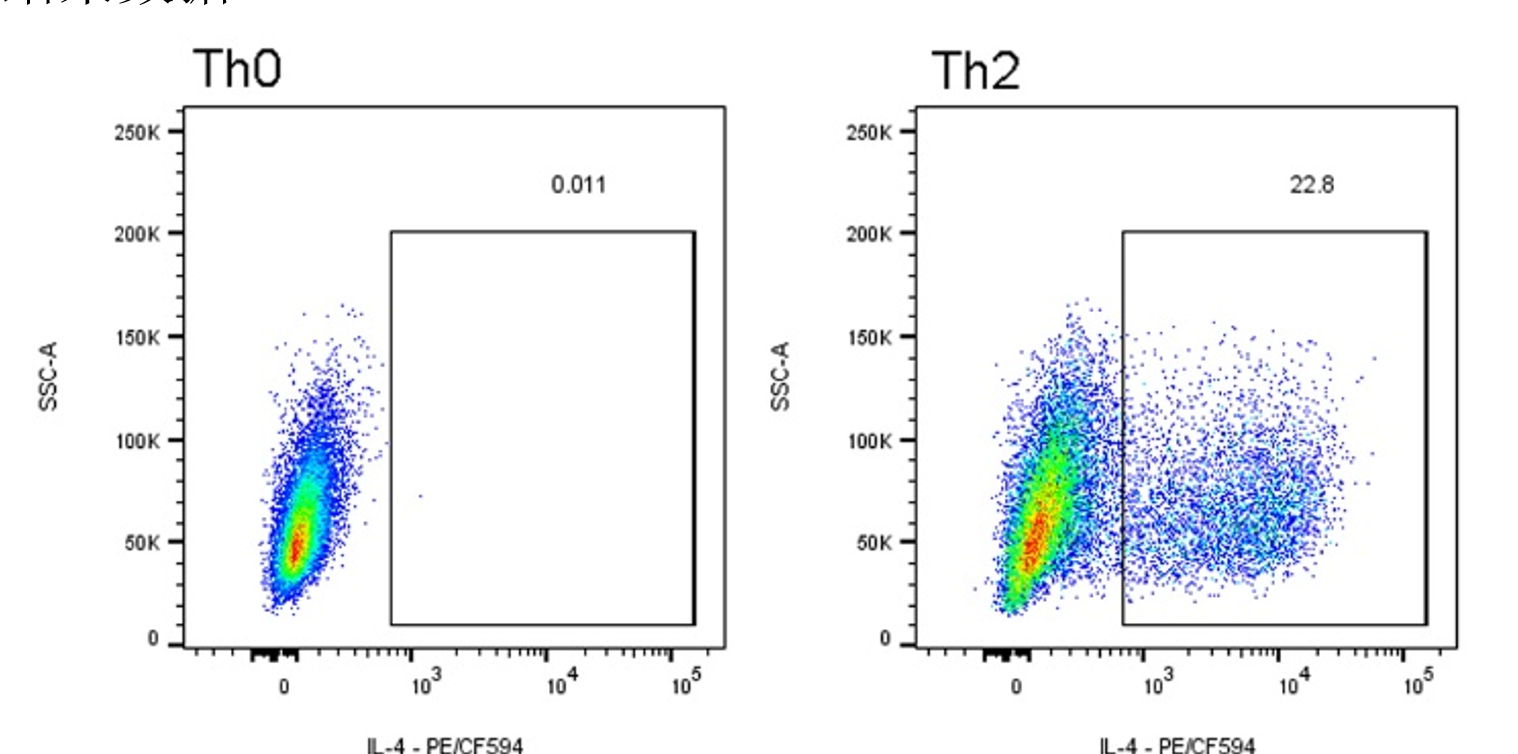
Step 5—Flow Cytometry Analysis: Collect the cells, treat with PMA + ionomycin + Brefeldin A for 5 hours, and then perform intracellular staining for identification using flow cytometry antibodies (e.g., PE/Dazzle™ 594 anti-human IL-4 Antibody).
Negative Control (Th0 Cells): To verify polarization efficiency, set up Th0 cells as a negative control. The culture conditions for Th0 cells are: RPMI-1640 + 10% FBS + 55 µM β-mercaptoethanol + 10 µg/mL Anti-human IL-4 + 10 µg/mL Anti-human IFN-γ + 200 U/mL IL-2 + 1 µg/mL anti-human CD28 mAb, cultured for 5 days.
Result Data:
5. Conclusion
As a key functional subset of CD4⁺ T cells, Th2 cells play an irreplaceable role in allergic diseases, anti-parasitic immunity, and humoral immune regulation. In vitro Th2 polarization technology is an essential experimental platform for in-depth studies of Th2 biological functions, disease modeling, and the development of novel therapeutic strategies. UA-Bio's human Th2 polarization kit and mouse Th2 polarization kit provide standardized, high-efficiency polarization systems, offering researchers a complete toolchain from basic mechanism studies to translational medical applications, facilitating the advancement of Th2-related research.
This article is reviewed and published by the technical expert team of UA
Disclaimer: This article partially utilizes artificial intelligence assistance in its creation. If any content involves copyright or intellectual property issues, please let us know and we promise to verify and remove it as soon as possible.
Purchase recombinant protein, choose 
UA protein focuses on providing various protein reagents, raw materials, and services required for drug research and development, cell therapy, gene therapy, and basic scientific research, including drug target proteins, immune checkpoint proteins, cytokines, tool enzymes, customized protein expression, and full-length transmembrane protein development. Nanjing Univ is committed to providing customers with high-quality products and professional services, and building a High-tech Biological Enterprise with International Competitiveness.
Target proteins | membrane proteins | cytokines | enzymes | viral antigens | protein customization
Nanjing UNIV Biotechnology Co., Ltd. Email:order@ua-bio.com Phone:+86-25-56221161

Product Information

Link:





©2021-2026 all rights reserved UNIV Biotechnology Co.,Ltd.
Privacy Policy
网站备案号 苏ICP备2025207586号-2 浙公网安备33010202004867号
 Business license (three certificates in one)
 Tel:+86-25-56221161
E-mail:order@ua-bio.com
All products sold on this website shall not be used for clinical diagnosis or treatment of humans or animals, and shall only be used for non-medical purposes such as industrial or scientific research.