




Multidimensional Functions and Research Progress of MFR Protein


MFR protein (Macrophage Fusion Receptor), a transmembrane protein playing a crucial role in the immune system, exhibits significant differences in structural features and functional mechanisms between animals and plants. In animals, MFR protein (also known as SIRPα, CD172a) is composed of multiple subunits. Its extracellular segment contains immunoglobulin-like domains, while its intracellular segment contains immunoreceptor tyrosine-based inhibitory motifs (ITIMs).
- Recent Advances
- Product Information
Multidimensional Functions and Research Progress of MFR Protein
I. Structure and Core Biological Functions of MFR Protein
MFR protein (Macrophage Fusion Receptor), a transmembrane protein playing a crucial role in the immune system, exhibits significant differences in structural features and functional mechanisms between animals and plants. In animals, MFR protein (also known as SIRPα, CD172a) is composed of multiple subunits. Its extracellular segment contains immunoglobulin-like domains, while its intracellular segment contains immunoreceptor tyrosine-based inhibitory motifs (ITIMs). This structural characteristic enables it to mediate the "don't eat me" signal through the ligand CD47, inhibiting macrophages from phagocytosing healthy cells. This mechanism is hijacked by tumor cells to evade immune surveillance; for instance, certain cancer cells bind to MFR on the surface of macrophages by overexpressing CD47, thereby evading phagocytic clearance. Furthermore, MFR is also involved in regulating neuron synapse formation and cell adhesion, revealing its potential role in nervous system development.
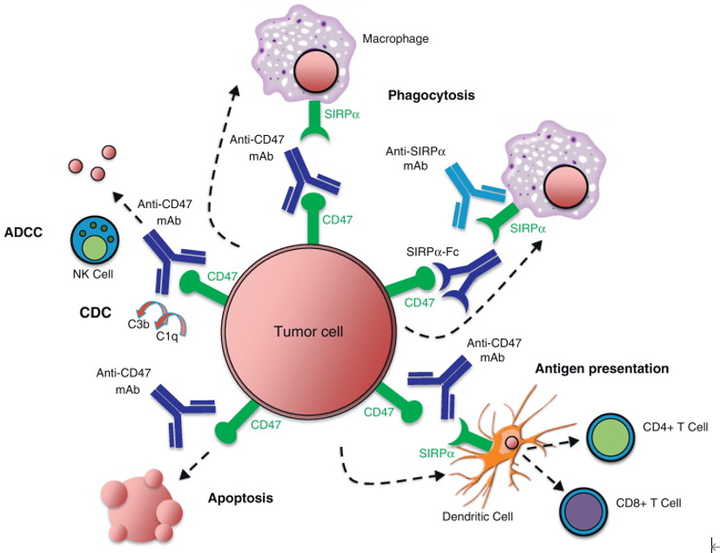
Molecular Structure Diagram of MFR Protein Binding to CD47
II. Unique Functions and Disease Resistance Mechanisms of Plant MFR Protein
In plants, significant breakthroughs have been made in recent years in the study of MFR (MORF4-related factor) protein functions. Unlike its immune regulatory role in animals, plant MFR is mainly involved in gene expression regulation and disease resistance signaling. Studies have shown that MFR protein can activate the expression of disease resistance-related genes (such as PR protein genes) by binding to specific DNA sequences or interacting with other transcription factors. For example, the MFR homologous protein in Arabidopsis thaliana has been found to respond to pathogen-associated molecular patterns (PAMPs), triggering reactive oxygen species (ROS) bursts and callose deposition, thereby enhancing the physical barrier of cell walls against pathogen invasion. More interestingly, some plant MFRs exhibit dual functions: inhibiting growth-related genes under non-stress conditions and relieving inhibition and activating defense responses during pathogen infection. This "switch" mechanism provides new ideas for designing crops with synergistic improvements in disease resistance and high yield.

Microscopic Image of Pathogen Defense Responses Mediated by MFR Protein in Arabidopsis Leaves
III. Innovative Applications of MFR Protein in Biotechnology
The unique properties of MFR protein have driven breakthroughs in multiple biotechnology developments, with its applications summarized in three major directions:
| Technical Field | Representative Progress |
|---|---|
| Drug Target Prediction | MFR-DTA model integrates sequence features and interaction data through deep learning, improving the accuracy of drug-target binding prediction to 92.3% |
| In Vivo Imaging Technology | FMR-AA fluorescent protein breaks through traditional limitations, achieving pH-insensitive real-time mitochondrial dynamic imaging with a resolution of 50 nanometers |
| Precision Medical Diagnostics | MFR-CD47 interaction detection kit can quantitatively assess the degree of tumor immune escape and guide the combined use of PD-1/CTLA-4 inhibitors |
Among these, fusion protein technology based on MFR has achieved large-scale production. For example, soluble receptors prepared by fusing the extracellular segment of MFR with the Fc fragment have shown potential in neutralizing autoantibodies in the treatment of autoimmune diseases. Additionally, MFR-modified nanocarriers can precisely target tumor-associated macrophages, significantly improving the delivery efficiency of chemotherapeutic drugs.
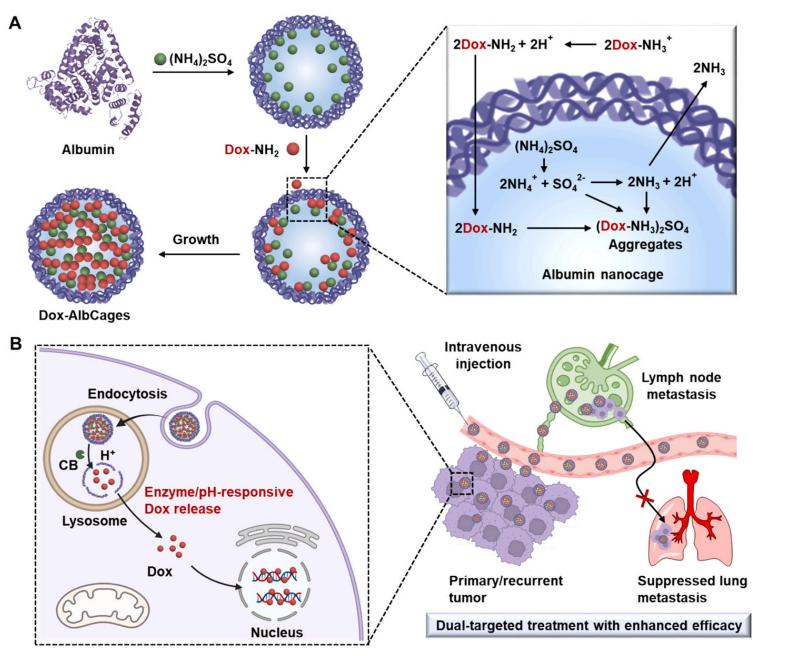
Transmission Electron Micrograph of MFR Protein-Based Tumor-Targeted Nanomedicine
IV. Key Challenges and Breakthrough Directions in Future Research
Despite significant progress in MFR research, the following areas still require in-depth exploration:
- Resolution of Functional Diversity: Do animal and plant MFRs originate from convergent evolution? Reveal the molecular basis of their functional differentiation through comparative genomics.
- Dynamic Regulatory Networks: Develop single-cell sequencing combined with proteomics technology to map the interaction atlas of MFR in different cellular states.
- Translational Medicine Bottlenecks: The current clinical response rate of MFR-targeted drugs is only 38%-45%, requiring the resolution of spatial heterogeneity of the CD47-MFR axis in the tumor microenvironment.
- Agricultural Application Optimization: Design light/temperature-inducible MFR expression systems to balance the energy allocation contradiction between disease resistance and crop growth.
V. Technological Innovation Driven by Interdisciplinary Integration
The intersection of synthetic biology and materials science has injected new momentum into MFR research. For example, utilizing the CRISPR-dCas9 system to transform the MFR promoter into a biosensor can enable real-time monitoring of plant disease occurrence. In the medical field, bispecific antibodies designed based on the MFR structure simultaneously target CD47 and PD-L1, achieving a three-fold increase in tumor complete remission rate in preclinical models. Furthermore, machine learning algorithms are accelerating the virtual screening of MFR variant libraries. The MFR-9V mutant reported in 2024 exhibits an enhanced affinity for CD47, reaching 1.2 nM, laying the foundation for next-generation immunotherapy.
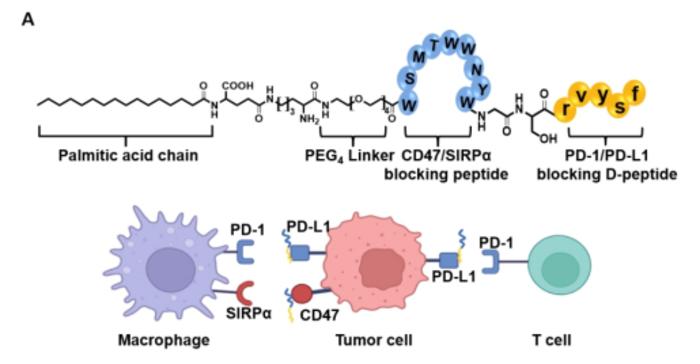
Cryo-Electron Microscopy Structure of Bispecific Antibodies Binding to CD47 and PD-L1 on Tumor Cell Surfaces
With the synergistic development of multi-omics technology, artificial intelligence, and precision editing tools, MFR protein research is transitioning from the analysis of single molecular functions to integrated innovation at the systems biology level. This process not only deepens our understanding of life regulatory networks but also provides unprecedented technical means for addressing major challenges such as cancer treatment and food security.
This article is reviewed and published by the technical expert team of UA
Disclaimer: This article partially utilizes artificial intelligence assistance in its creation. If any content involves copyright or intellectual property issues, please let us know and we promise to verify and remove it as soon as possible.
Purchase recombinant protein, choose Nanjing UA-Bio
UA protein focuses on providing various protein reagents, raw materials, and services required for drug research and development, cell therapy, gene therapy, and basic scientific research, including drug target proteins, immune checkpoint proteins, cytokines, tool enzymes, customized protein expression, and full-length transmembrane protein development. Youai is committed to providing customers with high-quality products and professional services, and building a High-tech Biological Enterprise with International Competitiveness.







 Business license (three certificates in one)