




CD22: A Key Alternative Target to Address CD19 Antigen Escape After CAR-T Therapy
Author: Senior Product Manager of UA Views:82 


Based on the clinical practice of CD19 CAR-T cell therapy, this article systematically elucidates the core mechanisms of antigen escape leading to relapse, analyzes the molecular characteristics and expression patterns of CD22 as another key surface antigen in the B-cell lineage, explores the value of CD22-targeted therapy and CD19/CD22 dual-target strategies in overcoming resistance, and introduces the detection application of fluorescent-labeled recombinant proteins.
- Recent Advances
- Product Information
Recent Advances
CD22: A Key Alternative Target to Address CD19 Antigen Escape After CAR-T Therapy
Summary: Based on the clinical practice of CD19 CAR-T cell therapy, this article systematically elaborates on the core mechanisms of antigen escape leading to relapse, analyzes the molecular characteristics and expression patterns of CD22 as another critical surface antigen in the B-cell lineage, explores the value of CD22-targeted therapy and CD19/CD22 dual-target strategies in overcoming resistance, and introduces the detection applications of fluorescently labeled recombinant proteins.
I. Breakthroughs and Relapse Challenges of CD19 CAR-T Therapy
CD19-targeted chimeric antigen receptor T-cell therapy has achieved revolutionary progress in the treatment of B-cell malignancies. Taking the PLAT-02 clinical trial conducted by Seattle Children's Hospital as an example, up to 93% of patients with relapsed or refractory B-cell acute lymphoblastic leukemia achieved good initial remission after receiving CD19 CAR-T cell therapy. This outstanding clinical response rate fully validates the core value of CD19 as a therapeutic target. However, long-term follow-up data reveal a harsh reality—approximately 50% of patients who achieved remission eventually experienced disease relapse. This relapse rate has been confirmed in multiple large-scale studies, showing that about 40% to 60% of patients fail to achieve durable remission. This clinical bottleneck has prompted researchers to delve into the molecular mechanisms of resistance and relapse.
II. Antigen Escape: A Core Mechanism of Relapse
Relapse after CAR-T therapy manifests in two primary patterns: CD19-positive relapse and CD19-negative relapse. The former is typically associated with insufficient persistence or functional exhaustion of CAR-T cells in vivo, while the latter involves a more fundamental tumor immune escape mechanism—antigen escape. Antigen escape refers to tumor cells that originally expressed CD19 downregulating or completely losing surface expression of the target antigen through various strategies, thereby successfully "evading" recognition and attack by CAR-T cells.
Studies have found that tumor cells can achieve CD19 antigen loss through multiple pathways, including selective splicing of exons encoding the CD19 epitope, gene mutations, and epigenetic silencing of expression. Particularly noteworthy is the discovery that some cancer cells originally expressing CD19 can switch to expressing CD22 protein as an alternative surface antigen under the persistent selective pressure of CAR-T cells. This phenomenon has been validated in leukemia cells from relapsed patients—some relapsed patients no longer exhibit CD19 protein expression, while CD22 protein shows positive expression. This antigen-switching mechanism highlights the high plasticity of B-cell malignancies under immune pressure and underscores the inherent limitations of single-target strategies.
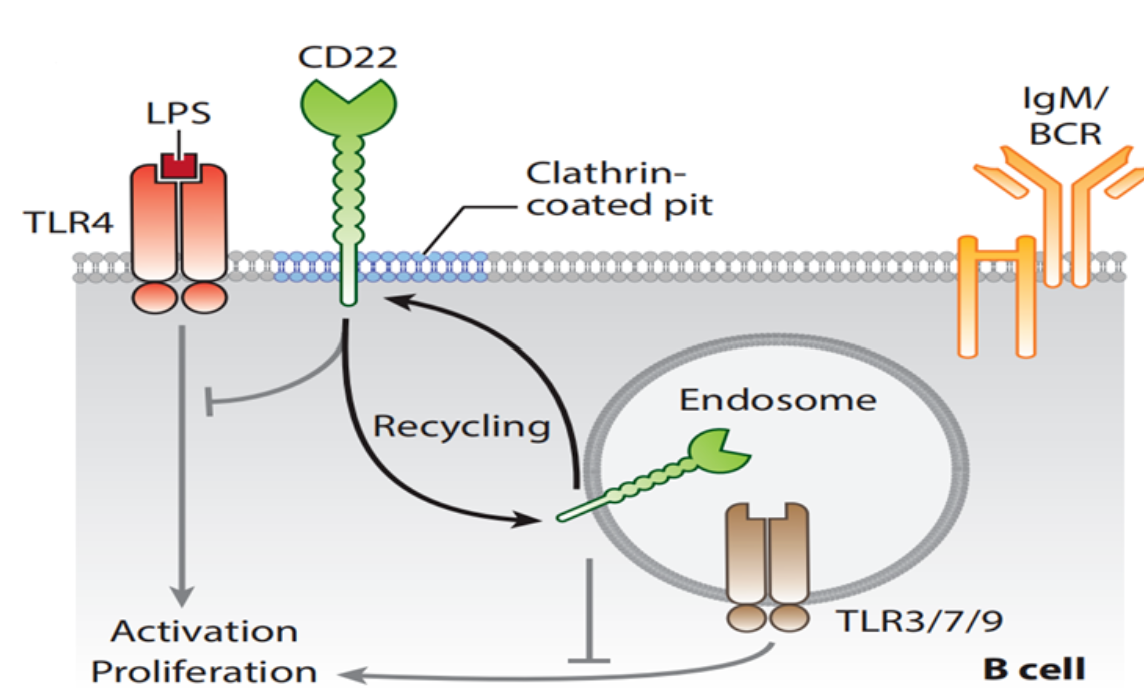
III. CD22: A Key Alternative Target in the B-Cell Lineage
CD22, also known as Siglec-2 (sialic acid-binding immunoglobulin-like lectin 2), is a transmembrane glycoprotein on the surface of B cells, belonging to the immunoglobulin superfamily and the Siglec family. The CD22 gene is located on human chromosome 19, and its encoded product includes seven immunoglobulin-like domains in the extracellular region, a transmembrane region, and an intracellular tail segment containing immunoreceptor tyrosine-based inhibitory motifs (ITIMs).
During B-cell development, CD22 is first expressed in the cytoplasm of pro-B cells and pre-B cells. As B cells mature into IgD+ cells, CD22 gradually appears on the cell surface. In normal B cells, CD22 functions as an inhibitory coreceptor—its intracellular ITIM motifs, when phosphorylated, can recruit the protein tyrosine phosphatase SHP-1, thereby inhibiting B-cell receptor-mediated signal transduction and playing a key regulatory role in establishing the signaling threshold for B-cell activation. Notably, CD22 and CD19 form a mutually restrictive balance in B-cell signaling regulation—CD19 regulates the phosphorylation state of CD22 by enhancing Lyn kinase activity, while CD22 inhibits the phosphorylation of CD19 through SHP-1.
In oncology, CD22 is expressed in leukemia blasts in over 90% of B-ALL cases, and its expression is relatively independent of CD19. This characteristic makes CD22 a crucial alternative target for patients who relapse due to antigen escape after CD19 CAR-T therapy.
IV. Clinical Exploration of CD22 Targeting and Dual-Target Strategies
Given the widespread expression of CD22 in B-cell malignancies and its relative independence from CD19 expression, multiple CD22-targeted immunotherapy strategies have been actively developed. In the field of antibody-drug conjugates, Inotuzumab ozogamicin has been approved by the FDA for the treatment of relapsed/refractory B-ALL. In CAR-T cell therapy, early clinical trials of CD22 CAR-T have shown encouraging efficacy, with overall response rates exceeding 70%. However, single-target CD22 CAR-T also faces the challenge of secondary resistance due to antigen downregulation or loss.
To overcome the limitations of single-target antigen escape, CD19/CD22 dual-targeting strategies have emerged as a current research hotspot. Preclinical studies have confirmed that bispecific CAR-T cells targeting both CD19 and CD22 can effectively eliminate CD19 single-positive, CD22 single-positive, and double-positive tumor cells, significantly delaying resistant relapse and improving survival in animal models. Clinically, multiple CD19/CD22 dual-target CAR-T products have demonstrated good safety and antitumor activity in B-ALL and non-Hodgkin lymphoma, with overall response rates reaching 65% to 80%. Although dual-target strategies significantly reduce the relapse rate associated with antigen escape, the long-term in vivo persistence of CAR-T cells remains a key factor affecting long-term efficacy.
V. Conclusion
The clinical success of CD19 CAR-T cell therapy marks a new era in cancer immunotherapy, but the relapse rate of nearly 50% highlights the inherent limitations of single-target strategies. The mechanism by which tumor cells achieve immune escape through antigen loss or switching has prompted researchers to turn to alternative targets such as CD22 and CD19/CD22 dual-targeting strategies. CD22, with its widespread expression in the B-cell lineage and relative independence from CD19 expression, has become a key target for addressing CD19 escape relapse. Univ offers PE-Labeled Siglec-2/CD22 His&Avi Tag Protein, Human. This product, with its precise molecular design, uniformity ensured by site-specific labeling technology, and the high brightness of PE dye, provides a stable and reliable detection tool for CD22-related CAR-T cell screening, targeted drug binding activity analysis, and clinical translation research of dual-target strategies.
This article is reviewed and published by the technical expert team of UA
Disclaimer: This article partially utilizes artificial intelligence assistance in its creation. If any content involves copyright or intellectual property issues, please let us know and we promise to verify and remove it as soon as possible.
Purchase recombinant protein, choose Nanjing UA-Bio
UA protein focuses on providing various protein reagents, raw materials, and services required for drug research and development, cell therapy, gene therapy, and basic scientific research, including drug target proteins, immune checkpoint proteins, cytokines, tool enzymes, customized protein expression, and full-length transmembrane protein development. Youai is committed to providing customers with high-quality products and professional services, and building a High-tech Biological Enterprise with International Competitiveness.
Target proteins | membrane proteins | cytokines | enzymes | viral antigens | protein customization
Nanjing UA Biotechnology Co., Ltd. Email:order@ua-bio.com Phone:+86-25-56221161

Product Information

Link:





©2021-2026 all rights reserved UA Biotechnology Co.,Ltd.
Privacy Policy 
网站备案号 浙ICP备2022019033号-2 浙公网安备33010202004867号
 Business license (three certificates in one)
 Tel:+86-25-56221161
E-mail:order@ua-bio.com
All products sold on this website shall not be used for clinical diagnosis or treatment of humans or animals, and shall only be used for non-medical purposes such as industrial or scientific research.
