




Dual-target CAR-T strategy: A breakthrough solution to address antigen escape in B-cell malignancies
Author: Senior Product Manager of UA Views:108 


Based on the fundamental principles of chimeric antigen receptor T-cell (CAR-T) therapy, this article systematically elaborates on the challenges of antigen escape faced by single-target CAR-T in B-cell malignancies. It analyzes the complementary expression patterns and clinical evidence of CD19 and CD22 as targeting antigens for B-cell lineage tumors, and explores the theoretical basis and clinical translation prospects of the CD19/CD22 dual-targeting strategy in overcoming drug resistance and prolonging disease control duration.
- Recent Advances
- Product Information
Recent Advances
Dual-Target CAR-T Strategy: A Breakthrough Approach to Address Antigen Escape in B-Cell Malignancies
Summary: Based on the fundamental principles of chimeric antigen receptor T-cell (CAR-T) therapy, this article systematically elaborates on the challenges of antigen escape faced by single-target CAR-T in B-cell malignancies. It analyzes the complementary expression characteristics and clinical evidence of CD19 and CD22 as B-lineage tumor-targeting antigens and explores the theoretical foundation and clinical translation prospects of the CD19/CD22 dual-targeting strategy in overcoming drug resistance and prolonging disease control.
I. Basic Principles and Structural Analysis of CAR-T Therapy.
Chimeric antigen receptor T-cell therapy is one of the most groundbreaking technologies in the field of tumor immunotherapy. Its fundamental principle involves genetically engineering T cells isolated from the patient's peripheral blood in vitro—by introducing genes encoding chimeric antigen receptors through viral or non-viral vectors, enabling the T cells to express receptor proteins on their surface that can specifically recognize tumor cell surface antigens. These "reprogrammed" T cells are expanded in vitro to therapeutic doses and then reinfused into the patient, where they can recognize and kill tumor cells expressing the corresponding antigens in a major histocompatibility complex-independent manner. The extracellular antigen-binding domain of the CAR molecule determines targeting specificity, while the transmembrane and intracellular signaling domains initiate T-cell activation, proliferation, and effector functions upon antigen recognition, ultimately achieving precise tumor clearance.
II. Clinical Success and Challenges of Single-Target CAR-T.
Currently, CAR-T products targeting a single antigen have achieved milestone clinical efficacy in hematologic malignancies. However, long-term follow-up data reveal a harsh reality: despite extremely high initial response rates, a significant proportion of patients eventually experience disease relapse. In B-ALL, approximately 30%-50% of patients who achieve complete remission relapse within one year after CAR-T infusion. One of the primary mechanisms of this relapse is antigen escape—where tumor cells reduce or completely lose surface expression of the targeted antigen through alternative splicing, gene mutations, or epigenetic silencing, thereby successfully "evading" recognition and attack by CAR-T cells. Consequently, antigen modulation leading to limited duration of efficacy has become the core bottleneck restricting the long-term effectiveness of single-target CAR-T and a major mechanism of drug resistance and treatment failure.
III. CD19 and CD22: Complementary Targeting Antigens in B-Cell Malignancies.
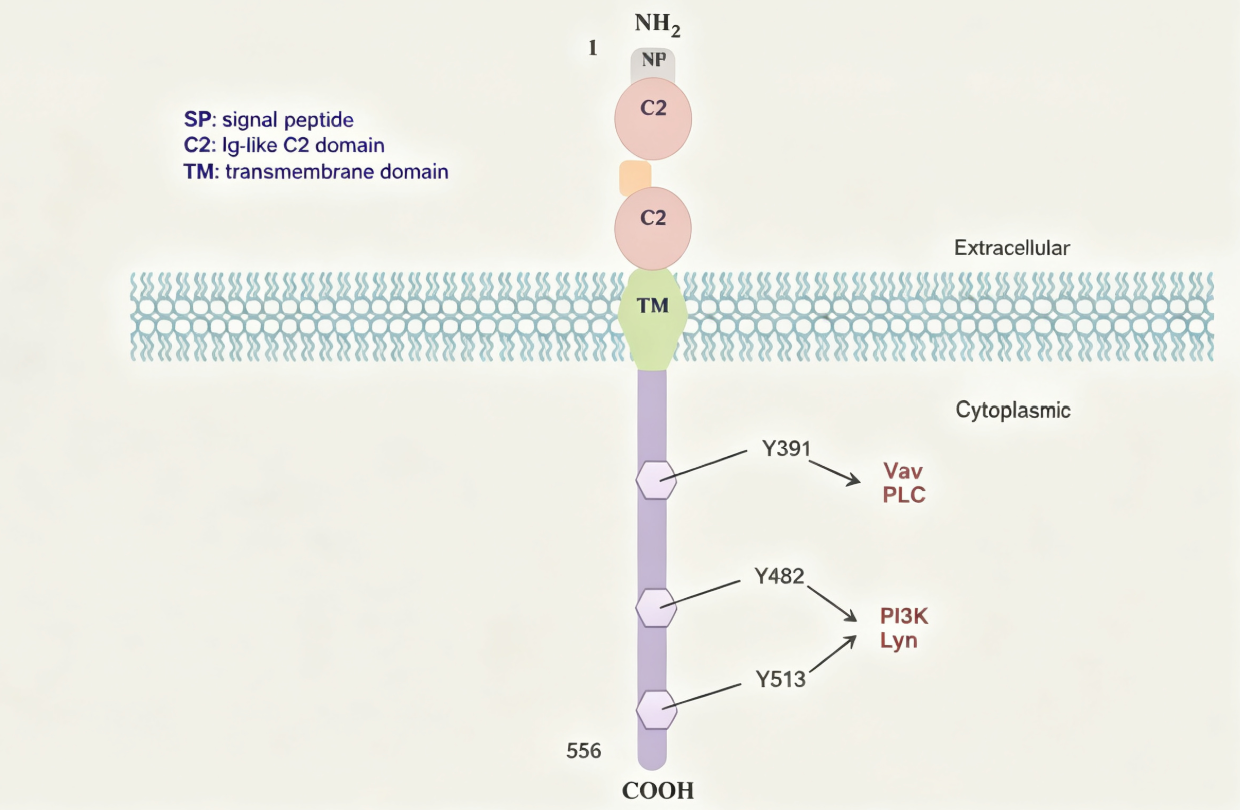
To overcome relapse caused by single-antigen escape, researchers have turned their attention to a second antigen that complements the expression of the primary target in malignancies of the same lineage. In B-cell tumors, CD19 and CD22 constitute the most classic complementary target pair. CD19 is a cell surface molecule widely expressed in the B-lymphocyte lineage, persistently expressed from the pro-B cell stage to mature B cells, and positive in the vast majority (over 95%) of B-ALL cases. It is also the targeting antigen for several marketed CAR-T products. CD22 (also known as Siglec-2) is another B-cell differentiation antigen, expressed in approximately 60%-70% of B-cell lymphomas and leukemias, with expression independent of CD19—clinical observations show that some patients who relapse after CD19 CAR-T therapy due to CD19 loss still retain CD22 expression in their tumor cells.
More importantly, CD19 and CD22 play opposing functional roles in the B-cell receptor signaling pathway—CD19 is a co-receptor that enhances signaling, while CD22 is a co-receptor that inhibits signaling. Their expression regulation is mutually constrained, making it difficult for tumor cells to lose both molecules simultaneously without severely affecting their survival signals. Therefore, the CD19/CD22 dual-targeting strategy is expected to retain the high efficacy of single-target CD19 while covering cases of resistant relapse caused by antigen escape, significantly prolonging disease control.
IV. Preclinical and Clinical Evidence for Dual-Target CAR-T.
Preclinical studies have shown that bispecific CAR-T or tandem dual-target CAR-T simultaneously targeting CD19 and CD22 can effectively kill CD19 single-positive, CD22 single-positive, and double-positive tumor cells in vitro and eliminate antigen-loss variants resistant to single-target CAR-T. In animal models, dual-target CAR-T delayed tumor relapse and improved survival compared to single-target CAR-T. In clinical studies, several CD19/CD22 dual-target CAR-T products have undergone Phase I/II trials in B-ALL and non-Hodgkin lymphoma. One clinical study demonstrated that CD19/CD22 dual-target CAR-T achieved an overall response rate of over 85% in pediatric and young adult B-ALL patients, with prolonged duration of response compared to historical single-target data, without significantly increasing safety risks. These data provide strong evidence supporting the clinical application of the dual-target strategy. Although the dual-target approach significantly reduces the relapse rate associated with antigen escape, the long-term persistence of CAR-T cells in vivo remains a key factor affecting long-term efficacy and requires further optimization in subsequent studies.
V. Conclusion.
The breakthrough efficacy of single-target CAR-T therapy in B-cell malignancies has been widely demonstrated, but antigen escape-induced drug resistance and relapse remain the core obstacles limiting its long-term benefits. CD19 and CD22 exhibit complementary and relatively independent expression characteristics in B-lineage tumors, and tumor cells find it difficult to lose both molecules critical for B-cell survival signals simultaneously, providing a solid theoretical foundation for the CD19/CD22 dual-targeting strategy. U-Health offers FITC-Labeled CD19 Fc Chimera Protein, Human. With its precise molecular design, dimerization advantages conferred by the Fc tag, and the high brightness and stability of FITC dye, this product provides a reliable detection tool for target validation, CAR-positive rate detection, and flow cytometry analysis in CD19 single-target and CD19/CD22 dual-target CAR-T research.
This article is reviewed and published by the technical expert team of UA
Disclaimer: This article partially utilizes artificial intelligence assistance in its creation. If any content involves copyright or intellectual property issues, please let us know and we promise to verify and remove it as soon as possible.
Purchase recombinant protein, choose Nanjing UA-Bio
UA protein focuses on providing various protein reagents, raw materials, and services required for drug research and development, cell therapy, gene therapy, and basic scientific research, including drug target proteins, immune checkpoint proteins, cytokines, tool enzymes, customized protein expression, and full-length transmembrane protein development. Youai is committed to providing customers with high-quality products and professional services, and building a High-tech Biological Enterprise with International Competitiveness.
Target proteins | membrane proteins | cytokines | enzymes | viral antigens | protein customization
Nanjing UA Biotechnology Co., Ltd. Email:order@ua-bio.com Phone:+86-25-56221161

Product Information

Link:





©2021-2026 all rights reserved UA Biotechnology Co.,Ltd.
Privacy Policy 
网站备案号 浙ICP备2022019033号-2 浙公网安备33010202004867号
 Business license (three certificates in one)
 Tel:+86-25-56221161
E-mail:order@ua-bio.com
All products sold on this website shall not be used for clinical diagnosis or treatment of humans or animals, and shall only be used for non-medical purposes such as industrial or scientific research.
