




CD3E/CD3G heterodimer: The structural basis of TCR-CD3 complex and a key target for antibody drug development
Author: Senior Product Manager of UA Views:52 


This article systematically elucidates the molecular basis of CD3E and CD3G forming heterodimers, their core functions in the assembly and signal transduction of the TCR-CD3 complex, and analyzes the necessity of their heterodimeric conformation under physiological conditions as well as its decisive impact on therapeutic antibody recognition.
- Recent Advances
- Product Information
Recent Advances
CD3E/CD3G Heterodimer: The Structural Basis of TCR-CD3 Complex and a Key Target for Antibody Drug Development
Summary
This article systematically elaborates on the molecular basis of CD3E and CD3G forming heterodimers and their core functions in the assembly and signal transduction of TCR-CD3 complexes. It analyzes the necessity of their heterodimeric conformation under physiological conditions and its decisive impact on therapeutic antibody recognition.
This article systematically elaborates on the molecular basis of CD3E and CD3G forming heterodimers and their core functions in the assembly and signal transduction of TCR-CD3 complexes. It analyzes the necessity of their heterodimeric conformation under physiological conditions and its decisive impact on therapeutic antibody recognition.
I. Composition of TCR-CD3 Complex and Classification of CD3 Subunits
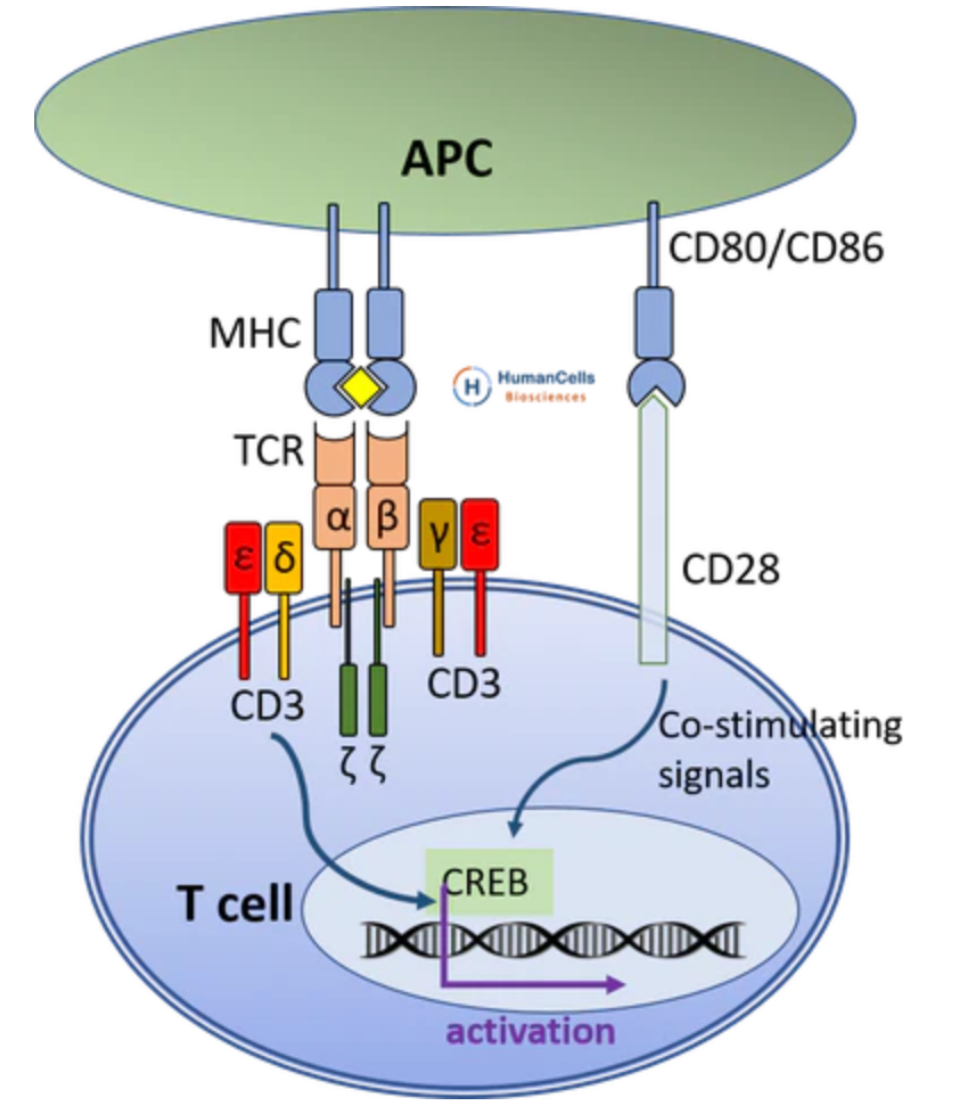
The T cell receptor (TCR) is the core molecule for T cells to recognize antigens and initiate adaptive immune responses, but it lacks transmembrane signal transduction capability. This function is carried out by the CD3 molecule family. CD3 is a group of type I transmembrane proteins found on the surface of T cells, consisting of four subtypes—CD3D (CD3δ), CD3E (CD3ε), CD3G (CD3γ), and CD3Z (CD3ζ). These subunits bind non-covalently to the TCR α and β chains (or γ and δ chains in γδ T cells) to form a structurally intact and functionally coordinated TCR-CD3 complex.
In the assembly pattern of the complex, CD3D and CD3E exist as heterodimers, CD3G and CD3E form another set of heterodimers, while CD3Z exists as a homodimer. Thus, CD3E is the key node connecting different CD3 subunits to form functional dimers. CD3D/CD3E and CD3G/CD3E heterodimers preferentially associate with the TCRα chain and TCRβ chain, respectively, forming a hexameric TCR-CD3 complex that interacts with the CD3Z homodimer.
II. Core Functions of CD3E/CD3G Heterodimer in T Cell Signal Initiation
The CD3E/CD3G heterodimer is not only the structural backbone maintaining the conformational stability of the TCR-CD3 complex but also the functional module for signal transduction from the extracellular to intracellular domains. All CD3 chains contain immunoreceptor tyrosine-based activation motifs (ITAMs) in their cytoplasmic tails, which are the initiation sites for T cell signal transduction.
When the specific MHC-peptide complex presented on the surface of antigen-presenting cells binds to the TCR, conformational changes are transmitted through CD3 subunits to the intracellular region. Upon antigen stimulation, Src family protein tyrosine kinases (such as LCK and FYN) phosphorylate tyrosine residues in the ITAMs of the CD3 complex, providing binding sites for proteins with SH2 domains (e.g., ZAP-70). Subsequently, a series of downstream signaling molecules are recruited and activated, initiating multiple signaling pathways such as MAPK, NF-κB, and NFAT, ultimately driving T cell proliferation, differentiation, cytokine secretion, and effector functions. Thus, the CD3E/CD3G heterodimer constitutes the primary signaling hub in the T cell activation cascade.
III. Decisive Impact of Heterodimeric Conformation on Therapeutic Antibody Recognition
In the field of antibody drug development, particularly in the development of T cell-redirecting bispecific antibodies, CD3 is one of the most prominent targets. When discussing targeting CD3, it strictly refers to targeting human CD3E antigen (UniProt ID: P07766). However, under physiological conditions, CD3 antigens on the T cell surface exist as CD3D/CD3E and CD3G/CD3E heterodimers, making it essential to emphasize this characteristic of CD3E.
Studies have confirmed that the molecular weights of the two subunits of CD3 heterodimers are very similar, making it easy for them to form homodimers during co-expression, which poses technical challenges in preparing heterodimeric proteins with correct conformations. More critically, the majority of therapeutic anti-CD3 antibodies (such as OKT3 and UCHT1) recognize CD3E in its natural heterodimeric conformation with CD3D or CD3G, rather than isolated CD3E monomers. Patent literature explicitly states that only when CD3E and CD3G form dimers do they become immunogenic and can be bound by OKT3, whereas isolated CD3E or CD3G cannot be bound by OKT3. Similarly, UCHT1 can only recognize the heterodimeric conformations of CD3E/CD3D or CD3E/CD3G, and cannot bind to isolated CD3E ECD, CD3D ECD, or CD3G ECD.
This characteristic dictates that during the screening, evaluation, and quality control of CD3-targeting drugs, recombinant proteins that accurately mimic the natural CD3E/CD3G heterodimeric conformation must be used as research tools, rather than simple single-subunit proteins. Due to the flexibility of proteins, the spatial structure of CD3E in its monomeric state differs from that when it interacts with other proteins (heterodimeric state), further highlighting the necessity of using correctly conformed heterodimeric proteins for research.
IV. Structural Design and Application Value of Recombinant Human CD3E&CD3G Heterodimeric Protein
To meet the aforementioned research and drug development needs, recombinant protein technology can be employed to construct tool molecules that precisely mimic the natural human CD3E/CD3G heterodimeric conformation. The core design involves co-expressing the extracellular domains of human CD3E (typically spanning from aspartic acid at position 23 to aspartic acid at position 126, UniProt P07766) and CD3G (typically spanning from glutamine at position 23 to serine at position 116, UniProt P09693), using Fc fragments to drive the formation of 1:1 heterodimeric complexes.
Key design elements of this product include: incorporating different affinity tags (e.g., His tag and Flag tag) on the Fc fragments of CD3E and CD3G, respectively, to effectively remove homodimeric impurities through two-step affinity chromatography, ensuring heterodimer purity exceeds 95%. This design addresses the technical challenge of CD3E and CD3G easily forming homodimers during co-expression due to their similar molecular weights. The product is typically prepared using the HEK293 cell expression system, maximizing the retention of the native protein's conformational integrity and glycosylation modifications. Validations show that this heterodimeric protein can specifically bind to anti-CD3 monoclonal antibodies (such as OKT3 and UCHT1), with activity quality-controlled via ELISA (e.g., EC50 reaching 1.22 μg/mL or 22.4 ng/mL levels).
V. Conclusion
CD3E and CD3G form an indispensable structural and functional module in the TCR-CD3 complex through their heterodimeric conformation, providing the initiation platform for signal transduction following TCR antigen recognition. The dependence of therapeutic anti-CD3 antibodies on the native heterodimeric conformation necessitates the use of recombinant protein tools that accurately mimic this conformation in related drug development. The CD3E&CD3G heterodimeric protein, prepared via HEK293 cell co-expression, plays a pivotal role as a research tool in T cell immunology studies, antibody screening, and bispecific drug development, owing to its clear molecular design, dual-tag-assisted purification strategy, and stringent quality control. Uni offers CD3E&CD3G Heterodimer, Fc, His Tag&Fc, Flag Tag Protein, Human, which can be used for binding activity and affinity measurements of bispecific antibodies, anti-CD3 antibody screening and epitope analysis, as well as fundamental and applied research on T cell activation mechanisms.
```
This article is reviewed and published by the technical expert team of UA
Disclaimer: This article partially utilizes artificial intelligence assistance in its creation. If any content involves copyright or intellectual property issues, please let us know and we promise to verify and remove it as soon as possible.
Purchase recombinant protein, choose Nanjing UA-Bio
UA protein focuses on providing various protein reagents, raw materials, and services required for drug research and development, cell therapy, gene therapy, and basic scientific research, including drug target proteins, immune checkpoint proteins, cytokines, tool enzymes, customized protein expression, and full-length transmembrane protein development. Youai is committed to providing customers with high-quality products and professional services, and building a High-tech Biological Enterprise with International Competitiveness.
Target proteins | membrane proteins | cytokines | enzymes | viral antigens | protein customization
Nanjing UA Biotechnology Co., Ltd. Email:order@ua-bio.com Phone:+86-25-56221161

Product Information

Link:





©2021-2026 all rights reserved UA Biotechnology Co.,Ltd.
Privacy Policy 
网站备案号 浙ICP备2022019033号-2 浙公网安备33010202004867号
 Business license (three certificates in one)
 Tel:+86-25-56221161
E-mail:order@ua-bio.com
All products sold on this website shall not be used for clinical diagnosis or treatment of humans or animals, and shall only be used for non-medical purposes such as industrial or scientific research.
