




IFN Family Proteins: Viruses Tremble in Fear, Tumors Flee in Terror


Interferon (IFN) is a class of cytokines with antiviral, immunomodulatory, and antitumor activities. Based on structural, receptor, and functional differences, IFNs are primarily categorized into Type I, Type II, and Type III. Additionally, the recently discovered Type IV IFN (IFN-λ4) has garnered attention.
- Recent Advances
- Product Information
Interferon (IFN): A Comprehensive Overview
Interferon (IFN) is a class of cytokines with antiviral, immunomodulatory, and antitumor activities. Based on structural, receptor, and functional differences, IFNs are primarily categorized into Type I, Type II, and Type III. Additionally, the recently discovered Type IV IFN (IFN-λ4) has garnered attention.
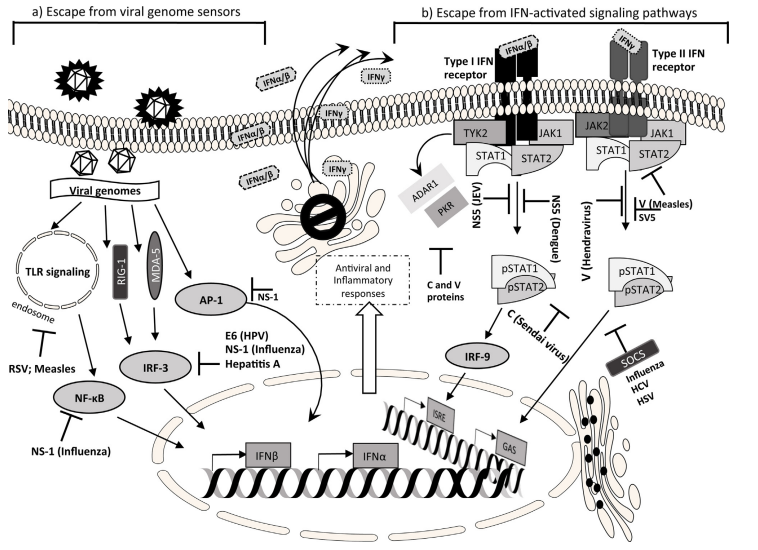
Simplified Diagram of Virus-Blocking IFN Signaling Pathway
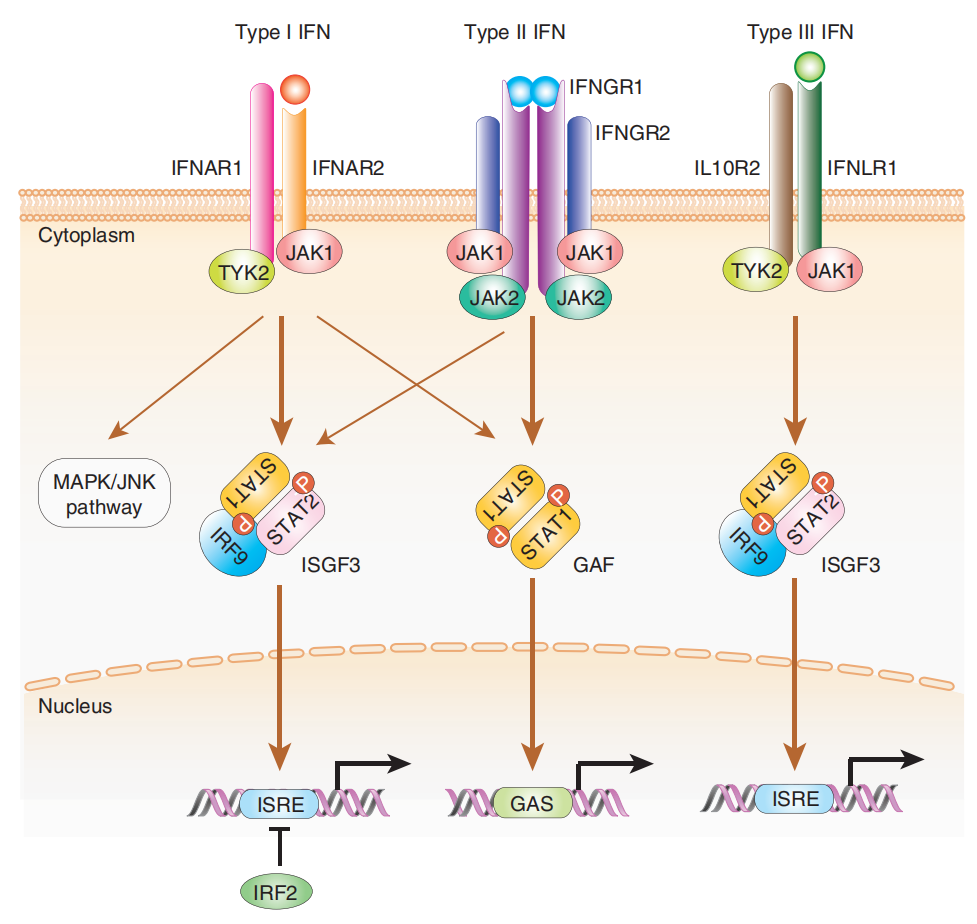
Simplified Diagram of Immunomodulatory IFN Signaling Pathway
Type I Interferons (Type I IFNs)
Type I IFNs constitute the largest IFN family, comprising IFN-α, IFN-β, IFN-ω, IFN-ε, and IFN-κ, which function via the IFNAR1/IFNAR2 receptor complex.
Key Members and Their Functions
IFN-α (13 subtypes):
- Antiviral Activity: Induces hundreds of interferon-stimulated genes (ISGs) to inhibit viral replication.
- Immunomodulation: Activates dendritic cells (DCs), NK cells, and T cells, enhancing antigen presentation.
- Clinical Applications: Treats chronic hepatitis B, multiple sclerosis, and certain cancers (e.g., hairy cell leukemia).
IFN-β:
- Neuroprotection: Inhibits inflammatory demyelination; first-line therapy for multiple sclerosis (MS).
- Antiviral Activity: Stronger paracrine signaling than IFN-α.
IFN-ω:
- Functions similarly to IFN-α but is specifically expressed during certain viral infections (e.g., HIV).
IFN-ε/IFN-κ:
- Mucosal Immunity: IFN-ε is constitutively expressed in genital mucosa, providing basal antiviral defense; IFN-κ is produced by keratinocytes and participates in skin immunity.
Type II Interferon (Type II IFN)
Comprising solely IFN-γ, which acts via the IFNGR1/IFNGR2 receptor, primarily produced by activated T cells, NK cells, and macrophages.
Functions of IFN-γ
Core of Immune Regulation:
- Activates macrophages to promote pathogen clearance (e.g., Mycobacterium tuberculosis).
- Enhances MHC I/II expression, bridging innate and adaptive immunity.
Antitumor Activity:
- Inhibits angiogenesis and promotes tumor cell apoptosis.
Double-Edged Sword in Inflammation:
- Overproduction may lead to autoimmune diseases (e.g., rheumatoid arthritis).
Type III Interferons (Type III IFNs, IFN-λ)
Including IFN-λ1 (IL-29), IFN-λ2 (IL-28A), IFN-λ3 (IL-28B), and IFN-λ4, functioning via the IFNLR1/IL10R2 receptor, mainly expressed in mucosal epithelial cells.
Functional Characteristics
Mucosal-Specific Defense:
- Efficient antiviral activity in respiratory, intestinal, and hepatic tissues (e.g., HCV, influenza) with fewer inflammatory side effects than Type I IFNs.
Controversy over IFN-λ4:
- Some individuals lack functional IFN-λ4 due to genetic mutations, correlating with spontaneous hepatitis C clearance.
Other IFN-Related Molecules
Limitin:
- A Type I IFN analog discovered in mice with antiviral and B cell-suppressive functions.
Non-Canonical IFNs:
- e.g., IFN-ζ (specifically expressed in mammalian placenta); functions under investigation.
Through multi-layered immune regulation, the IFN family serves as a critical target in the treatment of infections, tumors, and autoimmune diseases. As precision medicine advances, their therapeutic potential will continue to expand.
References
Pestka, S. (2007). The interferon receptors. Springer.
Lazear, H. M. (2019). Immunity.
Maria Rosaria Capobianchi; Elena Uleri; Claudia Caglioti; Antonina Dolei. (2015). Type I IFN family members: Similarity,
differences and interaction. Cytokine & Growth Factor Reviews.
Hideo Negishi, Tadatsugu Taniguchi, Hideyuki Yanai. (2018). The Interferon (IFN) Class of Cytokines and the IFN
Regulatory Factor (IRF) Transcription Factor Family. Cold Spring Harbor Laboratory Press.
This article is reviewed and published by the technical expert team of UA
Disclaimer: This article partially utilizes artificial intelligence assistance in its creation. If any content involves copyright or intellectual property issues, please let us know and we promise to verify and remove it as soon as possible.
Purchase recombinant protein, choose Nanjing UA-Bio
UA protein focuses on providing various protein reagents, raw materials, and services required for drug research and development, cell therapy, gene therapy, and basic scientific research, including drug target proteins, immune checkpoint proteins, cytokines, tool enzymes, customized protein expression, and full-length transmembrane protein development. Youai is committed to providing customers with high-quality products and professional services, and building a High-tech Biological Enterprise with International Competitiveness.







 Business license (three certificates in one)