




Dengue virus NS1 protein: Uncovering the key to virus pathogenesis and the hope of antibody therapy


The NS1 protein of dengue virus is the key to its pathogenesis, and the discovery of 2B7 antibodies provides new hope for blocking the destructive effect of this protein. This study not only deepens our understanding of the pathogenic mechanism of dengue virus, but also opens up new avenues for the development of more effective therapeutic drugs and vaccines.
- Recent Advances
- Product Information
Dengue virus NS1 protein: Uncovering the key to virus pathogenesis and the hope of antibody therapy
Dengue Virus (DENV) is a widely spread flavivirus that causes tens of millions of people to be infected every year, and severe dengue fever is particularly dangerous. In recent years, scientists have discovered an antibody called 2B7 that blocks the pathogenic ability of the dengue virus, a breakthrough research that brings new hope to develop effective therapeutic drugs and vaccines. The key to all this is closely related to the non-structural protein 1 (NS1) of dengue virus.
NS1 protein: the core of virus pathogenicity
The NS1 protein is a key nonstructural protein of dengue viruses and plays an important role in viral replication and pathogenicity. In the acute phase of infection, NS1 protein will be secreted into the patient's blood, becoming an important marker for the early diagnosis of dengue fever. However, the role of NS1 protein goes far beyond that.
Studies have shown that NS1 protein can interact with the endothelial cells of the host cell, disrupting the connection between the endothelial cells, thereby increasing blood vessel permeability. This damage can lead to blood vessel leakage and is one of the typical symptoms of severe dengue fever. In addition, the NS1 protein may also help the virus pass through the endothelial barrier, infect and damage target organs.
2B7 antibody: blocking the "destructive power" of NS1 protein
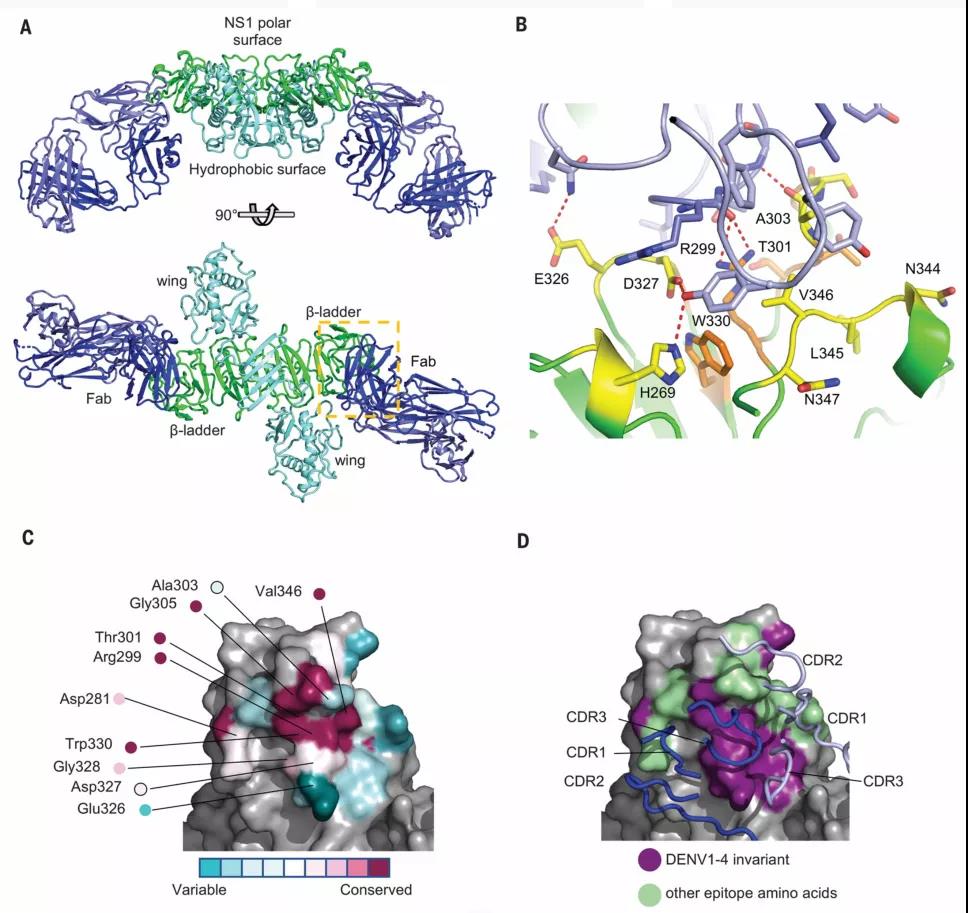
In a study published in the journal Science, scientists revealed how 2B7 antibodies neutralize the pathogenic ability of dengue viruses by targeting the NS1 protein. The study found that there is a specific region in the NS1 protein, the wing region, which enables NS1 to connect to the host cell and trigger destructive events. The 2B7 antibody can accurately attach to this area, preventing the interaction between NS1 protein and endothelial cells, thereby protecting the cells from damage.
The mechanism of action of this antibody is very unique. It not only prevents virus pathogenic by blocking the activity of NS1 protein, but also avoids the phenomenon of antibody-dependent enhancement (ADE). ADE refers to the fact that some antibodies bind to the virus, which will enhance the virus's ability to infect. However, the 2B7 antibody binds only to the NS1 protein and does not bind to the virus particle itself, thus not causing ADE.
New hope for treatment and vaccine development
This study not only reveals the pathogenic mechanism of NS1 protein, but also provides new ideas for the development of therapeutic drugs and vaccines for dengue fever. Because the NS1 protein is conservative among a variety of flaviviruses, the 2B7 antibody may also have potential therapeutic effects on other flaviviruses (such as Zika virus, West Nile virus, etc.). Furthermore, the cross-reactivity of this antibody provides the possibility for the development of broad-spectrum antiflavivirus drugs.
Conclusion
The NS1 protein of dengue virus is the key to its pathogenesis, and the discovery of 2B7 antibodies provides new hope for blocking the destructive effect of this protein. This study not only deepens our understanding of the pathogenic mechanism of dengue virus, but also opens up new avenues for the development of more effective therapeutic drugs and vaccines.
This article is reviewed and published by the technical expert team of UA
Disclaimer: This article partially utilizes artificial intelligence assistance in its creation. If any content involves copyright or intellectual property issues, please let us know and we promise to verify and remove it as soon as possible.
Purchase recombinant protein, choose Nanjing UA-Bio
UA protein focuses on providing various protein reagents, raw materials, and services required for drug research and development, cell therapy, gene therapy, and basic scientific research, including drug target proteins, immune checkpoint proteins, cytokines, tool enzymes, customized protein expression, and full-length transmembrane protein development. Youai is committed to providing customers with high-quality products and professional services, and building a High-tech Biological Enterprise with International Competitiveness.







 Business license (three certificates in one)