




Ubiquitin-Proteasome Pathway: New Hope for Disease Treatment


The Ubiquitin-Proteasome Pathway (UPP) is an important mechanism for intracellular protein degradation and is involved in regulating a variety of key life activities, such as cell proliferation, differentiation, apoptosis, DNA repair, etc.
- Recent Advances
- Product Information
Ubiquitin-Proteasome Pathway: New Hope for Disease Treatment
The Ubiquitin-Proteasome Pathway (UPP) is an important mechanism for intracellular protein degradation and is involved in regulating a variety of key life activities, such as cell proliferation, differentiation, apoptosis, DNA repair, etc. In recent years, abnormalities in this pathway have been closely related to the occurrence and development of a variety of diseases, including neurodegenerative diseases (such as Alzheimer's disease, Huntington's disease), cancer, cardiovascular disease, and respiratory diseases. Therefore, the ubiquitin-proteasome pathway has become an important target for drug development.
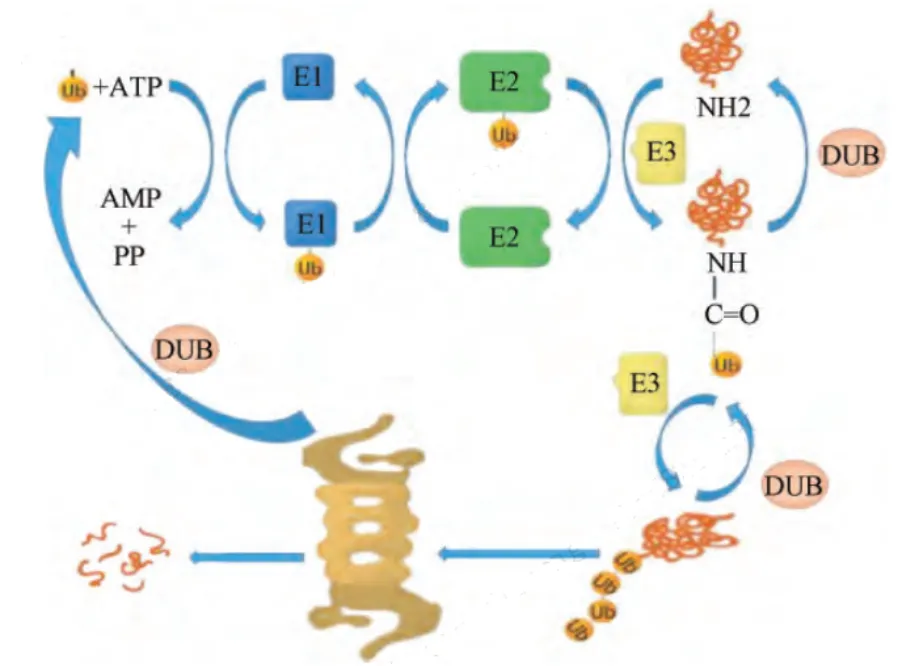
Composition and mechanism of action of the ubiquitin-proteasome pathway
The ubiquitin-proteasome pathway involves the synergistic action of multiple enzymes, mainly including ubiquitin activating enzyme E1, ubiquitin conjugating enzyme E2, ubiquitin ligase E3, and proteasomes. These enzymes covalently link ubiquitin to substrate proteins through cascade reactions to form polyubiquitin chains, and then the proteasome recognizes and degrades these labeled proteins. In addition, deubiquitinating enzymes (DUBs) can remove ubiquitin from proteins, thereby regulating protein stability and function.
Ubiquitin-proteasome pathway and disease
Neurodegenerative diseases: In Alzheimer's disease, abnormal accumulation of β-amyloid protein and hyperphosphorylated Tau protein is one of the main pathological features. Dysfunction of the ubiquitin-proteasome system prevents these proteins from being effectively degraded, forming toxic aggregates inside and outside the cell. Similarly, in Huntington's disease, the misfolding and accumulation of mutant huntingtin protein (mHTT) are also related to abnormalities in the ubiquitin-proteasome pathway.
Cancer: The ubiquitin-proteasome pathway affects the survival of tumor cells by regulating the degradation of tumor suppressor proteins (such as p53) or blocking the degradation of oncogenic proteins. For example, the proteasome inhibitor bortezomib blocks the NF-κB pathway of tumor cells by stabilizing tumor suppressor proteins such as p53, thereby inducing tumor cell apoptosis.
Drug development progress
Proteasome inhibitors: Bortezomib is the first FDA-approved proteasome inhibitor for the treatment of multiple myeloma. However, single-drug treatment has the problem of drug resistance, so second-generation proteasome inhibitors such as carfizomib and ixazomib have also been clinically approved.
Deubiquitinase inhibitors: Deubiquitinase inhibitors inhibit the activity of DUBs and increase the accumulation of polyubiquitinated modified proteins, thereby blocking the cell cycle and inhibiting tumor development. For example, small molecule inhibitors such as P5091 and WP-1130 have shown therapeutic potential for drug-resistant tumors in preclinical studies.
Ubiquitinase regulators: By regulating the activity of E1, E2, and E3, the ubiquitination level of specific proteins can be affected, thereby regulating their function. For example, Nutlin-3 is an E3 ligase inhibitor that stabilizes p53 by blocking the interaction between MDM2 and p53, thereby inhibiting the tumor cell cycle.
Future Outlook
Although significant progress has been made in the development of drugs for the ubiquitin-proteasome pathway, problems such as drug specificity, drug resistance, and off-target effects still limit its application in clinical treatment. Future research needs to address these issues through multi-drug combination therapy and more rational drug design strategies. With a deeper understanding of the structure and function of the proteasome and further research on the ubiquitination and deubiquitination mechanisms, more effective therapeutic drugs are expected to be developed.
This article is reviewed and published by the technical expert team of UA
Disclaimer: This article partially utilizes artificial intelligence assistance in its creation. If any content involves copyright or intellectual property issues, please let us know and we promise to verify and remove it as soon as possible.
Purchase recombinant protein, choose Nanjing UA-Bio
UA protein focuses on providing various protein reagents, raw materials, and services required for drug research and development, cell therapy, gene therapy, and basic scientific research, including drug target proteins, immune checkpoint proteins, cytokines, tool enzymes, customized protein expression, and full-length transmembrane protein development. Youai is committed to providing customers with high-quality products and professional services, and building a High-tech Biological Enterprise with International Competitiveness.







 Business license (three certificates in one)