




Fusion proteins: the "upgraded version" of therapeutic proteins


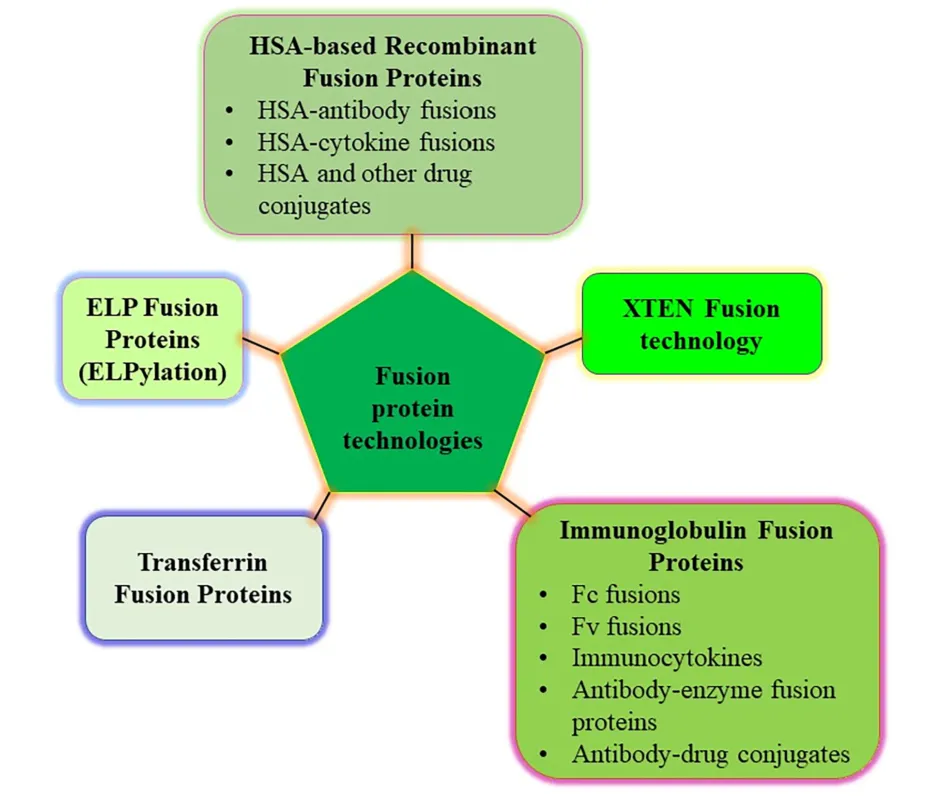
A fusion protein is a new type of protein that fuses two or more proteins together through genetic engineering technology. The core of this technology is to select a suitable fusion partner to enhance the activity and stability of the functional protein.
- Recent Advances
Fusion proteins: the "upgraded version" of therapeutic proteins
In modern medicine, therapeutic proteins have become an important type of drug, and they play a key role in the treatment of a variety of diseases. However, many functional proteins have a short half-life in serum, which means that their action time in the body is limited and they need to be frequently administered, which not only increases the burden on patients but also limits their therapeutic applications. To solve this problem, scientists have developed an innovative technology - fusion protein technology. By fusing functional proteins with other proteins (fusion partners), the stability and half-life of functional proteins can be significantly enhanced, thereby improving their therapeutic effects.
What is a fusion protein?
A fusion protein is a new type of protein that fuses two or more proteins together through genetic engineering technology. The core of this technology is to select a suitable fusion partner to enhance the activity and stability of the functional protein. Fusion proteins not only retain the biological activity of the original functional protein, but also significantly improve its tolerance and therapeutic effect in the body through the characteristics of the fusion partner, such as extending the half-life and enhancing resistance to degradation.
Immunoglobulin fusion technology: the "multifunctional upgrade" of antibodies
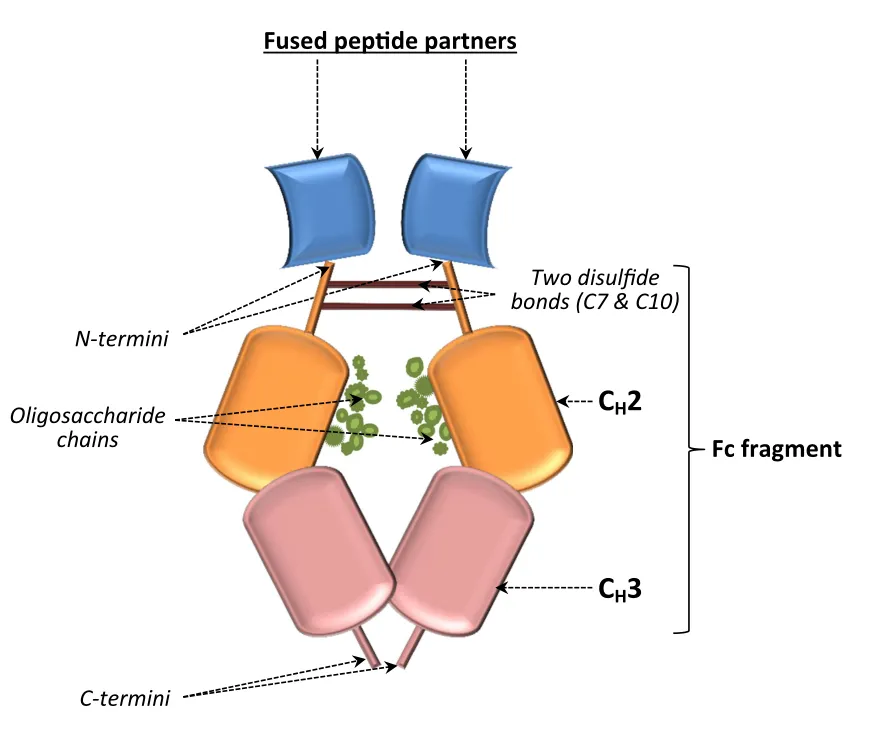
Immunoglobulin fusion technology is one of the most commonly used fusion protein technologies. This technology uses the structural domain of antibodies, especially the Fc segment of IgG, as a fusion partner. The Fc segment of an antibody is part of the constant region of an antibody, including the hinge region - CH2-CH3. Compared with the variable region, the use of the constant region as a fusion partner can regulate the size and pharmacokinetic properties of the fusion protein, making it more stable in vivo and having a longer half-life. In addition, the Fc segment can further extend the in vivo half-life of the fusion protein through the FcRn-mediated recycling mechanism, and utilize the biological functions such as ADCC (antibody-dependent cellular cytotoxicity) and CDC (complement-dependent cytotoxicity) mediated by the Fc segment to enhance its therapeutic effect.
Variable fragment (Fv) fusion: smaller, faster, more flexible
In addition to using the constant region of antibodies, scientists also use the variable region of antibodies to develop fusion proteins. Variable fragment (Fv) fusion proteins can significantly reduce the size of fusion proteins, allowing them to pass through tissues or tumors more easily and quickly. However, due to the relatively weak stability of the variable region, scientists have generated single-chain Fv molecules by covalently coupling peptide linkers to VH and VL, thereby improving their stability. In addition, the stability and therapeutic effect of Fv fragments are further enhanced by introducing covalent disulfide bonds or mutations between VH and VL.
TNF-α, cytokine fusion proteins, and HLA polypeptide complex fusion proteins are typical examples of bioengineering using antibody variable regions. These fusion proteins have shown great potential in treating a variety of diseases.
Antibody-enzyme fusion proteins: Precisely attack tumors
With the development of biomolecular science, antibody-enzyme fusion proteins have gradually become a new therapeutic strategy. This fusion protein combines antibodies with enzymes and uses the targeting ability of antibodies to precisely deliver enzymes to tumor sites. Once it reaches the tumor cells, the enzyme can be activated to release toxic substances and directly kill cancer cells. This approach not only improves the precision of treatment, but also significantly reduces damage to normal cells.
Antibody-enzyme fusion proteins have shown good therapeutic prospects in a variety of preclinical studies and human studies. Compared with traditional chemotherapy, they are less toxic and have more significant therapeutic effects.
HSA-based recombinant fusion proteins: a "secret weapon" to extend half-life
Human serum albumin (HSA) is the most abundant protein in human plasma, accounting for 40%-60% of total plasma protein, and its half-life is as long as 20 days. Using HSA as a fusion partner can significantly extend the half-life of therapeutic proteins and make them last longer in the body. In addition, HSA can also enhance protein stability and reduce immunogenicity. By fusing the effector protein to the amino or carboxyl terminus of HSA, the function of the effector protein can be almost unaffected, while significantly improving its therapeutic effect.
HSA-based recombinant fusion protein technology provides a flexible and effective method for the development of therapeutic proteins, and is expected to play an important role in future drug development.
Future Outlook: Infinite Possibilities of Fusion Protein Technology
The emergence of fusion protein technology has brought new hope to the development of therapeutic proteins. By combining functional proteins with different fusion partners, scientists can not only significantly improve the stability and half-life of functional proteins, but also give them new biological functions. With the continuous advancement of technology, fusion protein technology will play a greater role in the treatment of various diseases, bringing patients more treatment options and better treatment effects.
In short, fusion protein technology is an important breakthrough in modern medicine. It not only solves the limitations of traditional therapeutic proteins, but also provides new ideas and methods for future drug research and development. With the development and listing of more fusion protein drugs, we have reason to believe that fusion proteins will play an irreplaceable role in the future medical field.
This article is reviewed and published by the technical expert team of UA
Disclaimer: This article partially utilizes artificial intelligence assistance in its creation. If any content involves copyright or intellectual property issues, please let us know and we promise to verify and remove it as soon as possible.
Purchase recombinant protein, choose Nanjing UA-Bio
UA protein focuses on providing various protein reagents, raw materials, and services required for drug research and development, cell therapy, gene therapy, and basic scientific research, including drug target proteins, immune checkpoint proteins, cytokines, tool enzymes, customized protein expression, and full-length transmembrane protein development. Youai is committed to providing customers with high-quality products and professional services, and building a High-tech Biological Enterprise with International Competitiveness.







 Business license (three certificates in one)