




Transcription enhancer associated domain proteins: new targets for cancer treatment


In the complex cell regulatory network of the human body, transcription enhancer associated domain proteins (TEAD) are a key class of transcription factors that play an important role in organ development and cancer occurrence.
- Recent Advances
- Product Information
Transcription enhancer associated domain proteins: new targets for cancer treatment
In the complex cell regulatory network of the human body, transcription enhancer associated domain proteins (TEAD) are a key class of transcription factors that play an important role in organ development and cancer occurrence. In recent years, with the in-depth study of the functions of TEAD proteins, they have become a new target for cancer treatment. Today, let us take a deeper look at TEAD proteins and their potential applications in cancer treatment.
Function and mechanism of action of TEAD proteins
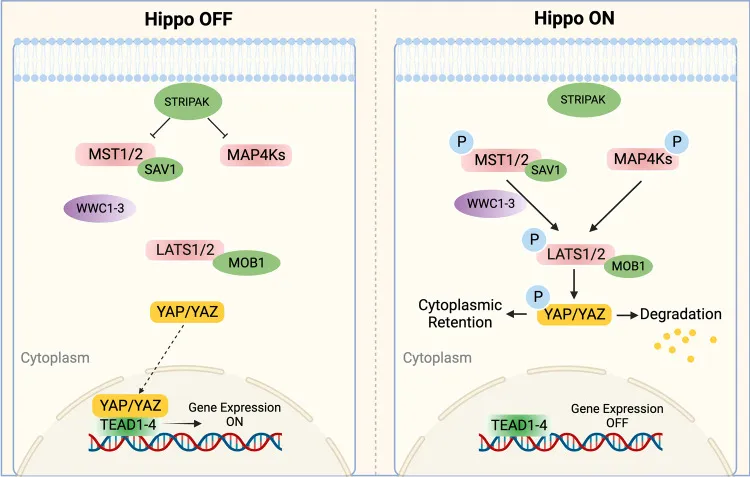
TEAD proteins are a class of transcription factors that regulate gene expression mainly by binding to transcriptional coactivators YAP/TAZ. Under normal physiological conditions, TEAD proteins form a complex with YAP/TAZ to regulate cell proliferation, survival and migration. This process is essential for the normal development of organs. However, when cancer occurs, abnormal activation of the TEAD-YAP complex can lead to excessive proliferation of cancer cells and tumor formation.
The TEAD protein family includes four members: TEAD1, TEAD2, TEAD3 and TEAD4. They show abnormal activity in many cancers, such as lung cancer, breast cancer, colon cancer, etc. In these cancers, abnormal activation of TEAD proteins is closely related to tumor growth, invasion and metastasis. Therefore, inhibiting the activity of TEAD proteins or degrading TEAD proteins has become a potential strategy for cancer treatment.
TEAD protein degradation strategy
In recent years, scientists have developed a variety of degradation strategies for TEAD proteins. Among them, an innovative approach is to use bispecific compounds to induce the degradation of TEAD proteins. One end of these bispecific compounds binds to TEAD transcription factors and the other end binds to E3 ubiquitin ligases. E3 ubiquitin ligases can catalyze the covalent connection of ubiquitin to TEAD transcription factors, thereby inducing the degradation of TEAD proteins by natural proteasomes.
The advantage of this strategy is that it utilizes the cell's own degradation mechanism and can specifically degrade TEAD proteins without affecting the functions of other normal proteins. This approach not only improves the specificity of treatment, but also reduces potential side effects on normal cells.
Development of TEAD inhibitors
In addition to degradation strategies, scientists are also actively developing TEAD inhibitors. These inhibitors inhibit the proliferation of cancer cells and tumor growth by directly inhibiting the activity of TEAD proteins and preventing them from binding to YAP/TAZ.
In early June this year, Insilico Medicine announced the nomination of ISM6331, a potential best-in-class preclinical candidate compound. This is a pan-TEAD inhibitor small molecule targeting the Hippo pathway, specifically for the treatment of advanced solid tumors. In addition, Beida Pharmaceuticals has also independently developed the TEAD palmitoylation inhibitor BPI-460372, which was approved for clinical trials in China and the United States in January this year.
The development and clinical trials of these inhibitors have brought new hope to cancer treatment. By inhibiting the activity of TEAD proteins, these drugs are expected to effectively control tumor growth and metastasis, and improve patients' survival rate and quality of life.
Future Outlook
As a new target for cancer treatment, the research and development of TEAD proteins is advancing rapidly. From bispecific compounds to small molecule inhibitors, scientists are exploring a variety of strategies to inhibit the activity of TEAD proteins or induce their degradation. These innovative treatments are expected to not only improve the effectiveness of cancer treatment, but also reduce the side effects of traditional chemotherapy.
In the future, with further research on the function of TEAD proteins and the development of more clinical trials, we have reason to believe that therapeutic strategies targeting TEAD proteins will play an important role in cancer treatment, which will bring more treatment options and hope to cancer patients.
This article is reviewed and published by the technical expert team of UA
Disclaimer: This article partially utilizes artificial intelligence assistance in its creation. If any content involves copyright or intellectual property issues, please let us know and we promise to verify and remove it as soon as possible.
Purchase recombinant protein, choose Nanjing UA-Bio
UA protein focuses on providing various protein reagents, raw materials, and services required for drug research and development, cell therapy, gene therapy, and basic scientific research, including drug target proteins, immune checkpoint proteins, cytokines, tool enzymes, customized protein expression, and full-length transmembrane protein development. Youai is committed to providing customers with high-quality products and professional services, and building a High-tech Biological Enterprise with International Competitiveness.







 Business license (three certificates in one)