




ASGPR: The "glycoprotein catcher" of the liver and the key to small nucleic acid drug delivery


In the human liver, there is a magical receptor that is like a precise "glycoprotein catcher" that specifically recognizes and captures specific glycoproteins. This receptor is the asialoglycoprotein receptor (ASGPR).
- Recent Advances
- Product Information
ASGPR: The "glycoprotein catcher" of the liver and the key to small nucleic acid drug delivery
In the human liver, there is a magical receptor that is like a precise "glycoprotein catcher" that specifically recognizes and captures specific glycoproteins. This receptor is the asialoglycoprotein receptor (ASGPR). In recent years, ASGPR has played an extremely important role in the medical field, especially in the delivery of small nucleic acid drugs, and has become the focus of scientific researchers.
Discovery and structure of ASGPR
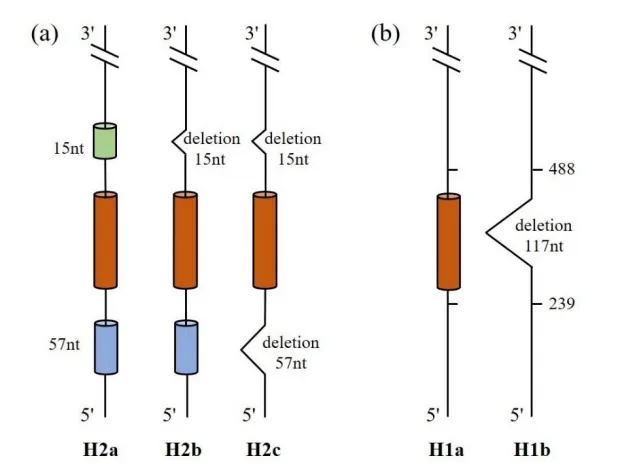
The story of ASGPR can be traced back to 1965, when American scientists Gilbert Ashwell and Anatol Morell discovered this special receptor in their research, so it is also called the "Ashwell-Morell receptor". ASGPR consists of two subunits encoded by different genes: the large subunit H1 (molecular weight of about 48 kDa) and the small subunit H2 (molecular weight of about 40 kDa). These two subunits are highly homologous in structure and both belong to type II transmembrane proteins. In mammals, the ratio of these two subunits is about 3:1, and they work together to play an endocytic role.
The expression of ASGPR has a strong polarity, mainly concentrated on the sinusoidal and basolateral cell membrane surfaces of hepatocytes. In addition to the liver, ASGPR is also expressed in some extrahepatic tissues, such as peritoneal macrophages, testes, sperm, intestinal epithelial cells and thyroid cells. However, the expression of ASGPR in the liver is far higher than that in other parts, with an average of about 500,000 ASGPRs highly expressed on the surface of a liver cell. This high expression gives ASGPR a very high recognition and binding ability in the liver.
ASGPR's "prey" mechanism
ASGPR's "prey" objects are oligosaccharides or oligosaccharide proteins with galactose (Gal) residues or acetylgalactosamine (GalNAc) residues at the end. It can accurately recognize these glycosylated structures and engulf them through endocytosis. ASGPR has a rich variety of ligands, including asialoglycoproteins, lactobionic acid, galactosylated ligands, asialofetuin, and stigmasterol glycosides. Among them, GalNAc is the lactose analog with the strongest binding ability to ASGPR, and this property provides an important opportunity for drug delivery.
ASGPR and small nucleic acid drug delivery
In the field of small nucleic acid drugs, ASGPR has become a key target for liver-targeted delivery. Small nucleic acid drugs such as siRNA have the advantages of high gene silencing efficiency, good specificity, and a wide range of targets, but they usually do not have tissue targeting and are difficult to pass through biological membranes freely. GalNAc (N-acetylgalactosamine), as an efficient ASGPR targeting ligand, is widely used in the delivery system of siRNA drugs.
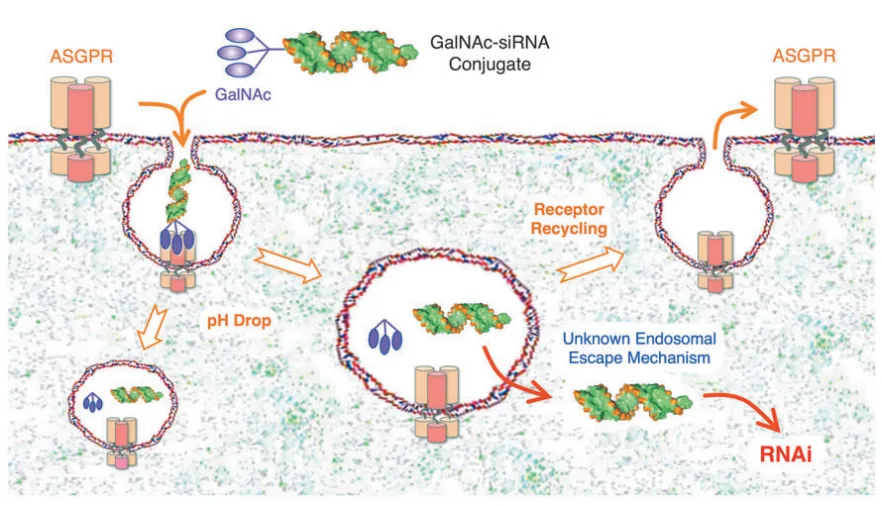
GalNAc-modified siRNA drugs can enter hepatocytes through ASGPR-mediated endocytosis. The specific process is as follows: GalNAc binds to ASGPR on the surface of hepatocytes, and then transports siRNA from the cell surface to the cytoplasm through clathrin-mediated endocytosis. In the cell, the GalNAc-siRNA conjugate separates from the ASGPR, and the released free siRNA silences the target gene in the cytoplasm, thereby exerting its efficacy.
At present, most of the siRNA drugs on the market use GalNAc modification to complete intracellular delivery. This delivery system not only improves the delivery efficiency of siRNA, but also significantly enhances its hepatocyte targeting, reduces the distribution of drugs in non-target tissues, and reduces potential side effects.
The importance of ASGPR detection
In the early stage of small nucleic acid drug development, it is of great significance to detect the expression of ASGPR on the surface of hepatocyte membranes. The expression level of ASGPR directly affects the uptake and transfection efficiency of small nucleic acid drugs such as siRNA. By detecting the expression of ASGPR, researchers can optimize drug design and improve the delivery effect of drugs. In addition, the detection of ASGPR can also be used to evaluate the targeting of drugs, providing important data support for preclinical studies.
Future Prospects
ASGPR has broad application prospects in small nucleic acid drug delivery. With the in-depth study of the structure and function of ASGPR, scientists are expected to develop more efficient and more accurate drug delivery systems. For example, by designing new GalNAc analogs or optimizing coupling strategies, the delivery efficiency and targeting of drugs can be further improved. In addition, the potential application of ASGPR in other diseases is also worth exploring, such as using its endocytosis mechanism to deliver gene therapy drugs or protein drugs.
In short, as a "glycoprotein catcher" of the liver, ASGPR not only plays an important role in physiological processes, but also plays a key role in the delivery of small nucleic acid drugs. Its discovery and application have brought new hope to modern medicine, and it is expected to bring good news to more patients in the future.
This article is reviewed and published by the technical expert team of UA
Disclaimer: This article partially utilizes artificial intelligence assistance in its creation. If any content involves copyright or intellectual property issues, please let us know and we promise to verify and remove it as soon as possible.
Purchase recombinant protein, choose Nanjing UA-Bio
UA protein focuses on providing various protein reagents, raw materials, and services required for drug research and development, cell therapy, gene therapy, and basic scientific research, including drug target proteins, immune checkpoint proteins, cytokines, tool enzymes, customized protein expression, and full-length transmembrane protein development. Youai is committed to providing customers with high-quality products and professional services, and building a High-tech Biological Enterprise with International Competitiveness.







 Business license (three certificates in one)