




ENPP3: A "mysterious target" that unlocks new hope for cancer treatment


In the long journey of cancer treatment, scientists have been looking for new targets that can accurately attack cancer cells. In recent years, a molecule called ENPP3 has gradually entered the field of vision of scientific researchers, and it may become a powerful weapon to fight against various cancers. Today, let us unveil the mystery of ENPP3 and explore its potential in cancer treatment.
- Recent Advances
- Product Information
ENPP3: A "mysterious target" that unlocks new hope for cancer treatment
In the long journey of cancer treatment, scientists have been looking for new targets that can accurately attack cancer cells. In recent years, a molecule called ENPP3 has gradually entered the field of vision of scientific researchers, and it may become a powerful weapon to fight against various cancers. Today, let us unveil the mystery of ENPP3 and explore its potential in cancer treatment.
1. What is ENPP3?
ENPP3, the full name of exonucleoside pyrophosphatase/phosphodiesterase 3, is a type II transmembrane protein. It is widely present on the surface of human cells and participates in a variety of key physiological activities, such as nucleotide signaling and hydrolysis of extracellular pyrophosphate. ENPP3 has a complex structure, including nuclease-like domains, catalytic domains, and somatomedin b-like domains, which give it a variety of biological functions.
2. ENPP3's "hidden identity"-cancer marker
In cancer research, ENPP3 has shown unique value. It is not only a new biomarker for basophils in chronic myeloid leukemia (CML), but also highly expressed in a variety of cancers. For example, in renal cell carcinoma (RCC), acute basophilic leukemia, some colon cancers, and bile duct tumor cells, the expression level of ENPP3 is significantly higher than that of normal cells. This means that ENPP3 can be used as a potential cancer diagnostic marker to help doctors detect cancer earlier and more accurately.
3. The potential of ENPP3 in cancer treatment
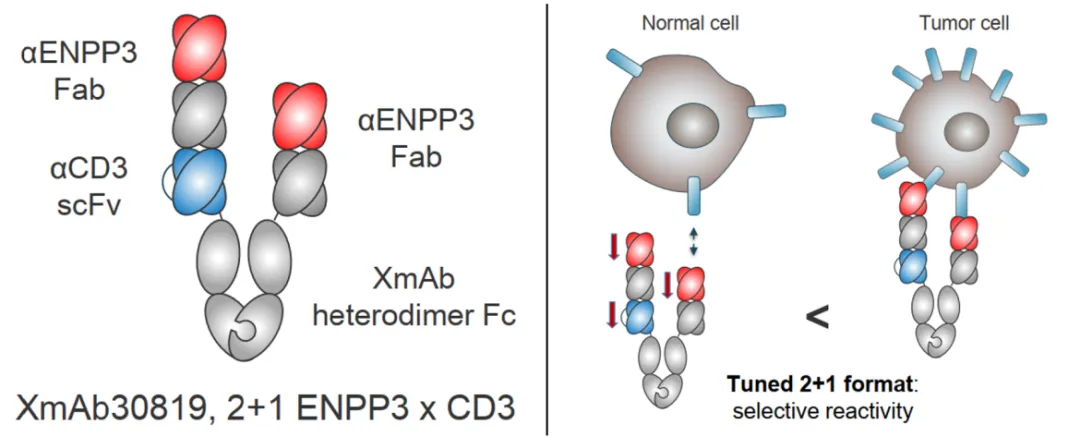
In addition to being a marker, ENPP3 also shows great potential in cancer treatment. Scientists have found that by targeting ENPP3, innovative therapies for a variety of cancers can be developed. At present, drug research and development for ENPP3 is being actively promoted worldwide. For example, XmAb-819 developed by Xencor is a bispecific antibody that can simultaneously bind to ENPP3 and CD3 of the T cell receptor complex, activate T cells, and efficiently kill tumor cells expressing ENPP3. The design of this "2+1" bispecific antibody provides new ideas for cancer immunotherapy.
In addition, AGS-16C3F developed by Agensys is an antibody-drug conjugate (ADC) that precisely delivers drugs to tumor cells by connecting the microtubule inhibitor methyl auristatin (MMAF) and an antibody targeting ENPP3, inhibiting the mitosis of cancer cells and ultimately leading to cell death. Although AGS-16C3F failed to achieve the expected efficacy in the Phase II clinical trial of metastatic renal cell carcinoma (mRCC), it provides valuable experience for the development of ENPP3 targeted drugs.
4. Challenges and future of ENPP3 target research
Although ENPP3 has shown great potential in cancer treatment, its research still faces many challenges. ENPP3 has a complex structure and its function in cells has not yet been fully clarified. In addition, drug development for ENPP3 needs to overcome many technical difficulties, such as drug specificity, stability and efficacy. However, with the continuous advancement of biotechnology, scientists will have a deeper understanding of ENPP3 and are expected to develop more efficient and safe ENPP3 targeted drugs.
In the future, ENPP3 is expected to become a potential new target for the specific treatment of renal cell carcinoma and various cancers. With the development of more clinical trials and in-depth research, ENPP3 targeted drugs are expected to bring new hope to cancer patients.
5.Conclusion
ENPP3, a once neglected molecule, is now becoming a "rising star" in the field of cancer research. It not only provides a new marker for early diagnosis of cancer, but also brings new ideas and methods to cancer treatment. On the road to fighting cancer, ENPP3 may become a "sharp sword" in our hands to help us overcome cancer, a major problem in human health.
This article is reviewed and published by the technical expert team of UA
Disclaimer: This article partially utilizes artificial intelligence assistance in its creation. If any content involves copyright or intellectual property issues, please let us know and we promise to verify and remove it as soon as possible.
Purchase recombinant protein, choose Nanjing UA-Bio
UA protein focuses on providing various protein reagents, raw materials, and services required for drug research and development, cell therapy, gene therapy, and basic scientific research, including drug target proteins, immune checkpoint proteins, cytokines, tool enzymes, customized protein expression, and full-length transmembrane protein development. Youai is committed to providing customers with high-quality products and professional services, and building a High-tech Biological Enterprise with International Competitiveness.







 Business license (three certificates in one)