




EpCAM: "Star Molecule" in Cell Adhesion and Cancer Research


In the world of cells, there is a special molecule that tightly connects cells together like "glue" and also plays an important role in the occurrence and metastasis of cancer. It is the epithelial cell adhesion molecule (EpCAM, also known as CD326). Today, let us step into the world of EpCAM and explore its mystery.
- Recent Advances
- Product Information
EpCAM: "Star Molecule" in Cell Adhesion and Cancer Research
In the world of cells, there is a special molecule that tightly connects cells together like "glue" and also plays an important role in the occurrence and metastasis of cancer. It is the epithelial cell adhesion molecule (EpCAM, also known as CD326). Today, let us step into the world of EpCAM and explore its mystery.
1. Discovery and naming of EpCAM
EpCAM was first discovered in 1979, when it was mainly identified as a tumor-associated antigen in human colon cancer tissue. Due to its specific expression in epithelial cells, scientists named it EpCAM, which means "epithelial cell adhesion molecule". In 2006, at an international seminar held in the Netherlands, the naming of EpCAM was officially unified, and its CD number was CD326.
2. Genes and structure of EpCAM
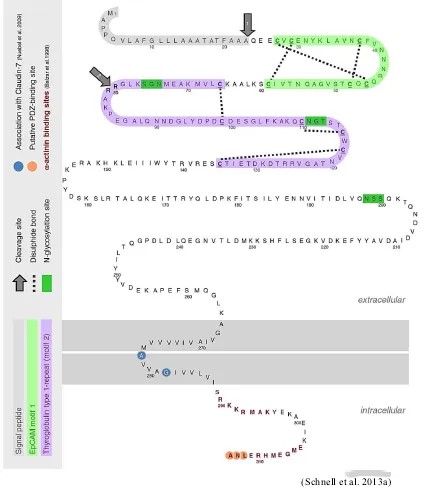
EpCAM is encoded by the TACSTD1 gene, which is located on chromosome 4. The genetic structure of EpCAM is very unique. It contains nine exons, each of which is responsible for encoding a different functional region. The protein structure of EpCAM consists of three parts: the extracellular domain (EpEX), the single transmembrane domain, and the intracellular domain (EpICD). Among them, the extracellular domain contains an epidermal growth factor (EGF)-like domain and a thyroglobulin-like domain, which are the basis for cell adhesion.
The molecular weight of EpCAM is about 33-40 kDa, and it exists in the form of polymers on the cell surface. This polymer structure enables EpCAM to form tight connections between cells and maintain tissue integrity. Although the intracellular domain of EpCAM is short, it is powerful. It contains two α-actinin binding sites, which play a key role in signal transduction.
3. The role of EpCAM in cell adhesion
The main function of EpCAM is to mediate cell adhesion. In normal tissues, EpCAM enables adjacent cells to be tightly bound together through the EGF-like domain and thyroglobulin-like domain in its extracellular domain. This adhesion is essential for maintaining the structure and function of tissues. For example, in epithelial tissues such as the skin and intestines, the expression of EpCAM contributes to the tight connection between cells and prevents the invasion of harmful substances from the outside world.
4. The relationship between EpCAM and cancer
EpCAM not only plays an important role in normal cells, but also plays a complex role in the occurrence and metastasis of cancer. In many types of cancer, the expression level of EpCAM is significantly increased. For example, in tumors such as colon cancer, breast cancer and prostate cancer, high expression of EpCAM is closely related to the invasiveness and metastasis of tumors. Scientists have found that abnormal expression of EpCAM may lead to weakened adhesion between cells, making it easier for cancer cells to fall off from the primary tumor and metastasize to other parts.
In addition, EpCAM is also involved in the regulation of cancer stem cells. Cancer stem cells are a group of cells with self-renewal ability, which are considered to be the root cause of tumor recurrence and metastasis. Studies have shown that EpCAM is highly expressed on the surface of cancer stem cells, which makes EpCAM a potential marker for identifying and targeting cancer stem cells.
5. Application of EpCAM in medical research
Due to the important role of EpCAM in cancer, it has become an important target for cancer diagnosis and treatment. In terms of diagnosis, high expression of EpCAM can be used as a biomarker for certain cancers, helping doctors detect tumors earlier. In terms of treatment, scientists are developing antibody drugs targeting EpCAM, which can specifically bind to EpCAM, thereby inhibiting the growth and metastasis of cancer cells.
In addition, EpCAM also shows potential application value in cell therapy. By targeting EpCAM, scientists can enrich and isolate cancer stem cells, providing new ideas for personalized cancer treatment.
6. Conclusion
EpCAM, a molecule that has attracted much attention in cell adhesion and cancer research, provides scientists with a window to deeply understand cell behavior and cancer mechanisms with its unique structure and function. With the continuous deepening of research, EpCAM is expected to become a "star target" in cancer diagnosis and treatment, bringing new hope for mankind to defeat cancer.
This article is reviewed and published by the technical expert team of UA
Disclaimer: This article partially utilizes artificial intelligence assistance in its creation. If any content involves copyright or intellectual property issues, please let us know and we promise to verify and remove it as soon as possible.
Purchase recombinant protein, choose Nanjing UA-Bio
UA protein focuses on providing various protein reagents, raw materials, and services required for drug research and development, cell therapy, gene therapy, and basic scientific research, including drug target proteins, immune checkpoint proteins, cytokines, tool enzymes, customized protein expression, and full-length transmembrane protein development. Youai is committed to providing customers with high-quality products and professional services, and building a High-tech Biological Enterprise with International Competitiveness.







 Business license (three certificates in one)