




FGF4: The "magic magician" in the organism


On the microscopic stage of the biological world, there is such a "magic magician" - FGF4, which belongs to the fibroblast growth factor (FGFs) family and plays an important role in many areas of life activities.
- Recent Advances
- Product Information
FGF4: The "magic magician" in the organism
On the microscopic stage of the biological world, there is such a "magic magician" - FGF4, which belongs to the fibroblast growth factor (FGFs) family and plays an important role in many areas of life activities.
FGF4 is like a "commander" in the cell world, which can promote cell proliferation and differentiation. During embryonic development, its expression and that of its receptors FGF R1c, 2c, 3c and 4 are regulated in time and space, helping the self-renewal of stem cells and the development of embryonic molar buds. Imagine that a small embryo gradually grows in the mother's body, and FGF4 is like a rigorous planner, precisely regulating the growth and differentiation of cells, so that the various organs and tissues of the embryo can develop according to the established program. In intestinal organoid culture, FGF4 and WNT-3a work together to promote CDX2+ hindgut endoderm-specific patterning and produce three-dimensional spheroids, providing an important model for studying intestinal diseases and drug screening.
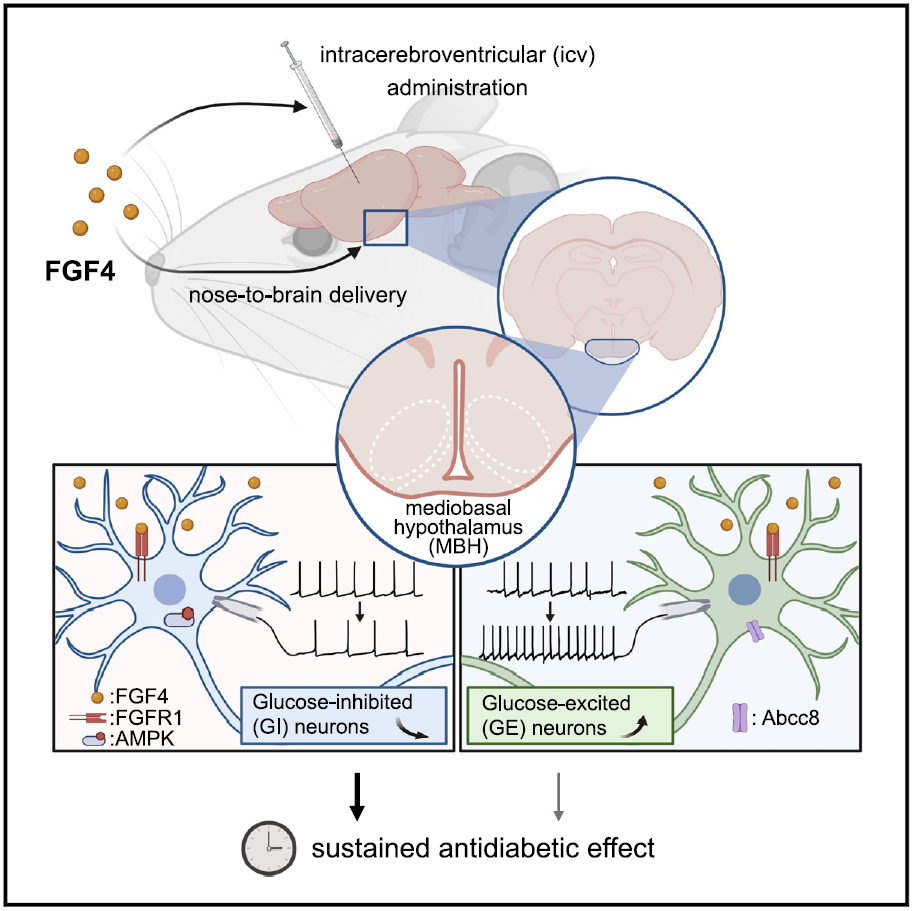
In addition to its key role in embryonic development, FGF4 also shows amazing ability in metabolic regulation. Studies have found that FGF4, like FGF1, has the effect of lowering blood sugar. In diabetes research, FGF4 was administered to diabetic mice through the lateral ventricle, and a single dose produced a lasting glucose control effect of more than 7 weeks. It turns out that FGF4 can target glucose-sensitive neurons in the hypothalamus and the FGFR1 highly expressed on its surface, correct the firing frequency of glucose-sensitive neurons in T2D mice, reconstruct the proportion of neurons, and promote glucose absorption in peripheral skeletal muscles across organs, thereby exerting a lasting glucose control effect. This is undoubtedly exciting news for diabetic patients. Perhaps in the near future, FGF4 can become a new hope for the treatment of diabetes.
FGF4 is also the "guardian" of liver health. Alcoholic liver disease is a major public health problem caused by excessive drinking worldwide. Long-term alcohol exposure can cause the liver to develop from simple fatty liver to alcoholic hepatitis, liver fibrosis, cirrhosis and hepatocellular carcinoma. FGF4 plays a key role in the regulation of liver glucose and lipid metabolism, and has multiple functions such as anti-apoptosis, regulation of inflammatory response and improvement of diet-induced liver fibrosis. Studies have confirmed that the levels of FGF4 mRNA and protein in liver tissue of ALD patients are significantly upregulated and positively correlated with the severity of the disease. In a mouse model of alcoholic liver injury, FGF4 activates FGFR4, then phosphorylates and modifies ERRγ, promotes its ubiquitination degradation in hepatocytes, thereby reducing liver oxidative stress, inflammatory response and apoptosis, and significantly improves alcohol-induced liver injury.
Not only that, FGF4 also shows great potential in the field of diabetes treatment. The research team of Academician Li Xiaokun of Wenzhou Medical University and Huang Zhifeng's research team, together with other teams, found that a single administration of FGF4 to diabetic mice through the lateral ventricle can produce a lasting glucose control effect of more than 7 weeks. It turns out that FGF4 can target glucose-sensitive neurons in the hypothalamus, drive the activation of FGFR1 receptors highly expressed on the surface of such neurons, correct the firing frequency of neurons in T2D mice, reconstruct the proportion of neurons, and promote peripheral skeletal muscle glucose absorption across organs, thereby exerting a lasting glucose control effect.
In addition, FGF4 also has a unique contribution to liver health. In the study of alcoholic liver disease, scientists have found that FGF4 plays a key role in regulating liver glucose and lipid metabolism, and has multiple functions such as anti-apoptosis, inflammatory response regulation, and improvement of diet-induced liver fibrosis. In the mouse model of alcoholic liver disease, alcohol-induced liver oxidative stress, inflammatory response and apoptosis, as well as liver damage were significantly aggravated after hepatocyte-specific knockout of Fgf4. The recombinant non-mitogenic analog FGF4△NT can significantly improve alcohol-induced liver damage through the FGFR4-ERRγ-CYP2E1 pathway, and no side effects such as cell proliferation were observed.
In the field of cell culture, FGF4 is also an indispensable role. As a recombinant protein, it can stimulate cell proliferation and is widely used in cell culture-related research and industrial production.
However, the current research on FGF4 is still deepening. Scientists hope to uncover more of its mysteries through further exploration and bring more benefits to human health. I believe that in the future, FGF4, the "magic magician", will shine more brightly in the field of biomedicine.
This article is reviewed and published by the technical expert team of UA
Disclaimer: This article partially utilizes artificial intelligence assistance in its creation. If any content involves copyright or intellectual property issues, please let us know and we promise to verify and remove it as soon as possible.
Purchase recombinant protein, choose Nanjing UA-Bio
UA protein focuses on providing various protein reagents, raw materials, and services required for drug research and development, cell therapy, gene therapy, and basic scientific research, including drug target proteins, immune checkpoint proteins, cytokines, tool enzymes, customized protein expression, and full-length transmembrane protein development. Youai is committed to providing customers with high-quality products and professional services, and building a High-tech Biological Enterprise with International Competitiveness.







 Business license (three certificates in one)