




GCGR: Analysis of the core role and mechanism of glucagon receptor in metabolic regulation


Glucagon receptor (GCGR), as an important member of the B-type G protein-coupled receptor (GPCR) family, plays a key role in maintaining blood glucose homeostasis, lipid metabolism and energy balance. It regulates liver glycogenolysis and gluconeogenesis by recognizing and responding to glucagon signals, and has become the focus of research on diabetes, obesity and related metabolic diseases.
- Recent Advances
- Product Information
GCGR: Analysis of the core role and mechanism of glucagon receptor in metabolic regulation
Glucagon receptor (GCGR), as an important member of the B-type G protein-coupled receptor (GPCR) family, plays a key role in maintaining blood glucose homeostasis, lipid metabolism and energy balance. It regulates liver glycogenolysis and gluconeogenesis by recognizing and responding to glucagon signals, and has become the focus of research on diabetes, obesity and related metabolic diseases.
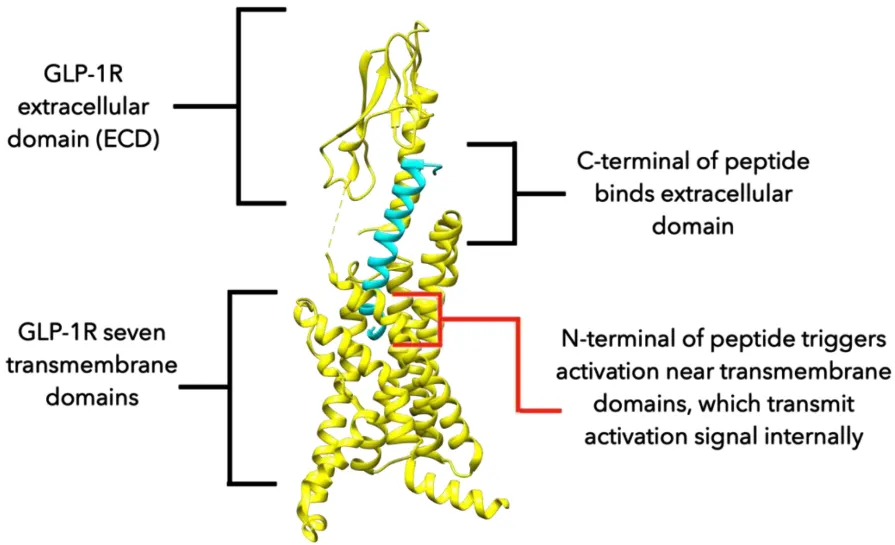
Structure and signal transduction mechanism of GCGR
GCGR consists of a seven-transmembrane helical domain (7TM) and an extracellular ligand-binding domain (ECD). Its ECD triggers conformational changes by binding to the N-terminus of glucagon, activating the interaction between the transmembrane domain and G protein. Studies have shown that after GCGR couples with Gαs protein, it activates adenylate cyclase (AC), leading to an increase in intracellular cyclic adenosine monophosphate (cAMP) levels, thereby activating the protein kinase A (PKA) pathway and promoting the expression of genes related to glycogenolysis and gluconeogenesis. In addition, GCGR can also regulate receptor desensitization and endocytosis through the β-arrestin-dependent pathway, forming a complex signal regulation network.
GCGR's dual role in metabolic regulation
Under physiological conditions, GCGR maintains fasting blood glucose levels by activating the hepatocyte gluconeogenesis pathway to avoid hypoglycemia. However, under pathological conditions (such as type 2 diabetes), excessive secretion of glucagon or hyperactivity of GCGR signaling can lead to increased hepatic glucose output and aggravate hyperglycemia. In addition, GCGR is also involved in lipid metabolism regulation, promoting lipolysis by activating the cAMP/PKA pathway, releasing free fatty acids (FFA) into the blood, and further affecting insulin sensitivity. This dual role makes GCGR a key target for intervention in metabolic diseases.
Cross-species differences and adaptive evolution of GCGR signaling
GCGRs of different species differ significantly in sequence and function. For example, bird GCGRs are enhanced by constitutive activity, supporting their hyperglycemic physiological characteristics to meet the rapid energy supply required for flight. This adaptive evolution shows that the regulatory intensity of GCGR signaling is closely related to the metabolic needs of the species. By comparing the molecular evolutionary analysis of vertebrate GCGR, the key role of its domains (such as the interaction interface between ECD and 7TM) in signal transduction can be revealed, providing a theoretical basis for the design of specific regulators.
Technical challenges and future directions of GCGR research
Because GCGR belongs to the GPCR family, the dynamic conformational changes of its transmembrane domain are complex, and traditional structural biology methods are difficult to resolve the three-dimensional structure of the full-length receptor. In recent years, breakthroughs in cryo-electron microscopy and single-molecule fluorescence technology have made it possible to resolve the structure of GCGR and ligand-G protein complexes, providing an important tool for understanding its signal transduction mechanism. In addition, peptide sequence optimization technology based on machine learning can design highly active and highly specific GCGR agonists or antagonists for basic research or potential application development.
As a core receptor for metabolic regulation, the in-depth analysis of GCGR's signal transduction mechanism not only helps to understand the pathogenesis of metabolic diseases, but also provides a scientific basis for the development of new intervention strategies. Future research needs to further combine structural biology, computational biology and synthetic biology technologies to reveal the dynamic regulatory network of GCGR in complex physiological environments and promote innovation in the treatment of metabolic diseases.
This article is reviewed and published by the technical expert team of UA
Disclaimer: This article partially utilizes artificial intelligence assistance in its creation. If any content involves copyright or intellectual property issues, please let us know and we promise to verify and remove it as soon as possible.
Purchase recombinant protein, choose Nanjing UA-Bio
UA protein focuses on providing various protein reagents, raw materials, and services required for drug research and development, cell therapy, gene therapy, and basic scientific research, including drug target proteins, immune checkpoint proteins, cytokines, tool enzymes, customized protein expression, and full-length transmembrane protein development. Youai is committed to providing customers with high-quality products and professional services, and building a High-tech Biological Enterprise with International Competitiveness.







 Business license (three certificates in one)