During tumorigenesis, myeloid cell populations—including bone marrow progenitor cells, suppressive immature monocytes, and neutrophils—are mobilized into the bloodstream. Among lymphoid cells, the systemic frequency of CD4⁺ Tregs and regulatory B cells increases; moreover, Tregs undergo specific clonal expansion in the periphery before infiltrating tumors. Conversely, the frequency of dendritic cells (DCs), CD8⁺ T cells, and CD4⁺ T cells, as well as the diversity of T cell receptor repertoires, decrease significantly.
Similar observations in mouse models include the accumulation of naive neutrophils, monocytes, and DCs, alongside reduced abundances of functional DCs and T cell populations. Draining lymph nodes, which communicate most directly with tumors, exhibit increased frequencies of monocytes and DCs but decreased CD8⁺ T cells, indicating impaired local immune surveillance. These findings suggest that the abnormal accumulation of immature myeloid cells is a key strategy for tumors to achieve immune evasion, though the upstream regulatory mechanisms remain incompletely understood.
In October 2023, a study published in Nature by Miriam Merad’s team at the Icahn School of Medicine at Mount Sinai revealed a novel mechanism by which the cytokine IL-4 promotes tumor immune evasion by regulating bone marrow hematopoiesis. This work provides critical insights into tumor-bone marrow axis interactions, identifying IL-4 as a major driver of tumor-infiltrating monocyte-derived macrophages (mo-macs). It clarifies how bone marrow-derived IL-4 acts on granulocyte-monocyte progenitors (GMPs) to induce immunosuppressive myeloid cell production and explores IL-4’s potential as a target for combination immunotherapy with checkpoint inhibitors.
Prior to this, the team used single-cell RNA sequencing to map the immune landscape of human and murine non-small cell lung cancer (NSCLC) lesions, identifying a novel immunosuppressive myeloid cell population: mature regulatory molecule-rich DCs (mregDCs). Further studies linked IL-4 to mregDC regulation, showing that blocking IL-4 signaling significantly reduced lung tumor burden in both KrasG12DTP53⁻/⁻ (KP) orthotopic lung adenocarcinoma models and B16 melanoma lung metastasis models, confirming IL-4’s pro-tumor role.
To identify the target cells of IL-4, researchers generated conditional knockout mice with IL-4 receptor α (IL-4Rα) deletion specifically in DCs, tissue-resident DCs, or T cells. None of these models showed altered tumor burden, suggesting that other immune cell types must respond to IL-4 to promote tumor progression—guiding subsequent investigations.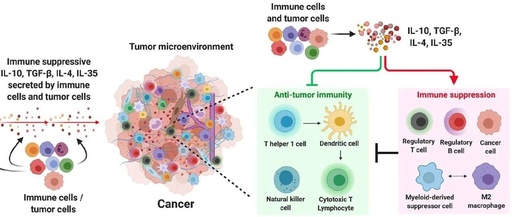
Using transcriptomic datasets from human and murine NSCLC, researchers analyzed differentially expressed genes between tumor-infiltrating monocyte-macrophages and tissue-resident monocytes. Gene Set Enrichment Analysis (GSEA) revealed that IL-4 signaling was the most enriched pathway in human monocyte-derived macrophage (mo-mac)-specific genes and the second most enriched in murine models, implicating the monocyte-macrophage lineage as key IL-4 targets.
To validate this, researchers crossed Il4ra-floxed mice with Ms4a3-cre mice, generating GMP-specific IL-4Rα knockout models. Ms4a3 is highly expressed in bone marrow GMPs, and its-driven Cre recombination deletes IL-4Rα in all downstream lineages (monocytes, mo-macs, and neutrophils) while preserving IL-4Rα in tissue-resident monocytes. Results showed that Il4raΔMs4a3 mice exhibited an 85% reduction in tumor burden compared to wild-type controls, confirming that IL-4 signaling in the granulocyte-monocyte lineage is critical for tumor progression. Further analysis revealed significantly reduced numbers of lung mo-macs and circulating monocytes in tumor-bearing Il4raΔMs4a3 mice, highlighting the monocyte-mo-mac lineage as core effectors of IL-4’s pro-tumor activity.
Single-cell RNA sequencing of bone marrow cells from tumor-bearing mice of both genotypes captured all expected immune populations, including two mo-mac subsets with low and high Trem2 expression (mo-mac I and II). Each mo-mac cluster showed significant differences in Il4raΔMs4a3 mice, indicating altered functional phenotypes. Immunohistochemistry confirmed profound changes in lung tumor immune infiltrates in Il4raΔMs4a3 mice: IL-4Rα deletion in GMP-derived lineages enhanced monocyte and mo-mac immunogenicity, reprogramming the lung TME into an inflammatory, anti-tumor state.
To determine the stage at which IL-4 signaling acts, researchers generated downstream cell-specific knockouts by crossing Il4ra-floxed mice with Cx3cr1-cre (monocyte-biased) or S100a8-cre (neutrophil-biased) mice. Neither model showed reduced lung tumor burden, demonstrating that IL-4 signaling primarily acts at the bone marrow progenitor stage rather than in mature myeloid cells.
Further studies elucidated the complete IL-4 regulatory pathway: soluble factors from the tumor microenvironment reach the bone marrow via circulation, activating type 2 granulocytes (basophils) to produce IL-4. IL-4 then binds IL-4Rα on GMPs, promoting their differentiation into immunosuppressive monocytes and mo-macs. These cells migrate to the tumor microenvironment, suppressing effector T cell function to facilitate tumor growth. This reveals a novel mechanism by which tumors "remotely regulate" bone marrow hematopoiesis to achieve immune evasion.
This research systematically uncovers how IL-4 promotes tumor immune evasion by regulating the differentiation of bone marrow granulocyte-monocyte progenitors and inducing immunosuppressive myeloid cell production. These findings deepen understanding of tumor-bone marrow crosstalk and identify IL-4 as a potential target for combination immunotherapy. Future studies should explore synergies between IL-4 neutralization and PD-1/PD-L1 inhibitors, while identifying specific soluble factors in the tumor microenvironment that induce basophil IL-4 production to develop more precise therapeutic strategies. Advances in understanding IL-4 regulatory networks may overcome tumor immune evasion and improve immunotherapy response rates.













 Business license (three certificates in one)