Asthma is a common chronic respiratory disease characterized by chest tightness, shortness of breath, and wheezing, which significantly impairs patients' quality of life. Among its subtypes, type 2 asthma is closely associated with allergic sensitization, accompanied by typical features such as elevated levels of cytokines (IL-4, IL-5, IL-13) secreted by type 2 helper T cells (Th2), eosinophilia, and mast cell activation. Despite the widespread use of traditional treatments such as glucocorticoids and leukotriene modifiers, 4% to 10% of asthma patients still develop severe asthma, which is difficult to control effectively with conventional therapies.
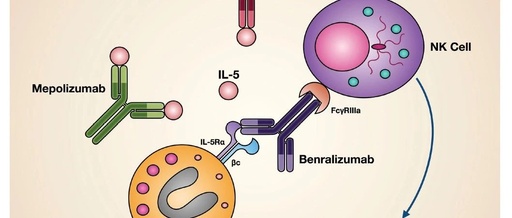
In the immune regulatory network of type 2 asthma, IL-5, as a key cytokine, regulates the proliferation, survival, and activation of eosinophils by binding to the IL-5 receptor α (IL-5Rα) on their surface, making it an important target for the treatment of severe eosinophilic asthma. Currently, biological agents targeting IL-5 or IL-5Rα (such as mepolizumab and benralizumab) have been widely used in clinical practice and have significantly improved symptom control in patients with severe asthma. However, most existing studies have focused on the regulatory role of IL-5 on eosinophils, and its impact on mast cells—another key effector cell in the pathological process of asthma—and their progenitors remains incompletely understood.
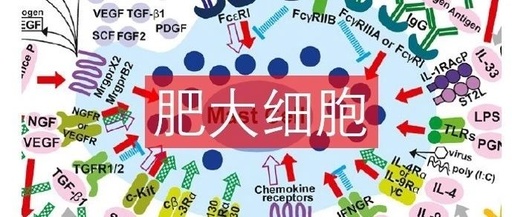
Mast cells, as innate immune cells, are widely distributed in vascularized tissues throughout the body. They participate in the pathological process of acute asthma attacks by releasing inflammatory mediators through IgE cross-linking mediated by FcεRI. In addition, the accumulation of mast cells in the airway smooth muscle layer can enhance their regulatory effect on smooth muscle contraction, and their localization near or within the airway epithelium allows them to rapidly respond to aeroallergens and other inhaled stimuli. Studies have found that a small number of mast cell progenitors exist in the circulation, which can migrate to peripheral tissues and differentiate into mature mast cells under the influence of the local microenvironment. The quantity of these progenitors is closely related to the decline in lung function and poor symptom control in asthma patients. Therefore, exploring the regulatory mechanism of the IL-5 pathway on mast cells and their progenitors may provide a new perspective for understanding the clinical benefits of IL-5-targeted therapy.
To clarify the functional association between the IL-5 pathway and mast cells, the research team first detected the expression of IL-5Rα on the surface of mast cells and their progenitors in human lung tissues and blood. Flow cytometry analysis of normal lung tissues resected from lung cancer patients showed that approximately 50% of lung mast cells (CD45⁺CD4⁻CD8⁻CD19⁻CD14⁻CD117⁺FcεRI⁺) express IL-5Rα, confirming that IL-5 signaling may directly act on tissue-resident mast cells.
In patients with allergic asthma, the frequency of blood mast cell progenitors (Lin⁻CD13⁻CD34⁺CD117⁺FcεRI⁺) is significantly higher than that in healthy controls, and approximately 30% of these progenitors express IL-5Rα, compared with only 1% to 19% in healthy controls. This finding suggests that the expansion of IL-5Rα⁺ mast cell progenitors in allergic diseases may be involved in the pathological process of asthma. To verify the species conservation of this phenomenon, a mouse model of acute allergic airway inflammation was established. It was found that the proportion of IL-5Rα⁺ cells in lung mast cell progenitors (CD45⁺Lin⁻CD11b⁻c-kit⁺ST2⁺FcεRI⁺integrinβ7⁺) in asthmatic model mice reached 40%, significantly higher than the 20% in control mice, further supporting that the upregulation of IL-5Rα expression is a common feature of allergic inflammation.
Notably, in the mouse model, the expression proportion of IL-5Rα in lung mast cell progenitors (approximately 30%) is higher than that in bone marrow progenitors (approximately 5%), and there is no significant correlation with mast cell maturity, suggesting that IL-5Rα expression may be regulated by the local microenvironment rather than the stage of cell differentiation. These findings collectively confirm that the expression of IL-5Rα in mast cells and their progenitors is disease-related, providing a molecular basis for the regulation of mast cell populations by the IL-5 pathway.
Based on the expression characteristics of IL-5Rα, further studies explored the functional impact of IL-5 on mast cell progenitors. In vitro culture experiments showed that adding IL-5 to a system containing multiple cytokines such as IL-3, IL-6, and stem cell factor (SCF) can significantly enhance the survival and proliferation ability of human blood mast cell progenitors. After 7 days of culture, the number of cells in the IL-5 treatment group was significantly higher than that in the control group; after 10 days, the proportion of CD117⁺FcεRI⁺ mature mast cells also increased significantly, confirming that IL-5 can promote the survival, proliferation, and differentiation of progenitors through direct action.
This result is consistent with previous studies showing that IL-5 and SCF synergistically promote mast cell proliferation and expands the understanding of the regulatory role of IL-5 in the early hematopoietic stage. It was also found that although IL-5 alone cannot maintain the long-term culture of mast cell progenitors, it can significantly enhance their responsiveness in a multi-cytokine environment, suggesting that IL-5 may participate in the regulation of mast cell homeostasis by amplifying the signaling effects of other hematopoietic factors.
To evaluate the in vivo effects of IL-5-targeted therapy on mast cell progenitors, the study analyzed samples from severe asthma patients receiving anti-IL-5 (mepolizumab) or anti-IL-5Rα (benralizumab) treatment. Data from the Swedish cohort (7 patients, treated for 4–13 months) showed that after treatment, the frequency of blood mast cell progenitors in patients significantly decreased, accompanied by a trend of reduced eosinophils and improved Asthma Control Test (ACT) scores. The Slovenian cohort (10 patients, treated for 20–37 months) further confirmed that after treatment, the number of blood mast cell progenitors and eosinophils significantly decreased, the ACT score significantly increased, and the dose of inhaled glucocorticoids was reduced by 50%, suggesting that long-term targeting of the IL-5 pathway can stably regulate mast cell progenitor populations and improve clinical outcomes.
Combined data from the two cohorts showed that both mepolizumab and benralizumab can independently reduce the level of mast cell progenitors, and the proportion of IL-5Rα⁺ in the remaining progenitors after treatment significantly increased (from 4%–45% to 32%–95% in the Slovenian cohort), which may reflect the adaptive response of progenitors to the loss of IL-5 signaling. In addition, the proportion of Th2 cells and the Th2/Th1 ratio decreased after treatment, suggesting that inhibition of the IL-5 pathway may simultaneously regulate adaptive and innate immune cell populations.
Transcriptome analysis further revealed that in the remaining mast cell progenitors after benralizumab treatment, the expression of genes related to pro-proliferative signaling pathways such as p38 MAPK and platelet-derived growth factor (PDGF) was significantly downregulated, while the expression of genes related to pathways such as ubiquitin-mediated proteolysis was upregulated. The expression of multiple genes related to mast cell function, such as IL1RL1 (IL-33 receptor ST2), ALOX5AP (a key gene for leukotriene synthesis), and ITGA4 (integrin α4), was reduced, suggesting that the surviving progenitors may be in a low activation state with impaired migration and effector functions. These findings provide a new explanation for understanding how IL-5-targeted therapy improves asthma: in addition to reducing eosinophils, reducing the number and functional activity of mast cell progenitors may also be an important mechanism.
This study systematically clarified the regulatory role of the IL-5 pathway on mast cell progenitors, finding that IL-5Rα expression is upregulated in mast cells and their progenitors in asthma patients, IL-5 can directly promote the survival and proliferation of progenitors, and targeting the IL-5/IL-5Rα pathway can reduce the number of circulating mast cell progenitors and alter their functional phenotypes. These findings suggest that the IL-5 pathway may be involved in the pathological process of asthma not only by regulating eosinophils but also by affecting mast cell progenitor populations, providing a new mechanism for explaining the clinical benefits of IL-5-targeted therapy.
Future studies need to further verify whether the number of tissue mast cells decreases with the reduction of circulating progenitors and explore the interaction between IL-5 and other mast cell regulatory factors to more comprehensively understand the regulatory network of mast cells in asthma. These findings also provide a theoretical basis for the development of combined treatment strategies targeting both eosinophils and mast cells, which is expected to further improve the treatment effect of severe asthma.












 Business license (three certificates in one)