IL-7 is a soluble secreted protein encoded by the IL7 gene, with a molecular weight of approximately 25 kDa, belonging to the IL-2 cytokine family. Its biological functions depend on binding to a specific receptor complex. The receptor (IL-7R) is a heterodimeric structure composed of the IL-7Rα chain (CD127) and the common γ chain (CD132). The γ chain is also shared with receptors for IL-2, IL-4, IL-9, IL-15, and IL-21, participating in signal transduction of multiple cytokines.
IL-7 exhibits a broad tissue distribution. High levels of IL-7 mRNA were initially detected in the thymus, and subsequent studies confirmed that it is most abundantly expressed in lymphoid organs such as the thymus and lymph nodes. In non-lymphoid tissues, stable expression of IL-7 can also be detected in the intestines, lungs, liver, and skin. In terms of cellular sources, IL-7 is mainly produced by non-hematopoietic cells, including thymic epithelial cells, fibroblastic reticular cells in lymph nodes, and skin keratinocytes. Among them, skin keratinocytes constitutively express IL-7, while IL-7 expression in intestinal epithelial cells is regulated by IFN-γ signaling. Additionally, in brain tissue, neural progenitor cells have been shown to secrete IL-7, suggesting its potential involvement in physiological or pathological processes of the nervous system.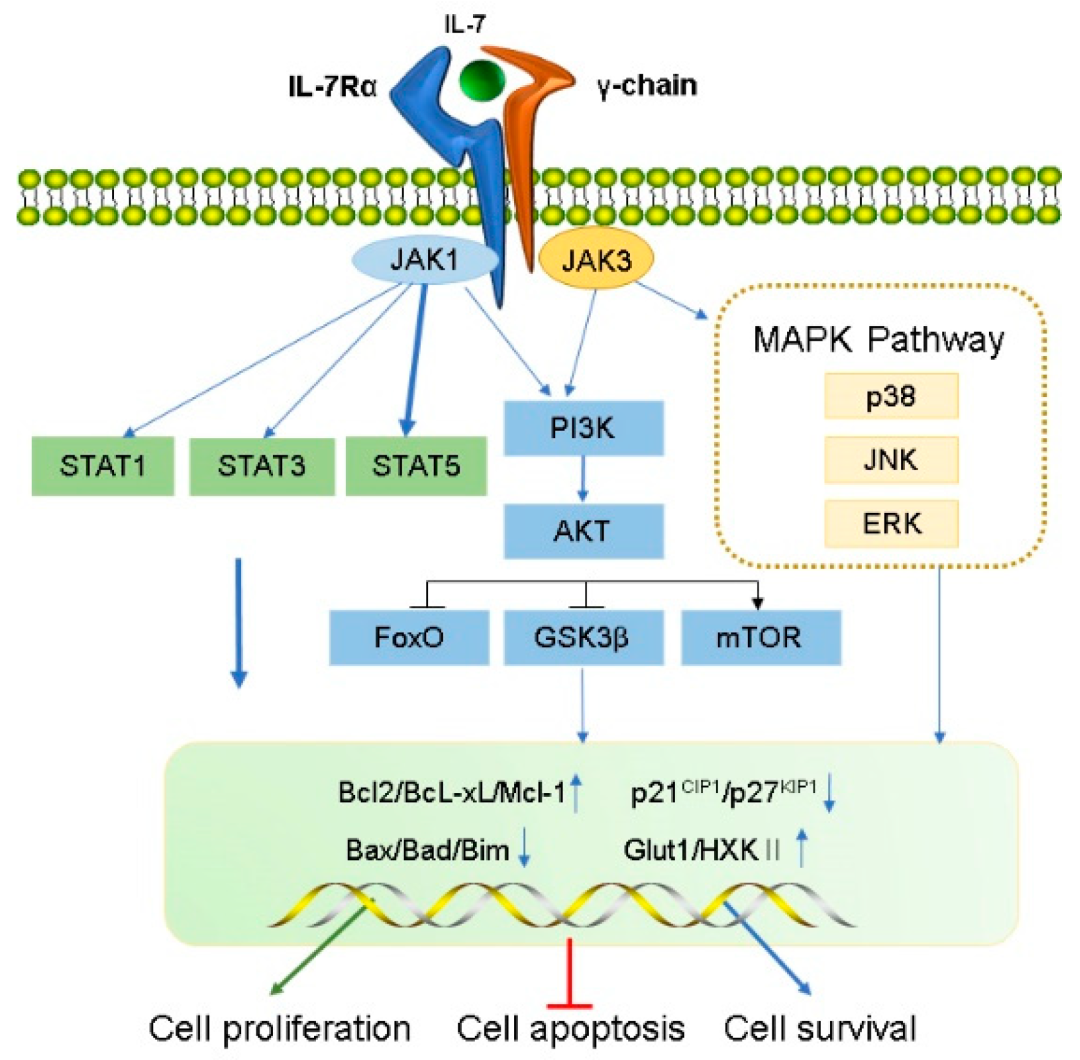
IL-7 is an indispensable regulatory factor in the development of the lymphoid system, and its functional deficiency leads to severe immunodeficiency. In IL-7-deficient mouse models, the development of T cells, B cells, and innate lymphoid cells (ILCs) is significantly impaired, fully demonstrating the central role of IL-7 in the construction of the lymphoid system.
In B cell development, IL-7 is crucial for the early differentiation of mouse B cells. The differentiation from common lymphoid progenitors to pro-B cells, as well as the further maturation of pro-B cells in the bone marrow, all depend on IL-7 signaling support. Although the development of human B cells is relatively less dependent on IL-7, IL-7 still plays an important regulatory role in the specification of early B cell lineages.
In the process of T cell development, IL-7 acts through multiple key stages. After lymphoid progenitors migrate to the thymus, IL-7 signaling provides necessary support for their survival and differentiation. Thymic double-negative (DN) T cell precursors (lacking CD4 and CD8 expression) are divided into four stages (DN1-DN4) based on the expression of CD44 and CD25. The differentiation from DN2 to γδ T cells is completely dependent on IL-7. IL-7 promotes the proliferation and differentiation of cells at the DN stage by upregulating cell growth-related genes such as CD98. However, when cells develop to the CD4+CD8+ double-positive stage, they lose the expression of functional IL-7R and temporarily detach from IL-7 regulation.
In the development of innate lymphoid cells (ILCs), IL-7 is crucial for the formation of ILC2 and ILC3 subsets. IL-7-deficient mice completely lack these ILC subsets, resulting in impaired mucosal barrier defense function, suggesting that IL-7 participates in the construction of the body's innate immune defense line by maintaining ILC populations.
IL-7 not only participates in the development and construction of the lymphoid system but also plays a continuous role in maintaining immune homeostasis. Unlike mature B cells, naive T cells and memory T cells continuously express IL-7Rα and rely on IL-7 signaling to maintain survival and homeostasis. IL-7 prolongs the survival cycle of T cells by regulating the intrinsic pathway of cell apoptosis and inhibiting the activation of pro-apoptotic molecules.
During T cell immune responses, IL-7 is involved in regulating the transformation of effector T cells into memory T cells. Activated T cells rapidly downregulate IL-7Rα expression, detach from IL-7-dependent homeostatic regulation, and instead rely on TCR and IL-2 signaling for proliferation. After the immune response ends, some effector T cells re-express IL-7Rα, and these cells become precursors of memory T cells, completing the establishment and long-term maintenance of the memory phenotype with the support of IL-7. In this process, the Foxo1 transcription factor, by maintaining IL-7Rα expression, becomes a key molecule connecting IL-7 signaling and memory T cell formation.
In addition, IL-7 is also of great significance for the homeostasis maintenance of innate lymphoid cells. The survival and functional maintenance of ILCs depend on signal support provided by IL-7, which further expands the role range of IL-7 in immune homeostasis regulation, making it an important regulatory factor connecting adaptive immunity and innate immunity.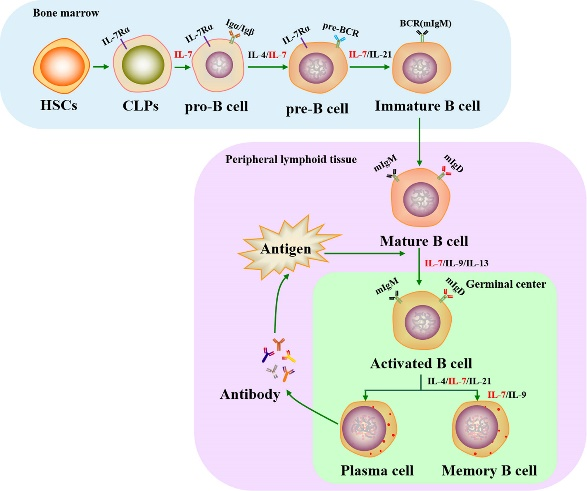
Abnormal expression or signal dysregulation of IL-7 is closely related to the occurrence and development of various diseases. In autoimmune diseases, IL-7 often shows increased expression levels, which are related to disease activity. For example, the level of IL-7 in the cerebrospinal fluid of patients with multiple sclerosis is significantly increased, which is positively correlated with the severity of the disease; the expression of IL-7 in the labial salivary gland tissue of patients with primary Sjögren's syndrome is increased, which may participate in the disease process by promoting the proliferation of autoreactive T cells. Studies have shown that single nucleotide polymorphisms in the IL-7R locus can affect the level of soluble IL-7R, increasing the susceptibility to autoimmune diseases. The mechanism may be related to IL-7 overactivating T cells and breaking immune tolerance.
In the field of oncology, abnormal activation of the IL-7/IL-7R signaling axis is closely related to hematological malignancies. In childhood acute B lymphoblastic leukemia (B-ALL), overexpression of IL-7Rα is associated with an increased risk of disease recurrence; in T cell acute lymphoblastic leukemia (T-ALL), approximately 10% of patients carry gain-of-function mutations in IL-7Rα, leading to ligand-independent continuous activation of the receptor and promoting the proliferation and survival of tumor cells. In addition, the role of IL-7 in solid tumors is controversial. Some studies have shown that it may play a tumor-suppressive role by enhancing anti-tumor immunity, while other studies have suggested that IL-7 may promote the progression of tumors such as non-small cell lung cancer. Its specific mechanism still needs further clarification.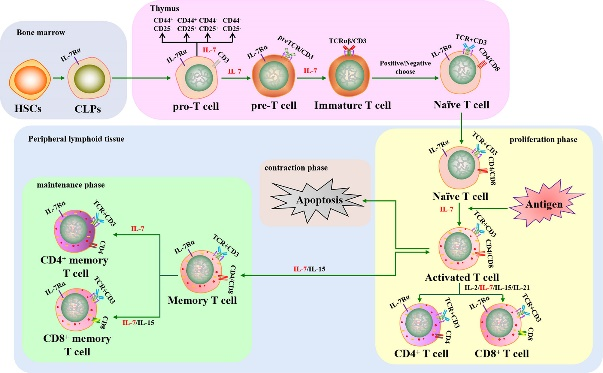
Based on the important role of IL-7 in immune regulation and diseases, therapeutic strategies targeting the IL-7/IL-7R pathway have become a research hotspot, and a variety of drugs have entered the clinical development stage.
In the treatment of autoimmune diseases, anti-IL-7R monoclonal antibodies can selectively inhibit the activity of effector T cells by blocking IL-7 signaling, while retaining the function of regulatory T cells (Treg), thereby reducing immune pathological damage. At present, anti-IL-7Rα monoclonal antibodies such as OSE-127 have completed phase I clinical trials in healthy volunteers with good safety, and phase II studies in diseases such as inflammatory bowel disease and Sjögren's syndrome are planned. Previously, candidate drugs such as PF-06342674 from Pfizer and GSK2618960 from GlaxoSmithKline were terminated in clinical trials for indications such as multiple sclerosis due to pipeline adjustments or undisclosed reasons, but they provided important experience for subsequent drug development.
In the field of tumor treatment, IL-7 has been explored for immunopotentiating therapy due to its ability to promote T cell proliferation. IL-7-Fc fusion protein can effectively induce T cell expansion by extending the half-life, showing good tolerance in healthy subjects. At present, clinical trials of IL-7-Fc combined with temozolomide in the treatment of glioblastoma, and combined with PD-1 inhibitors in the treatment of melanoma and triple-negative breast cancer have entered the 1b/2a stage. Preliminary results show that it can increase T cell infiltration in the tumor microenvironment. In addition, the combined application of IL-7 and CAR-T cell therapy is also being explored in acute lymphoblastic leukemia, which is expected to improve the therapeutic effect by enhancing the survival and proliferation ability of CAR-T cells.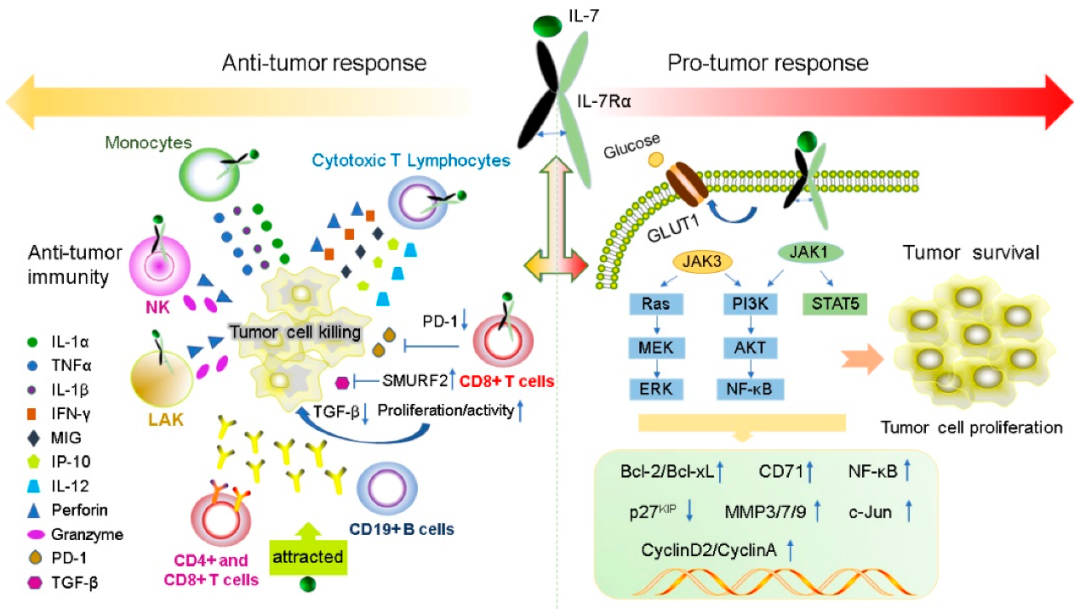
As a key immune regulatory factor, IL-7 plays an irreplaceable role in lymphoid system development and immune homeostasis maintenance. At the same time, its abnormal signaling is involved in the pathological processes of various diseases such as autoimmune diseases and tumors. In recent years, therapeutic strategies targeting the IL-7/IL-7R pathway have made significant progress. Blocking IL-7 signaling in autoimmune diseases to reduce immune damage, and enhancing IL-7 activity in tumors to improve anti-tumor immunity have shown good clinical application prospects.
Future research needs to further clarify the role mechanism of IL-7 in different diseases, develop more precise targeted drugs, and optimize the administration scheme to improve efficacy and reduce adverse reactions. With the deepening of clinical research, IL-7 targeted therapy is expected to provide new treatment options for patients with autoimmune diseases and tumors, promoting the development of the field of immunotherapy.












 Business license (three certificates in one)