I. Molecular Characteristics of LR3-IGF-I
(1) Structural Features
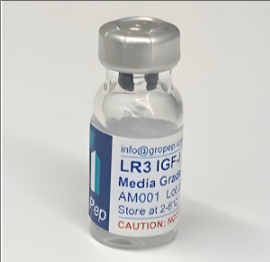
LR3-IGF-I is a recombinant analog of human insulin-like growth factor-I (IGF-I) prepared through genetic engineering technology, with a specially designed molecular structure. Its core modifications are reflected in two key aspects: first, a site-directed amino acid substitution at position 3, where the original glutamine (Q) is replaced with arginine (R); second, a 13-amino-acid extended polypeptide chain is linked to the N-terminus. This structural modification results in significant differences in the amino acid sequence between LR3-IGF-I and natural IGF-I, with the total number of amino acids reaching 83. The unique molecular structure endows it with distinct biochemical properties from natural IGF-I, laying a molecular foundation for its efficient role in organisms.
(2) Mechanism of Action
The activity of natural IGF-I in organisms is often regulated by IGF-binding proteins (IGFBPs), and they tend to form stable complexes, thereby reducing the free concentration and biological activity of IGF-I. However, due to its structural modification, LR3-IGF-I has a significantly reduced affinity for IGFBPs, with a reduction of more than 1000 times. This characteristic enables it to effectively evade the inhibitory effect of IGFBPs and exist in a higher proportion of free state in the biological environment. Free LR3-IGF-I can more efficiently bind specifically to IGF-I receptors on the cell surface, activating downstream signal transduction pathways such as the PI3K/Akt signaling pathway and the MAPK signaling pathway. The activation of these signaling pathways can initiate a series of growth-related biological reactions in cells, promoting cell proliferation, differentiation, and survival, and significantly enhancing its bioavailability and biological efficacy.
II. Functions and Advantages of LR3-IGF-I in Cell Culture
(1) Wide Cell Applicability
In cell culture systems, LR3-IGF-I exhibits strong versatility and can promote the growth of various cell types. All cells that have growth responses to insulin can show positive growth reactions after the addition of LR3-IGF-I, covering common cell lines such as CHO cells, HEK293 cells, BHK cells, MDCK cells, PER.C6 cells, Vero cells, and various fibroblasts. Whether in small-scale cell culture experiments in basic research or large-scale industrial cell culture production in the biopharmaceutical field, LR3-IGF-I can play a stable role, providing reliable support for cell growth in different scenarios.
(2) Significantly Improving Cell Proliferation Efficiency
In terms of promoting cell proliferation, LR3-IGF-I shows excellent performance. In serum-free cell culture systems, relevant experimental data indicate that LR3-IGF-I can significantly increase the viable cell density (IVCD) within a relatively low concentration range. Specifically, in the concentration range of 0.5-20 ng/mL, a significant improvement in cell proliferation can be observed. Comparative experiments show that some conventional products need to be used at high concentrations of 14-350 ng/mL to achieve similar effects, while LR3-IGF-I can achieve the same level of cell proliferation at a low concentration of 5 ng/mL. This low-concentration and high-efficiency characteristic not only reduces the cost of cell culture but also reduces the potential adverse effects that high-concentration additives may have on cells.
(3) Increasing Product Expression
In the field of recombinant protein production, the product expression level of cells is one of the core indicators to measure culture efficiency, and LR3-IGF-I has significant advantages in this aspect. Taking CHO cells commonly used in recombinant protein production as an example, after the addition of LR3-IGF-I, the monoclonal antibody yield of cells can be effectively increased by up to 52%, and the coefficient of variation (CV) between batches is less than 8%, showing good production stability. In terms of batch consistency, its relative standard deviation (RSD) is less than 5%, which is better than some similar products, and can meet the strict requirements for product quality stability in biopharmaceutical production, providing reliable performance guarantee for large-scale recombinant protein production.
(4) Effectively Maintaining Cell Viability
Maintaining cell viability for a long time is a key factor for successful cell culture, especially in the process of continuous culture. In a 7-day continuous cell culture experiment, the experimental group with LR3-IGF-I added showed excellent ability to maintain cell viability, and the viable cell rate remained above 95%. However, some control groups showed a decrease of about 15% in viable cell rate on the 5th day of culture. Analysis speculates that this may be related to the activity inhibition caused by residual IGFBP binding in the culture system. With its unique molecular structure, LR3-IGF-I can continuously provide growth signals for cells, reduce cell apoptosis, maintain the normal physiological functions of cells, and create favorable conditions for the long-term stable culture of cells.
III. Application Cases of LR3-IGF-I in Cell Culture
In the CHO cell culture system, the application effect of LR3-IGF-I has been fully verified. In a 12-day cell culture experiment, compared with the control group with ordinary insulin added, the experimental group with LR3-IGF-I added showed obvious advantages in cell growth and protein expression. From the cell density data, the peak cell density of the experimental group increased by 47.6% compared with the control group, and the cell growth trend was more vigorous; in terms of protein expression, the expression level of a certain protein in the experimental group increased by 61% compared with the control group, which fully proves the dual effects of LR3-IGF-I in promoting cell growth and product synthesis. These experimental results provide a strong experimental basis for the wide application of LR3-IGF-I in biopharmaceutical cell culture processes.
IV. Application Value and Development Prospect of LR3-IGF-I
With its unique molecular structure and excellent biological properties, LR3-IGF-I has irreplaceable application value in the biomedical field. Its emergence provides a new solution for the optimization of cell culture technology, which can significantly improve the efficiency and quality of cell culture and reduce production costs. In the context of the continuous development of the biopharmaceutical industry, the demand for efficient cell culture supplements is increasing. With its wide applicability, efficient proliferation-promoting effect, stable product improvement effect, and good cell viability maintenance ability, LR3-IGF-I has become a key component in cell culture systems. With the continuous maturity of related technologies and the deepening of application research, the application prospect of LR3-IGF-I in biomedical research and recombinant protein production will be broader, playing an important role in promoting the development of the biopharmaceutical industry.












 Business license (three certificates in one)