1. Structural Characteristics and Molecular Features of ROR1
ROR1 (Receptor Tyrosine Kinase-like Orphan Receptor 1) belongs to the receptor tyrosine kinase-like orphan receptor subfamily within the receptor tyrosine kinase (RTKs) superfamily. It was initially named because its ligand was unknown when first discovered. Later studies confirmed that it activates signaling pathways by binding to Wnt family proteins, playing a key role in regulating cell communication, proliferation, differentiation, and survival. This family is characterized by conserved and unique kinase domains and has a distinct evolutionary position in the human kinome phylogenetic tree.
The ROR1-encoding gene is located on chromosome 1p31.3, with a total length of 2812bp, encoding a type I transmembrane receptor protein containing 937 amino acids. Its structure has typical transmembrane receptor characteristics: the extracellular region includes immunoglobulin-like domains, frizzled protein domains (FZD), and a juxtamembrane kringle domain. Among them, the FZD domain participates in Wnt pathway signal transduction, and the kringle domain is responsible for recognizing Wnt ligands and mediating macromolecular interactions; the intracellular region contains a tyrosine kinase domain (TKD), two serine/threonine-rich domains (S/TRD), and a proline-rich domain (PRD). Notably, ROR1 has four isoforms, among which the full-length membrane receptor (105kD) and its glycosylated form (130kD) are highly expressed in tumor tissues and are the focus of research; while the truncated variant (64kD) is mainly distributed in the nucleus and has a weak association with tumorigenesis.
There is controversy regarding the kinase activity of ROR1. Due to critical substitutions in the conserved motifs of its kinase domain, resulting in the loss of ATP-binding ability and catalytic activity, ROR1 is classified as a pseudokinase. Sequence alignment with typical tyrosine kinases such as ROR2 and FLT3 confirmed that the functional defects in its kinase domain prevent it from transmitting signals through traditional kinase mechanisms, suggesting that it may function through non-kinase-dependent mechanisms.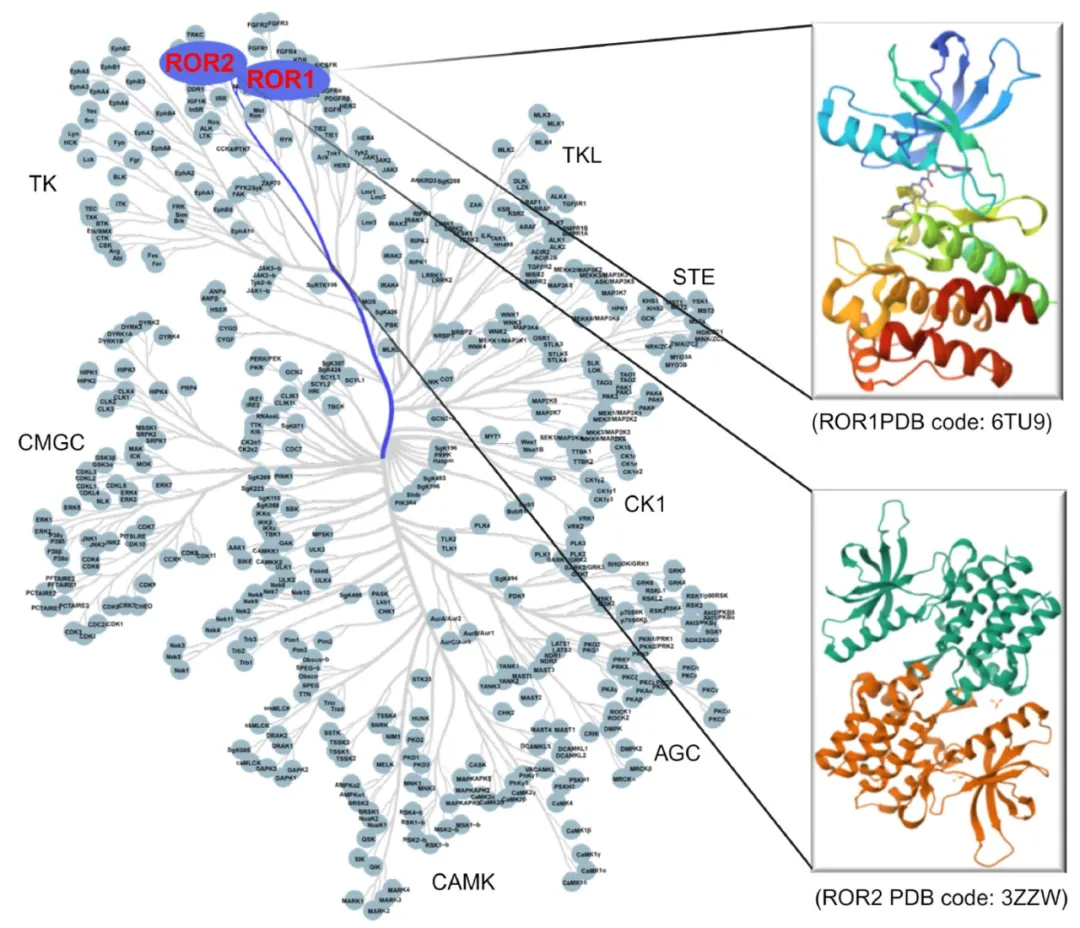
2. ROR1-Mediated Signaling Pathway Network
ROR1 mainly exerts biological effects through non-canonical Wnt signaling pathways, among which the Wnt5a/ROR1 signaling axis is the most thoroughly studied. After Wnt5a binds to the extracellular region of ROR1, it can activate the NF-κB signaling pathway, promote the secretion of pro-inflammatory factors such as IL-6 through the ROR1/Akt/p65 pathway, promote tumor cell migration, invasion, and epithelial-mesenchymal transition (EMT) processes, and ultimately facilitate tumor metastasis.
In the YAP/TAZ signaling pathway, after Wnt5a binds to the ROR1/FZD complex, it activates RhoA through Gα12/13 proteins, inhibits Lats1/2 kinase activity, leading to YAP/TAZ dephosphorylation and translocation to the nucleus. In the nucleus, YAP/TAZ binds to TEAD transcription factors to initiate the transcription of genes related to cell proliferation, stem cell self-renewal, and tumorigenesis. Meanwhile, the transcriptional activation of YAP/TAZ can further upregulate ROR1 expression, forming a positive regulatory loop. This pathway is closely related to tumorigenesis and chemoresistance.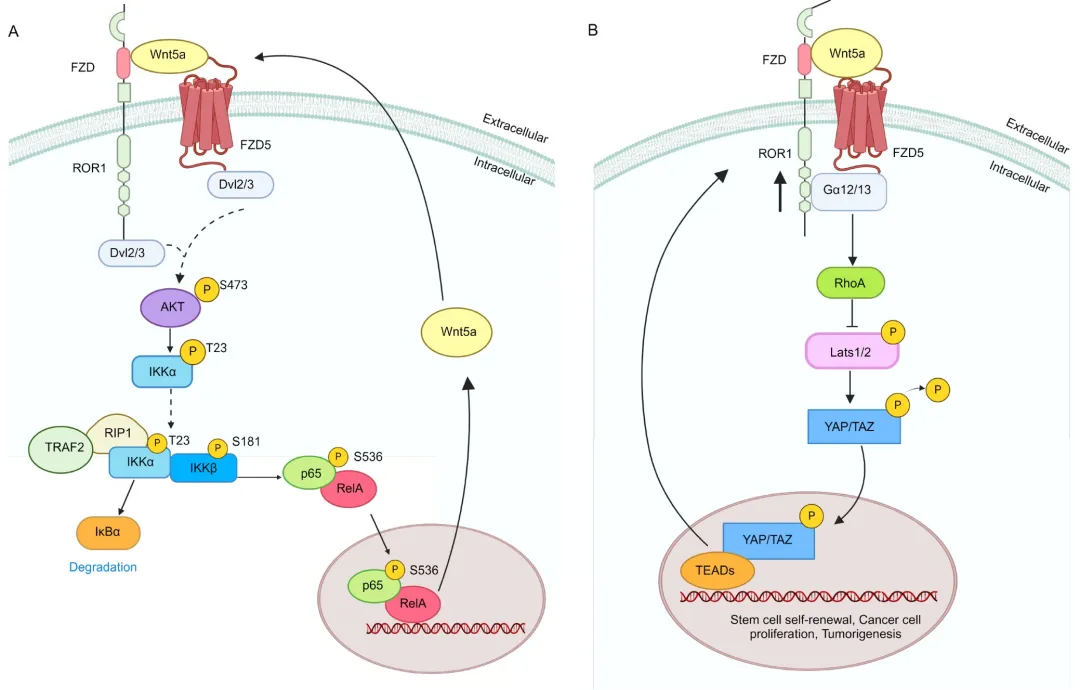
3. Tissue Expression Pattern of ROR1 and Its Correlation with Tumors
The expression of ROR1 has significant spatiotemporal specificity: it is widely expressed during embryonic development, and gene knockout can lead to embryonic lethality, suggesting its indispensability in early development; in adult individuals, ROR1 is lowly expressed or silenced in most postnatal tissues but is still expressed in adipose tissue, some endocrine glands, gastrointestinal tissues, and immature B lymphocytes. This developmental stage-specific expression pattern provides a theoretical basis for tumor-targeted therapy.
In tumor tissues, ROR1 is abnormally highly expressed, widely present in various malignant tumors such as chronic lymphocytic leukemia (CLL), breast cancer, ovarian cancer, melanoma, and lung adenocarcinoma. Studies have confirmed that high ROR1 expression is closely related to malignant tumor phenotypes: in CLL, its expression level is positively correlated with disease progression and poor prognosis, and can promote cell migration by activating Rho-GTPase; in lung cancer, ROR1 inhibits apoptosis by activating c-Src and MET pathways; in ovarian cancer, the recurrence rate of patients with high expression is as high as 85%, and the median survival time is significantly shortened; in breast cancer, it promotes disease progression by activating the PI3K/AKT pathway. This expression difference between tumor and normal tissues makes ROR1 a highly attractive tumor-specific therapeutic target.
4. Progress in ROR1-Targeted Drug Development
In the field of monoclonal antibodies, Cirmtuzumab is the first ROR1-targeted antibody to enter clinical trials. It exerts anti-tumor effects by blocking ligand binding and activating the immune system. It has shown good safety and efficacy in phase I clinical trials for CLL, and combined trials for breast cancer and mantle cell lymphoma (MCL) are currently underway. In terms of antibody-drug conjugates (ADCs), VLS-101 is formed by conjugating Cirmtuzumab with the microtubule inhibitor MMAE, which can precisely target ROR1-positive tumor cells and induce apoptosis, showing potential in clinical trials for various solid tumors and hematological tumors; NBE-002, through different toxin conjugation strategies, has shown significant activity in patient-derived xenograft models.
Bispecific T-cell engagers (BiTEs) such as NVG-111 can simultaneously bind to T cells and ROR1-positive tumor cells, mediate T-cell cytotoxic killing, and have shown significant effects in preclinical studies of CLL and solid tumors. CAR-T cell therapy uses ROR1-specific single-chain antibodies to construct chimeric antigen receptors, showing strong targeting in clinical trials for hematological and solid malignant tumors. The development of small-molecule inhibitors has lagged relatively due to disputes over kinase activity, but compounds such as KAN0439834 and ARI-1 have shown the ability to inhibit ROR1 phosphorylation and tumor cell survival, providing new ideas for non-kinase-dependent functional regulation.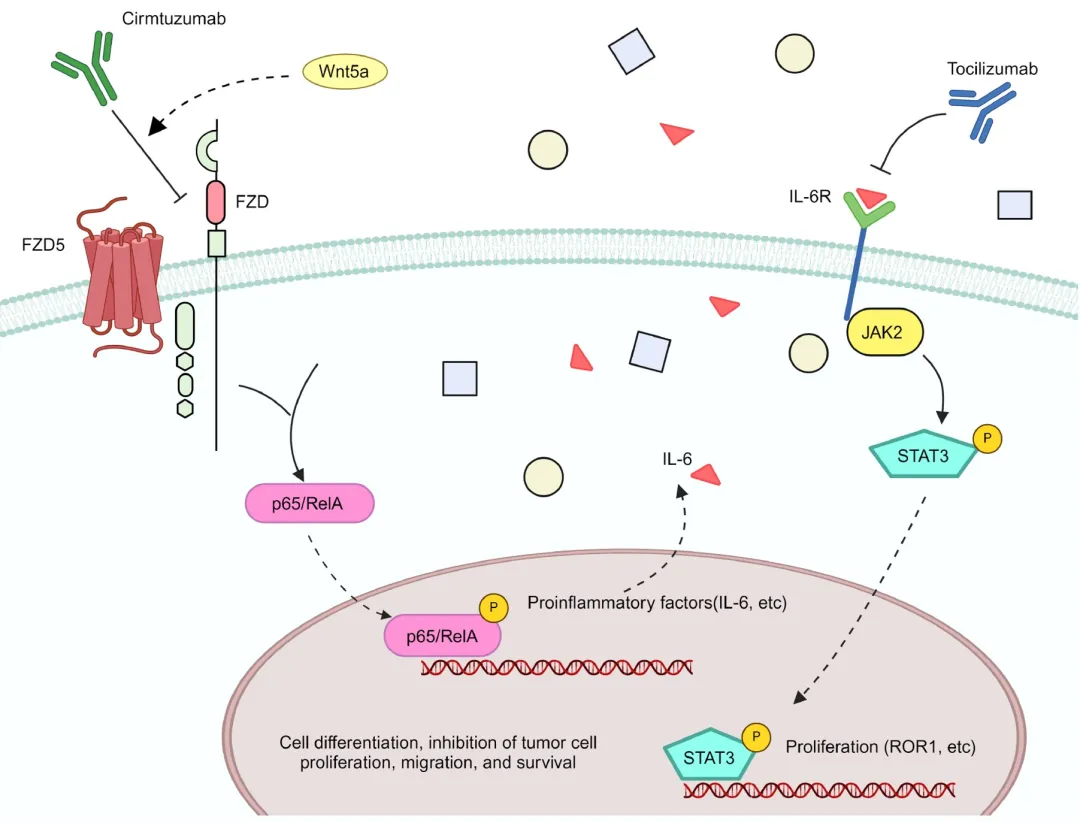
5. Clinical Research Progress and Future Prospects
In the field of hematological tumors, significant progress has been made in ROR1-targeted therapy: various drugs in CLL have shown effects in reducing the number of tumor cells; in MCL, silencing ROR1 can inhibit cell growth, and combined treatment regimens are being evaluated; in diffuse large B-cell lymphoma (DLBCL), the Zilovertamab vedotin combination regimen achieved a 100% complete remission rate in clinical trials, becoming a research highlight. In terms of solid tumors, ROR1-targeted therapies for breast cancer, ovarian cancer, and lung cancer have entered preclinical or early clinical stages, providing new strategies for the treatment of refractory tumors.
Future research needs to focus on enhancing targeting specificity, clarifying downstream signal networks, and overcoming drug resistance mechanisms. PROTAC technology for targeted degradation of ROR1, personalized combination therapy, and immunomodulatory strategies are expected to become development directions. With the deepening of research, the value of ROR1 as a tumor therapeutic target will be further highlighted, opening up new avenues for precise treatment of malignant tumors.













 Business license (three certificates in one)