1. Molecular Characteristics of the Siglec Family and Siglec-3
The sialic acid-binding immunoglobulin-like lectin (Siglec) family is a group of transmembrane receptors that recognize sialic acid-containing glycans and play an important role in immune suppression within the tumor microenvironment. This family includes 15 human and 9 murine molecules, which are classified into evolutionarily conserved and CD33-related rapidly evolving subtypes based on their sequence conservation. Siglec-3 (CD33) belongs to the CD33-related subfamily and is one of the focal points in tumor immunology research.
Siglec-3 is a type I membrane protein with typical Siglec structural features: the extracellular region contains one sialic acid-binding V-set immunoglobulin domain and one C2-set immunoglobulin domain; the transmembrane region has positively charged amino acid residues; and the intracellular region contains two immunoreceptor tyrosine-based inhibitory motifs (ITIMs). When bound to sialic acid-containing ligands, the tyrosine residues in the intracellular ITIMs are phosphorylated, recruiting phosphatases such as SHP1 and SHP2, thereby inhibiting downstream immune activation signals, which is similar to the negative regulatory mechanism of PD-1.
Compared with other inhibitory members like Siglec-7 and Siglec-9, Siglec-3 exhibits cell lineage-specific expression, mainly on the surface of myeloid cells (monocytes, macrophages, dendritic cells), with low expression in neutrophils and NK cells. This expression pattern determines its core role in regulating the functions of myeloid immune cells.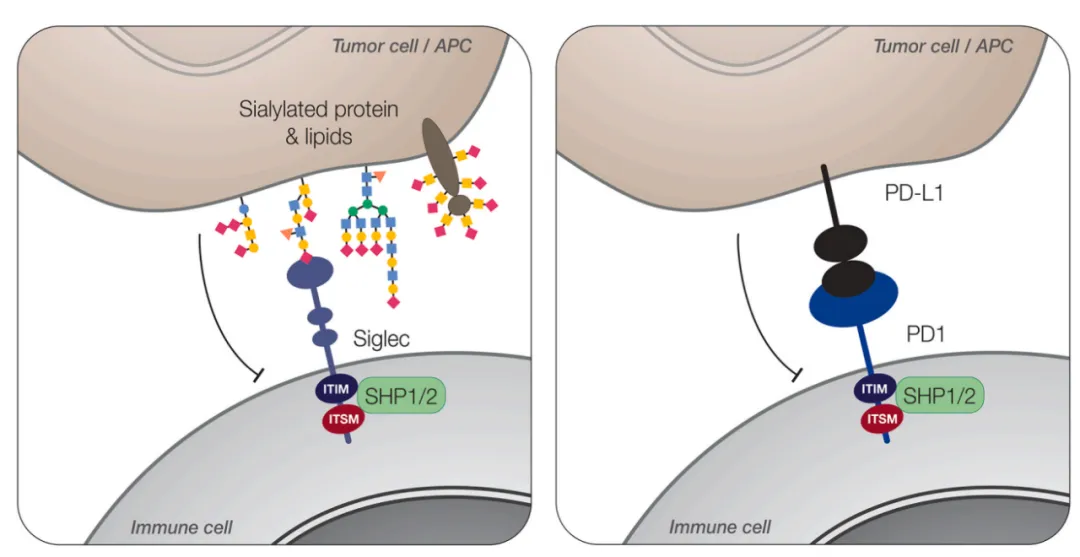
2. Ligands of Siglec-3 and Their Expression Characteristics in the Tumor Microenvironment
The function of Siglec-3 depends on its binding to sialic acid-containing glycan ligands. Tumor cells and stromal cells in the tumor microenvironment often undergo abnormal hypersialylation, producing a large number of ligands that can be recognized by Siglec-3, forming a "sialoglycan-Siglec-3" axis involved in tumor immune evasion.
Hypersialylation of tumor cells is mainly driven by the abnormal expression of sialyltransferases (such as ST3GAL1, ST3GAL4, and ST6GAL1). In acute myeloid leukemia (AML), molecules like CD166 and CD43 on the surface of leukemia cells are highly sialylated, serving as major ligands for Siglec-3. In solid tumors such as pancreatic cancer and colorectal cancer, mucins (MUC1, MUC16) secreted by tumor cells, after sialic acid modification, can bind to Siglec-3 on the surface of tumor-infiltrating macrophages. Additionally, sialylated hyaluronic acid secreted by cancer-associated fibroblasts can also act as a ligand involved in immune suppression.
Clinical studies have shown that the expression level of Siglec-3 ligands in tumor tissues is associated with patient prognosis. In AML patients, those with high expression of sialylated ligands have more infiltration of myeloid suppressor cells and lower response rates to chemotherapy and immunotherapy. In breast cancer models, high expression of Siglec-3 ligands on the surface of tumor cells can inhibit macrophage phagocytosis and promote metastasis. These findings indicate that the activation of the "sialoglycan-Siglec-3" axis is an important mechanism of tumor immune evasion.
3. Regulatory Effects of Siglec-3 on the Functions of Tumor Immune Cells
Siglec-3 regulates the functions of various immune cells through interaction with ligands, shaping an immunosuppressive tumor microenvironment:
(1) Regulation of Macrophages
Tumor-associated macrophages (TAMs) are major cells expressing Siglec-3. In solid tumors such as pancreatic cancer and ovarian cancer, the binding of sialylated ligands from tumor cells to Siglec-3 on TAMs activates the SHP1/2 signaling pathway, inhibiting the transformation of macrophages to a pro-inflammatory phenotype. This results in reduced secretion of pro-inflammatory factors such as IL-12 and TNF-α, increased production of anti-inflammatory factors like IL-10 and TGF-β, and inhibition of phagocytic function, thereby reducing the clearance of tumor cells. Furthermore, it promotes TAMs to express vascular endothelial growth factor (VEGF), indirectly facilitating tumor angiogenesis.
(2) Impact on Dendritic Cells
The antigen-presenting function of dendritic cells (DCs) is crucial for initiating adaptive anti-tumor immunity. Monocyte-derived DCs express Siglec-3 on their surface. When bound to sialylated ligands secreted by tumor cells, their maturation is inhibited, with decreased expression of co-stimulatory molecules such as CD80 and CD86, reduced secretion of IL-23, and impaired ability to activate CD4⁺ and CD8⁺ T cells. In lung cancer models, blocking Siglec-3 signaling can restore the mature phenotype of DCs and enhance their ability to induce anti-tumor T cell responses.
(3) Autoregulation of Acute Myeloid Leukemia Cells
In AML, leukemia cells themselves express Siglec-3, forming an "autocrine" regulatory loop. The binding of secreted sialylated ligands to their own Siglec-3 activates the PI3K/Akt signaling pathway to promote survival, inhibits the expression of apoptosis-related proteins such as Bax, and enhances resistance to chemotherapy drugs, providing a unique target for AML treatment.
(4) Regulation of Neutrophils
Neutrophils in the tumor microenvironment can differentiate into the tumor-promoting N2 phenotype. Studies have shown that the expression of Siglec-3 on neutrophils increases with tumor progression. Its binding to tumor cell ligands can inhibit neutrophil oxidative burst and the formation of neutrophil extracellular traps (NETs), impairing their killing ability. In a colorectal cancer liver metastasis model, blocking Siglec-3 can restore the anti-tumor activity of neutrophils and reduce the formation of metastases.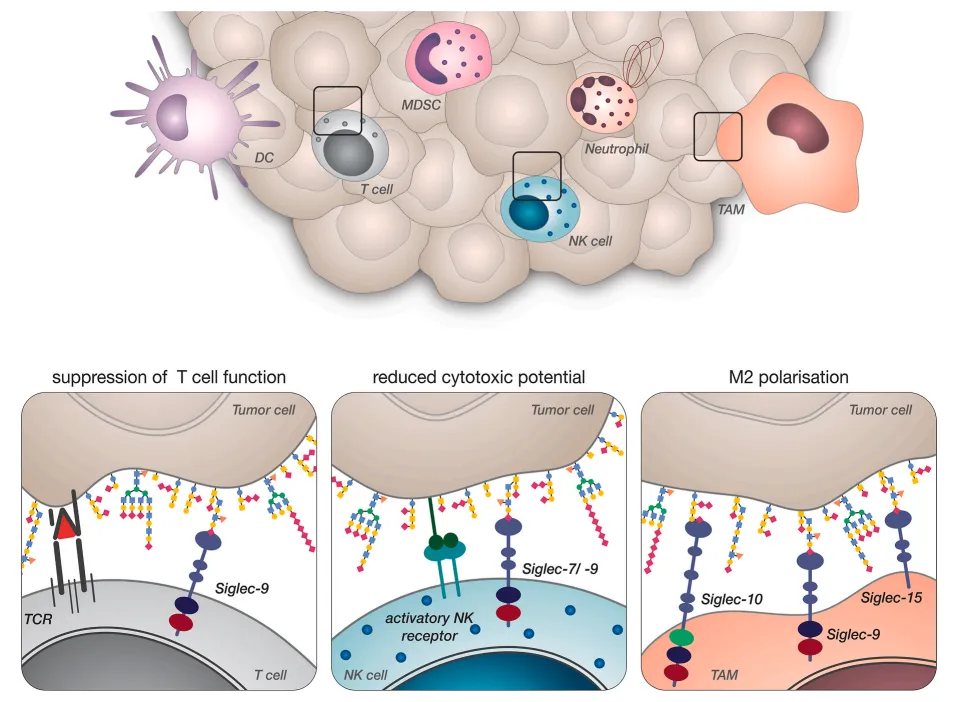
4. Therapeutic Strategies and Research Progress Targeting Siglec-3
Based on the role of Siglec-3 in tumor immune suppression, targeted therapeutic strategies have become a new direction:
(1) Siglec-3 Blocking Antibodies
The development of monoclonal antibodies that specifically block the binding of Siglec-3 to its ligands can relieve immune suppression. Preclinical studies have shown that anti-Siglec-3 monoclonal antibodies can block the interaction between leukemia cells and Siglec-3 on macrophages in AML models, promoting phagocytosis. In solid tumor models, they can polarize TAMs to a pro-inflammatory phenotype and enhance the infiltration and killing activity of CD8⁺ T cells. A humanized monoclonal antibody (such as IMGN632) has entered phase I clinical trials for the treatment of relapsed/refractory AML, showing good safety and anti-tumor activity.
(2) Antibody-Drug Conjugates (ADCs)
Utilizing the specific expression of Siglec-3 on tumor cells such as AML cells, conjugating antibodies with cytotoxic payloads can achieve precise killing of tumor cells. For example, ADCs composed of anti-Siglec-3 antibodies and DNA-damaging agents can selectively accumulate in leukemia cells in AML animal models, induce apoptosis, and have low toxicity to normal hematopoietic stem cells, which have entered preclinical evaluation.
(3) Sialic Acid Metabolism Inhibitors
Inhibiting the synthesis or modification of sialic acid in tumor cells to reduce Siglec-3 ligands can indirectly block the "sialoglycan-Siglec-3" axis. Sialyltransferase inhibitors (such as ST3GAL1 inhibitors) can reduce the sialylation level of tumor cells in pancreatic cancer models and enhance macrophage phagocytic function. Sialic acid synthesis precursor analogs such as 2-deoxy-D-glucose, when used in combination with chemotherapy drugs in AML models, can improve efficacy.
(4) Combination Therapy Strategies
Combining Siglec-3 targeting with other immune checkpoint inhibitors shows a synergistic effect. In melanoma models, the combination of anti-Siglec-3 antibodies and anti-PD-1 antibodies can increase the number and activity of tumor-infiltrating T cells, with a better tumor growth inhibition effect than single therapy. In AML models, the combination of Siglec-3 blockade and CD47 antibodies can synergistically promote macrophage phagocytosis of leukemia cells and prolong the survival of model animals.
5. Summary and Outlook
Siglec-3, by recognizing sialic acid-containing glycans in the tumor microenvironment, regulates the functions of immune cells such as macrophages and dendritic cells, and is an important mediator of tumor immune evasion. Targeted therapeutic strategies against Siglec-3 have shown good anti-tumor potential in preclinical studies, and some drugs have entered clinical trials, bringing hope for overcoming tumor resistance to existing immunotherapies.
However, Siglec-3 targeted therapy still faces challenges: the expression of Siglec-3 in normal myeloid cells may cause treatment-related toxicity; the compensatory activation of other Siglec family members may affect the therapeutic effect; and the cross-regulatory mechanisms between the "sialoglycan-Siglec-3" axis and other immune checkpoint pathways need to be further elucidated. In the future, it is necessary to optimize the specificity of targeted molecules, explore the best combination therapy regimens, and achieve individualized treatment based on patients' molecular typing to promote the application of Siglec-3 targeting strategies in clinical tumor treatment.













 Business license (three certificates in one)