The vascular endothelial growth factor (VEGF) family is a core molecule regulating angiogenesis. Since Ferrara et al. first systematically named its members in 1989, the family has included VEGF-A, VEGF-B, VEGF-C, etc. Among them, VEGF-A has become a research focus due to its dominant role in physiological and pathological processes. The precursor mRNA of VEGF-A generates multiple subtypes through alternative splicing, and VEGF121 is one of the most widely distributed subtypes. Composed of 121 amino acids, its molecular structure is characterized by the lack of a heparin-binding domain, which makes it mainly exist in body fluids in a soluble form. It can be widely distributed through the blood circulation, in sharp contrast to subtypes with heparin-binding domains such as VEGF165.
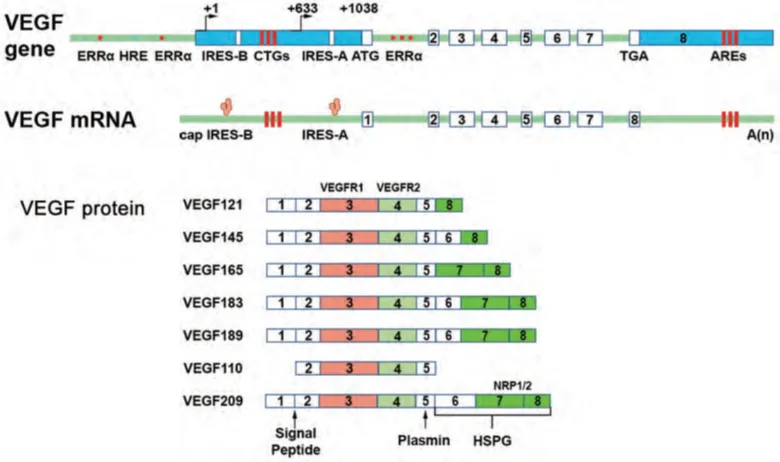
At the genetic level, VEGF121 arises from the selective splicing deletion of exons 6 and 7 in the VEGF-A gene, resulting in the absence of key regions related to heparin binding in the protein sequence. This evolutionarily conserved splicing pattern suggests its fundamental role in species survival and tissue homeostasis. Meanwhile, the N-terminal of VEGF121 retains the core functional domain that binds to VEGF receptors (VEGFRs), enabling it to specifically recognize and activate VEGFR-1 (FLT-1) and VEGFR-2 (KDR), laying the molecular foundation for the exertion of its biological functions.
Figure 1. Schematic diagram of the structure and receptor binding sites of VEGF gene, VEGF precursor mRNA and their protein formation
VEGF121 is widely distributed in normal tissues and is basally expressed during embryonic development, organ formation, and adult tissue homeostasis. It exists at persistently low levels in tissues such as the myocardium, lungs, kidneys, and skin, maintaining tissue oxygen supply and nutrient exchange by regulating basal angiogenesis and vascular permeability. Unlike the highly inducible expression of VEGF165 under pathological conditions, the physiological expression of VEGF121 is more stable, serving as a "basic regulator" of normal tissue metabolism.
In wound repair, the expression of VEGF121 is transiently upregulated. During skin wound healing, VEGF121 secreted by keratinocytes and fibroblasts diffuses in a soluble form, recruiting vascular endothelial cells to migrate to the wound and promoting the formation of a vascular network in granulation tissue, thereby providing blood supply for tissue regeneration. This "rapid response - broad action" characteristic makes it a key initiator of early vascular reconstruction in trauma.
The physiological functions of VEGF121 are concentrated in the activation of vascular endothelial cells and the maintenance of vascular networks:
Promotion of proliferation and migration: By binding to VEGFR-2, it activates the downstream ERK signaling pathway to promote the proliferation of vascular endothelial cells; at the same time, it enhances cell survival ability and reduces apoptosis through the PI3K/AKT pathway. In embryonic vasculogenesis, VEGF121-mediated endothelial cell migration is an important driving force for vascular sprouting.
Regulation of vascular permeability: After binding to VEGFR-2, it induces the relaxation of inter-endothelial junctions by activating the p38 MAPK pathway, increasing vascular permeability. This process facilitates tissue fluid exchange and nutrient transport under physiological conditions, and promotes immune cell infiltration during inflammatory responses.
Non-angiogenic functions: Recent studies have found that VEGF121 also has neuroprotective effects. In the central nervous system, it can promote neuron survival and axonal growth, and its mechanism may be related to the activation of anti-apoptotic signals mediated by VEGFR-1.
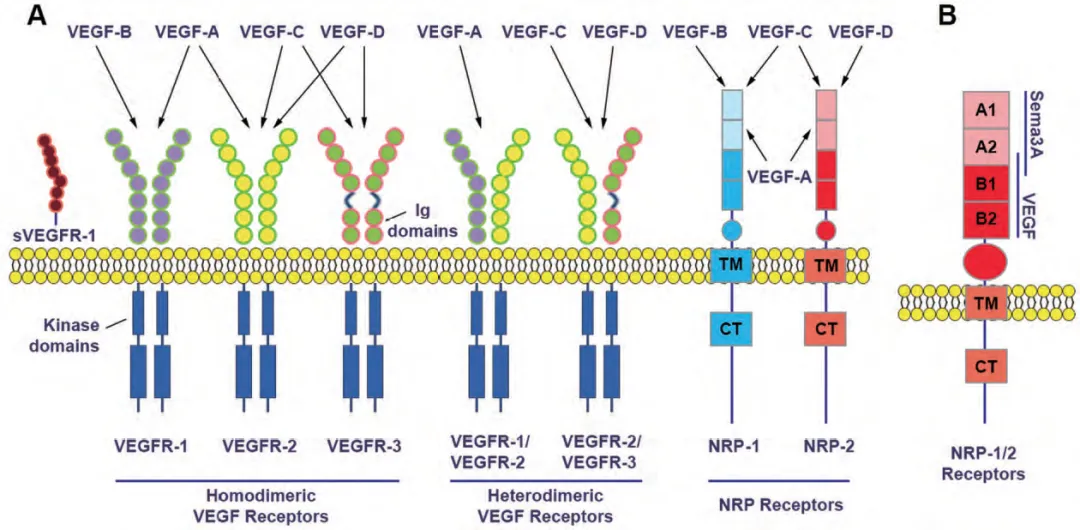
Figure 2. VEGF receptor and its selective ligands
Under pathological conditions, the abnormally high expression of VEGF121 is closely related to tumor progression, especially in solid tumors, where it promotes the remodeling of the tumor microenvironment and the enhancement of malignant phenotypes through multiple mechanisms.
The soluble nature of VEGF121 allows it to diffuse through tumor interstitial fluid and blood circulation, recruiting vascular endothelial cells from a distance and promoting the "systemic formation" of tumor neovascularization. Stimulated continuously by VEGF121, these new blood vessels have disorganized structures and high permeability, not only providing sufficient nutrients and oxygen for tumor cells but also creating channels for distant metastasis of tumor cells through vascular leakage.
In solid tumors such as lung cancer and colorectal cancer, the expression level of VEGF121 is positively correlated with tumor microvessel density, and patients with high expression often have shorter disease-free survival, suggesting that it can be used as a potential marker for tumor prognosis evaluation.
VEGF121 participates in tumor escape by inhibiting immune cell functions. After binding to VEGFR-1 on the surface of dendritic cells (DCs), it can activate the NF-κB signaling pathway, hinder DC maturation, reduce antigen-presenting ability, and weaken the anti-tumor immune response of T cells. At the same time, VEGF121 can promote the polarization of tumor-associated macrophages (TAMs) to the M2 type, further strengthening the immune-suppressive microenvironment.
This dual role of "promoting angiogenesis + immune suppression" makes VEGF121 an important driver of tumor progression and provides a theoretical basis for targeted therapy.
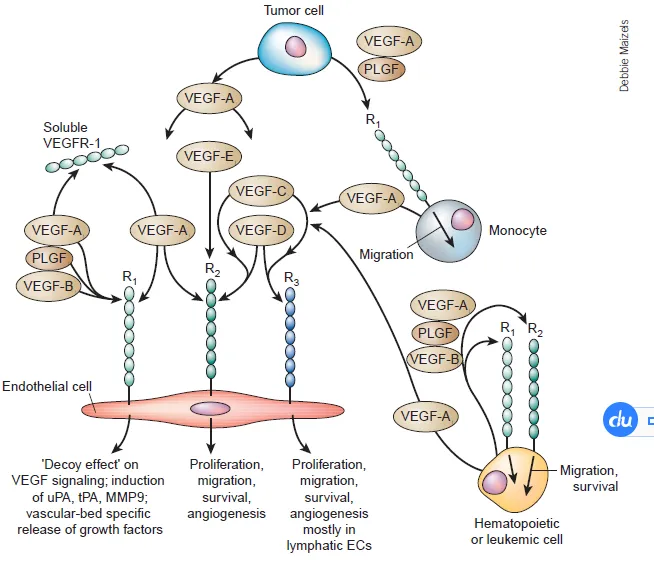
Figure 3. Ligand pathway and function of VEGFR
Targeted drugs against the VEGF family have made significant progress in fields such as oncology and ophthalmology, and the unique characteristics of VEGF121 provide a new direction for drug development.
Currently marketed anti-VEGF monoclonal antibodies (such as bevacizumab) can block the interaction between VEGF121 and VEGFR by binding to the receptor-binding domain of VEGF121, thereby inhibiting angiogenesis. In the treatment of colorectal cancer, non-small cell lung cancer, etc., these drugs reduce tumor vascular supply and delay disease progression by simultaneously inhibiting VEGF121 and VEGF165.
The development of bispecific antibodies has further expanded the targeting strategies for VEGF121. For example, bispecific antibodies targeting PD-1/VEGF can simultaneously block VEGF121-mediated angiogenesis and PD-1-mediated immune suppression, showing synergistic anti-tumor effects in preclinical studies and providing new ideas for overcoming the limitations of single-target therapy.
The soluble and widely distributed characteristics of VEGF121 pose unique challenges for its targeted therapy: systemic inhibition may affect the basal angiogenesis of normal tissues, leading to adverse reactions such as hypertension and proteinuria. Future research and development need to focus on tumor microenvironment-specific targeting, such as using protease-activated prodrugs highly expressed in tumor tissues, or achieving tumor-targeted delivery of VEGF121 inhibitors through nano-carriers, to enhance efficacy while reducing systemic toxicity.
In addition, the role of VEGF121 in physiological processes such as neuroprotection and wound repair suggests that its targeted therapy needs to balance the inhibition of pathological effects and the retention of physiological functions, which puts forward higher requirements for the precise regulation of drugs.
As an important subtype of the VEGF family, VEGF121 plays a key role in maintaining physiological homeostasis and the occurrence and development of diseases due to its soluble characteristics, wide tissue distribution, and multiple biological functions. Its dual mechanisms in tumor angiogenesis and immune suppression make it an important potential target for targeted therapy. With the in-depth understanding of the molecular characteristics and functional mechanisms of VEGF121, as well as the development of new targeted drugs, it is expected to provide more precise and efficient strategies for the treatment of related diseases and further expand the clinical value of VEGF family research.












 Business license (three certificates in one)