Introduction
The progression of chronic kidney disease (CKD) is often accompanied by anemia, a normocytic normochromic anemia that not only reduces patients' quality of life but also accelerates disease deterioration. Recent studies have found that abnormal expression of the anti-aging gene α-Klotho (KL) is closely associated with CKD-related anemia. Its characteristic of high specific expression in the kidney makes it a key molecule connecting renal function and hematopoietic regulation. Although multiple clinical studies have confirmed that α-Klotho levels are significantly reduced in CKD patients with anemia, the regulatory network behind this molecular change remains to be further analyzed. This article systematically sorts out the interactions between α-Klotho and erythropoietin, iron metabolism, vitamin D, and inflammatory responses, revealing its core regulatory role in renal anemia.
The Bidirectional Regulatory Network Between α-Klotho and Erythropoietin
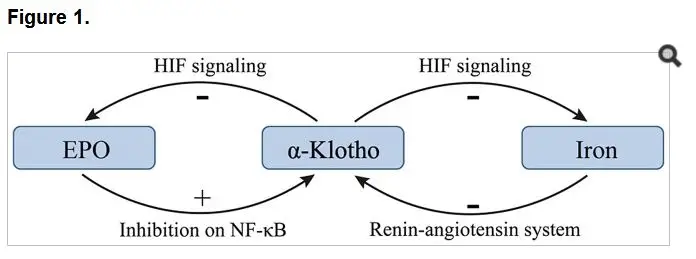
Erythropoietin (EPO), as a core regulatory factor for erythropoiesis, its synthetic disorder is a direct cause of CKD-related anemia. Studies have confirmed that there is a precise negative feedback regulatory mechanism between α-Klotho and EPO: EPO can promote the expression of α-Klotho, and α-Klotho, in turn, inhibits the excessive production of EPO in the CKD state, forming a dynamically balanced regulatory loop.
In the process of kidney injury, the progressive downregulation of α-Klotho breaks this balance. Endothelial cell damage induced by the uremic environment activates the nuclear factor-κB (NF-κB) pathway, and EPO can maintain the stable expression of α-Klotho by inhibiting the activity of this pathway. Animal experiments have shown that α-Klotho-deficient mice exhibit erythrocytosis by activating the hypoxia-inducible factor (HIF) signaling pathway, accompanied by a compensatory increase in renal EPO synthesis and secretion. This compensatory mechanism suggests that the decreased expression of α-Klotho may be an adaptive response of the body to insufficient EPO synthesis.
The Multidimensional Regulatory Role of α-Klotho in Iron Metabolism
Iron metabolism disorder is an important driving factor of CKD-related anemia, and α-Klotho plays a dual regulatory role in this process. Clinical data show that the serum α-Klotho level in 70 CKD patients with different stages is significantly negatively correlated with ferritin and transferrin saturation, and with the progression of the disease, the trend of α-Klotho decrease and fibroblast growth factor 23 (FGF23) increase is synchronously enhanced.
Experimental evidence shows that iron overload can inhibit the expression of renal α-Klotho at the transcriptional and translational levels, while iron chelation therapy can effectively reverse the angiotensin II-induced downregulation of α-Klotho. This suggests that the renin-angiotensin system may be involved in the regulation of α-Klotho expression by regulating iron homeostasis. It is worth noting that the compensatory high expression of α-Klotho under iron deficiency may maintain iron metabolism balance by inhibiting the activity of iron absorption-related proteins, and this regulatory mechanism is of great significance in the pathological process of CKD-related anemia.
Cross-talk Between Vitamin D Axis and α-Klotho
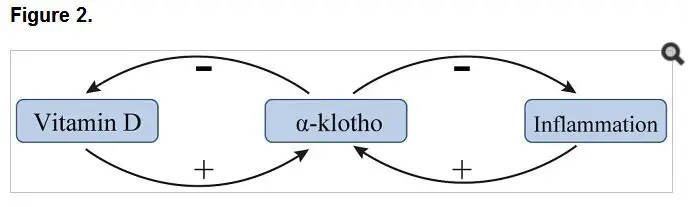
Abnormal vitamin D metabolism is very common in CKD patients, and the regulatory network formed by it and α-Klotho profoundly affects hematopoietic function. Studies have confirmed that 1,25-dihydroxyvitamin D can directly upregulate the expression of α-Klotho, while parathyroid hormone (PTH) indirectly enhances the transcriptional activity of α-Klotho by promoting the production of active vitamin D.
This regulation presents precise negative feedback characteristics: while vitamin D stimulates the expression of FGF23 and α-Klotho, it limits its own synthesis by inhibiting the activity of 25-hydroxyvitamin D1α-hydroxylase. In the progression of CKD, the decrease in renal hydroxylase activity leads to insufficient active vitamin D, further reducing α-Klotho levels, forming a vicious circle. The disorder of this axis not only affects calcium and phosphorus metabolism but also aggravates renal anemia through multiple pathways.
Anti-inflammatory Properties of α-Klotho and Its Hematopoietic Protective Effect
Chronic inflammation is an important driving factor of CKD-related anemia, and α-Klotho has significant anti-inflammatory regulatory functions. As a natural inhibitor of various inflammatory cytokines, α-Klotho can block the activation of inflammatory pathways induced by uremic toxins by reducing the DNA-binding ability of NF-κB and stabilizing the NF-κB inhibitor α complex.
In the CKD pathological environment, the decreased expression of α-Klotho weakens its anti-inflammatory effect, leading to increased release of pro-inflammatory factors such as tumor necrosis factor-α and interleukin-6. These inflammatory mediators not only directly inhibit the proliferation of erythroid progenitor cells but also interfere with iron utilization by upregulating hepcidin levels, forming the pathological basis of "inflammatory anemia". Therefore, the anti-inflammatory properties of α-Klotho make it a key molecular link connecting kidney injury and hematopoietic dysfunction.
Summary and Outlook
α-Klotho plays a core regulatory role in CKD-related anemia through multi-dimensional interactions with EPO regulation, iron metabolism, vitamin D axis, and inflammatory responses. Studies suggest that the low expression of α-Klotho in the anemic state may be a compensatory mechanism of the body - partially alleviating anemia symptoms by relieving the inhibition of EPO synthesis and upregulating serum iron levels and vitamin D activity.
In-depth analysis of the mechanism of α-Klotho in renal anemia is expected to provide a new target for the treatment of CKD complications. Future studies need to further clarify the molecular mechanism of α-Klotho expression regulation and explore the feasibility of restoring its level through genetic modification or drug intervention, so as to open up new ways to improve the hematopoietic function and quality of life of CKD patients.












 Business license (three certificates in one)