




β - Klotho: The 'Fate Line' of Metabolic Regulation and a New Target for Disease Treatment


The Klotho gene, named after the Greek goddess of fate who weaves the thread of life. This gene family includes three subtypes: alpha, beta, and gamma, among which beta Klotho has become a research focus in the field of life sciences due to its unique role in metabolic regulation. As a single transmembrane protein, it is mainly distributed in the liver and white adipose tissue, and regulates metabolic balance by participating in multiple signaling pathways, providing a new perspective for the treatment of metabolic diseases.
- Recent Advances
- Product Information
I. Introduction
II. Molecular Structure and Tissue Distribution of β-Klotho
(1) Molecular Structural Characteristics
(2) Tissue Expression Characteristics
III. Core Biological Functions of β-Klotho
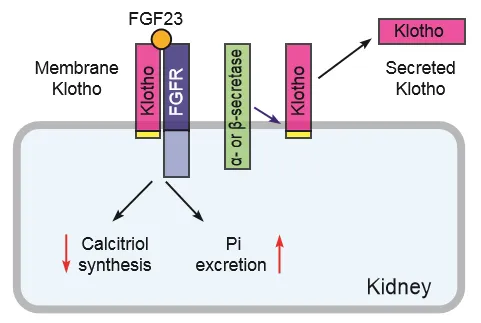
(1) Key Co-receptor in FGF Signaling Pathway
FGF19 pathway: Requires the collaboration of β-Klotho and γ-Klotho to regulate bile acid synthesis and hepatointestinal metabolism;
FGF21 pathway: Dependent on β-Klotho activation, involved in the regulation of glucose and lipid metabolism and energy balance.
(2) Core Regulator of Metabolic Balance
Glucose metabolism: Improves insulin sensitivity through the FGF21 pathway, promoting glucose uptake and utilization;
Lipid metabolism: Regulates bile acid metabolism in the liver and promotes lipid decomposition in adipose tissue;
Energy homeostasis: Coordinates energy perception between peripheral tissues and the central nervous system to maintain metabolic balance.
(3) Other Potential Functions
IV. Association between β-Klotho and Metabolic Diseases
(1) Non-alcoholic Fatty Liver Disease (NASH)
Disorders of bile acid metabolism, promoting intrahepatic fat accumulation;
Enhanced inflammatory response, accelerating the process of liver fibrosis.
(2) Type 2 Diabetes
Weakened FGF21 signal, exacerbating insulin resistance;
Imbalanced regulation of gluconeogenesis, disrupting blood glucose homeostasis.
V. Clinical Application Prospects of β-Klotho
(1) Development of New Therapeutic Drugs
Monoclonal antibodies: Such as NGM313, which has entered clinical trials for NASH and type 2 diabetes by activating the β-Klotho/FGFR1c complex;
Small molecule modulators: Improve metabolic indicators by upregulating β-Klotho expression or enhancing its activity, and some compounds have entered the animal experiment stage.
(2) Disease Diagnosis and Prognosis Evaluation
Diagnostic markers: Serum β-Klotho levels can be used as an early screening indicator for NASH and type 2 diabetes;
Prognosis monitoring: Dynamic detection of its expression changes can evaluate the therapeutic effect and the risk of disease progression.
VI. Summary and Outlook
This article is reviewed and published by the technical expert team of UA
Disclaimer: This article partially utilizes artificial intelligence assistance in its creation. If any content involves copyright or intellectual property issues, please let us know and we promise to verify and remove it as soon as possible.
Purchase recombinant protein, choose Nanjing UA-Bio
UA protein focuses on providing various protein reagents, raw materials, and services required for drug research and development, cell therapy, gene therapy, and basic scientific research, including drug target proteins, immune checkpoint proteins, cytokines, tool enzymes, customized protein expression, and full-length transmembrane protein development. Youai is committed to providing customers with high-quality products and professional services, and building a High-tech Biological Enterprise with International Competitiveness.







 Business license (three certificates in one)