Since PD-1/PD-L1 inhibitors revolutionized tumor treatment, identifying innate immune regulatory targets has become key to overcoming the limitations of existing therapies. The CD47-signal regulatory protein α (SIRPα, also known as SHPS1) axis, which controls the "self-recognition" function of innate immune cells such as macrophages, is regarded as a promising target in tumor immunology. In 2020, I-Mab and AbbVie entered a global collaboration on an anti-CD47 monoclonal antibody, accelerating research and development (R&D) in this field. Currently, dozens of companies worldwide are developing CD47-related drugs. However, amid intense competition in CD47 targeting, focusing on the other end of the axis—SHPS1 targeting—has emerged as a crucial differentiated R&D option, offering new ideas to avoid the safety risks and dosage issues associated with CD47 targeting.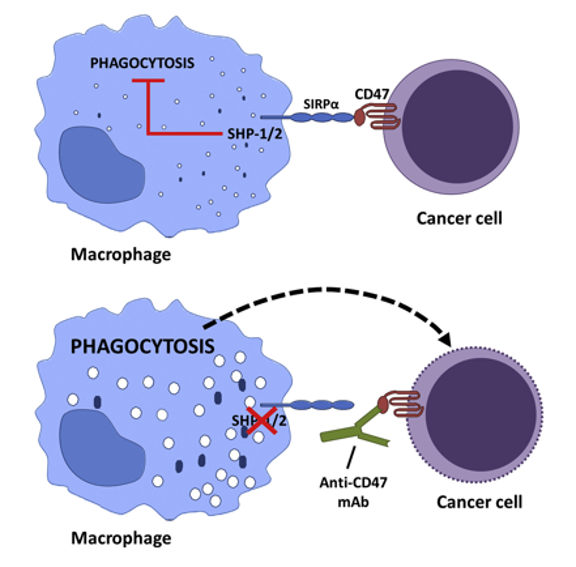
Unlike the PD-1/PD-L1 axis, which regulates adaptive immunity dominated by T cells, the CD47-SHPS1 axis is a key checkpoint in innate immunity. As a transmembrane glycoprotein, SHPS1 is mainly expressed on the surface of innate immune cells such as macrophages and dendritic cells. Its extracellular domain specifically binds to CD47 on cell surfaces. This interaction activates SHP-1/2 phosphatases in the intracellular region of SHPS1, inhibiting macrophage phagocytic signaling and transmitting a "don’t eat me" self-recognition signal.
Tumor cells exploit this mechanism by upregulating CD47 expression, which binds to SHPS1 on macrophages to evade immune phagocytosis. Therefore, blocking the CD47-SHPS1 interaction can lift the phagocytic inhibition of macrophages and restore their ability to clear tumor cells—this is the core principle of therapies targeting this axis.
The CD47-SHPS1 axis can also synergize with adaptive immunity to enhance anti-tumor efficacy: after macrophages phagocytose tumor cells, they can activate CD8⁺ T cells through antigen presentation; when the binding between SHPS1 (on dendritic cells) and CD47 is blocked, the antigen-presenting capacity of dendritic cells is also enhanced, further promoting T cell immune responses. This "innate-adaptive immunity" synergy makes the axis potentially effective even for "cold tumors" insensitive to PD-1/PD-L1 antibodies.
CD47 is widely expressed on tumor cells and normal tissues (e.g., red blood cells, platelets), making targeted drugs prone to hematological toxicity. Additionally, high doses are required to overcome the "sink effect" of normal tissues (where drugs are sequestered by normal cells). In contrast, SHPS1 expression is strictly specific: it is only concentrated in monocytes, macrophages, granulocytes, some dendritic cells, a small number of bone marrow progenitors, and neurons, with almost no expression in other normal tissues.
This characteristic brings two major advantages: first, it significantly reduces off-target risks, minimizing adverse reactions such as anemia and thrombocytopenia that are common with CD47 targeting; second, low doses are sufficient to effectively block axis signaling, eliminating the need to compete for binding sites on normal tissues, thereby reducing medication costs and toxicity associated with high doses.
The human SHPS1 gene exhibits significant polymorphism, with the most common variants being SHPS1 v1 (NP_542970/P78324) and SHPS1 v2 (CAA71403). The CD47-binding sites of these two variants are conserved, but their distribution varies significantly across populations: SHPS1 v1/v1 homozygotes account for 50%–70% of European, African, and South Asian populations, while in East Asian populations, v1/v1 homozygotes only account for 20%–30%, and v1/v2 heterozygotes make up 50%–60%.
Polymorphism limits the efficacy of antibodies targeting a single variant: antibodies that only recognize v1 cannot effectively block SHPS1 function in patients with v1/v2 heterozygosity, leading to reduced antibody-dependent cellular phagocytosis (ADCP) efficiency. Studies have confirmed that "pan-variant" antibodies capable of binding both v1 and v2 have 2–3 times higher ADCP activity than single-variant-targeting antibodies, with stable efficacy across different populations. Therefore, developing SHPS1 drugs that cover multiple alleles is the core direction to overcome polymorphism limitations.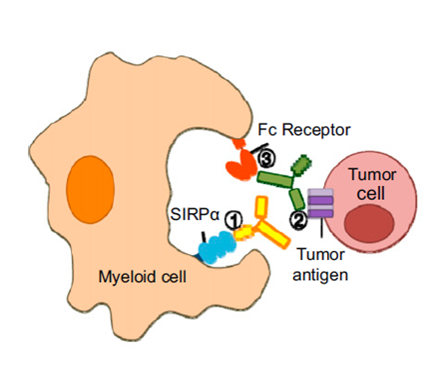
Current R&D of SHPS1-targeting antibodies centers on "pan-variant coverage and cross-species compatibility." A 2019 study by ALX Oncology provides a classic framework, including the following key steps:
Chickens, which share only 40% amino acid homology with human SHPS1, were selected as immunized animals to avoid immune tolerance. "Alternating immunization with human SHPS1 v1 and v2 antigens" was used to ensure the immune system recognizes both conserved and unique epitopes of the two variants, laying the foundation for screening "pan-variant" antibodies.
After cloning antibody genes via single-cell technology, multi-target verification was conducted: first, testing binding ability to SHPS1 v1, v2, and minor variants; second, eliminating cross-reactivity with family members such as SHPS1γ; third, verifying binding to SHPS1 in mice and cynomolgus monkeys to meet preclinical research needs; fourth, evaluating phagocytic activity through ADCP assays to screen antibodies with high functional efficacy. This strategy has successfully yielded multiple "pan-variant" antibody candidates.
SHPS1 targeting, with its tissue-specific expression, low-dose requirement, and innate immune regulatory advantages, has become a differentiated option for CD47-axis therapies, effectively avoiding the safety and dosage issues of CD47 targeting. The R&D of "pan-variant" antibodies to address polymorphism has further improved its clinical universality. Although the field is still in its early stages, studies have confirmed its potential in solid tumors (colorectal cancer, pancreatic cancer) and hematological malignancies (lymphoma). In particular, combination with PD-1/PD-L1 antibodies can enhance synergistic efficacy.
In the future, it will be necessary to optimize the ADCP activity and half-life of antibodies through Fc engineering, and realize personalized treatment based on patients’ SHPS1 genotypes. With further R&D progress, SHPS1 targeting is expected to become an important supplement to tumor immunotherapy, providing new options for more patients.












 Business license (three certificates in one)