




Influenza A virus MHC tetramer: the key to unlocking the immune response code


MHC Tetramer is a revolutionary technology used for direct detection, quantification, and analysis of antigen-specific T cells. The core principle is to utilize the high affinity binding ability of the biotin streptavidin system.
- Recent Advances
- Product Information
1.What is an MHC tetramer, and what is its basic design principle?
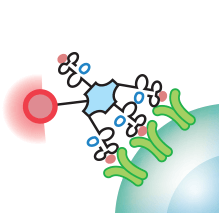
MHC tetramer is a revolutionary technology used to directly detect, quantify, and analyze antigen-specific T cells. Its core principle relies on the high-affinity binding capability of the biotin-streptavidin system. First, recombinantly expressed MHC molecules (for influenza virus, typically human HLA or murine H-2 homologs) are folded and loaded with a specific influenza virus antigenic peptide (e.g., an immunodominant epitope from influenza virus hemagglutinin HA or nucleoprotein NP). Then, each MHC/peptide complex is labeled with a biotin molecule. A streptavidin protein has four biotin-binding sites, enabling it to simultaneously bind four identical biotinylated MHC/peptide complexes, thereby forming a fluorescently labeled "tetramer" complex. This tetramer can act like a "key," specifically binding to T cells expressing the corresponding T-cell receptor (TCR), allowing them to be identified via fluorescence microscopy or flow cytometry.
2.Why is MHC tetramer technology crucial for influenza virus research?
Influenza viruses, particularly influenza A viruses, are known for their ability to undergo antigenic drift and antigenic shift, necessitating annual vaccination. Assessing vaccine efficacy and the body's immune response focuses not only on detecting antibodies but also on understanding cellular immune responses, especially those mediated by CD8+ cytotoxic T cells (CTLs). These CTLs can recognize and kill virus-infected cells, playing a critical role in clearing the virus and establishing long-term protective immunity. MHC tetramer technology provides an unprecedented precise tool to directly "see" and count T cells specific to a particular epitope of the influenza virus, which cannot be directly achieved with traditional functional assays like ELISpot or intracellular cytokine staining. This offers core data for understanding the breadth, strength, and durability of influenza immunity.

3.When designing an influenza virus MHC tetramer, how is the appropriate antigenic epitope selected?
Selecting the appropriate antigenic epitope is the first and most critical step in successfully using MHC tetramer technology. For influenza viruses, researchers typically prioritize "immunodominant" epitopes. These epitopes have several characteristics: First, they are usually derived from relatively conserved internal viral proteins, such as nucleoprotein (NP) or matrix protein 1 (M1), which vary little among different influenza virus strains and may elicit cross-reactive T-cell responses against multiple strains. Second, these epitopes have high binding affinity for specific MHC alleles (e.g., common human HLA-A*02:01 or murine H-2Dᵇ). Epitope prediction is typically done using bioinformatics algorithms and ultimately validated through experiments (e.g., binding assays or T-cell functional experiments). Selecting a correct, immunogenic epitope is essential to ensure the tetramer can effectively detect the target T-cell population.
4.What are the specific applications of MHC tetramer technology in influenza vaccine development?
In influenza vaccine development, MHC tetramer technology plays a key role in biomarker discovery and evaluation. First, it is used to assess whether novel vaccines (e.g., universal influenza vaccines) can effectively induce robust virus-specific T-cell immune responses. Researchers can use tetramers loaded with conserved epitopes to directly quantify the number of cross-reactive T cells produced after vaccination. Second, it can be used to compare the ability of different vaccine platforms (e.g., live attenuated vaccines, inactivated vaccines, mRNA vaccines, or viral vector vaccines) to induce cellular immunity. Additionally, in preclinical studies (mouse models) and clinical trials, tetramer technology can longitudinally monitor the kinetics of antigen-specific T-cell responses, including their proliferation, differentiation into memory T cells, and residency in different tissues (e.g., the lungs), providing direct evidence of vaccine efficacy and durability.
5.Beyond counting, what in-depth information can MHC tetramers provide about T cells?
Yes, the functionality of MHC tetramers extends far beyond simple counting. When combined with multicolor flow cytometry, it becomes an extremely powerful tool for in-depth analysis. Researchers can further analyze the phenotype and functional status of antigen-specific T cells (i.e., tetramer-positive cells) after isolating them. For example, they can detect the memory phenotype of these cells (whether they are naive T cells, effector memory T cells, or central memory T cells), exhaustion markers (e.g., expression levels of PD-1, TIM-3), activation status, and cytokine secretion potential. This is crucial for understanding which types of T-cell responses are protective after influenza infection or vaccination. For instance, studies have found that resident memory T cells in the lungs are critical for providing protection against respiratory infections, and tetramer technology is the gold standard for identifying and studying this cell population.
6.What challenges or limitations exist in using MHC tetramer technology?
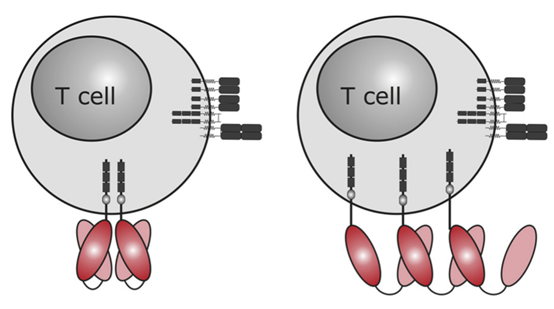
Despite its powerful functionality, MHC tetramer technology has some limitations. The primary challenge is MHC restriction. Each tetramer is designed for a specific MHC allele and a specific epitope, so research must be conducted for specific population haplotypes or require multiple tetramers in highly genetically diverse populations. Second, affinity issues may cause some low-affinity T cells to be missed, while high-affinity T cells may be "stripped" during the staining process, affecting the absolute accuracy of quantification. Additionally, the technology itself cannot distinguish T cells with different functions (e.g., effector cells vs. memory cells) and must be combined with additional phenotypic staining. Finally, the cost and technical requirements are high, including the need for skilled operation of flow cytometry and complex data analysis.
7.What are the advantages and disadvantages of MHC tetramer technology compared to traditional methods like ELISpot and ICS?
MHC tetramer, ELISpot (enzyme-linked immunospot), and ICS (intracellular cytokine staining) are complementary rather than替代 technologies. The advantage of MHC tetramers lies in their direct, physical identification of T cells based on TCR specificity, enabling precise counting and phenotypic analysis, but they cannot provide functional information. ELISpot and ICS, on the other hand, measure the functional output of T cells (e.g., secretion of cytokine IFN-γ), confirming the functional activity of T cells and not being strictly constrained by MHC restriction (as long as the peptide is presented). However, they are indirect measurement methods and cannot purify specific cell populations like tetramers. Therefore, the ideal research approach often involves combining these technologies: using tetramers to precisely identify and isolate antigen-specific T cells, and then using ICS or functional experiments to verify the functionality of these cells.
-
How will future MHC multimer technologies evolve?
The technology is continuously evolving to overcome its limitations and expand its applications. A clear trend is the diversification of multimers, including pentamers, octamers, dextramers, etc., which have higher valencies and can more stably bind low-affinity TCRs, improving detection sensitivity. Another direction is barcoded multimer technology, which allows dozens or even hundreds of MHC complexes loaded with different peptides to be mixed and incubated with T cells, enabling high-throughput screening of a large number of epitopes in a single experiment. Additionally, integration with mass cytometry (CyTOF) or sequencing technologies enables simultaneous analysis of antigen specificity, full transcriptome, and surface proteome at the single-cell level, which will significantly deepen our understanding of influenza immune responses.
This article is reviewed and published by the technical expert team of UA
Disclaimer: This article partially utilizes artificial intelligence assistance in its creation. If any content involves copyright or intellectual property issues, please let us know and we promise to verify and remove it as soon as possible.
Purchase recombinant protein, choose Nanjing UA-Bio
UA protein focuses on providing various protein reagents, raw materials, and services required for drug research and development, cell therapy, gene therapy, and basic scientific research, including drug target proteins, immune checkpoint proteins, cytokines, tool enzymes, customized protein expression, and full-length transmembrane protein development. Youai is committed to providing customers with high-quality products and professional services, and building a High-tech Biological Enterprise with International Competitiveness.







 Business license (three certificates in one)