




ILRs, the Leukocyte Immunoglobulin-Like Receptor Family Proteins.


Immunoregulatory receptors are crucial for coordinating immune responses and maintaining appropriate inflammation in both infectious and non-infectious diseases. Among these, leukocyte immunoglobulin-like receptors (LILRs), composed of activating and inhibitory receptors, play a significant role in modulating immune responses and regulating disease progression.
- Recent Advances
- Product Information
Immunoregulatory receptors are crucial for coordinating immune responses and maintaining appropriate inflammation in both infectious and non-infectious diseases. Among these, leukocyte immunoglobulin-like receptors (LILRs), composed of activating and inhibitory receptors, play a significant role in modulating immune responses and regulating disease progression.
On one hand, inhibitory LILRs constitute a protective system that mitigates inflammatory responses, thereby rapidly restoring immune homeostasis. On the other hand, due to their unique ability to attenuate immune responses, pathogens exploit inhibitory LILRs to evade immune recognition, promoting their persistence within the host. Conversely, engagement of activating LILRs triggers immune responses and the production of inflammatory mediators to combat microbes. However, their excessive activation may lead to exacerbated immune responses and chronic inflammation, significantly impacting disease outcomes and contributing to autoimmune disorders.
In summary, LILRs coordinate inflammatory processes by stimulating or inhibiting immune cell effector functions, including:
Cell migration,
Cell proliferation,
Phagocytosis,
Cytokine production and secretion,
Chemokine production and secretion, and
Cell death.
LILRs are divided into two groups based on their motifs:
Inhibitory Receptors (LILRB1-B5): These signal through intracellular immunoreceptor tyrosine-based inhibitory motifs (ITIMs) and membrane adapters.
Activating Receptors (LILRA1-A2 and LILRA4-A6): These signal through immunoreceptor tyrosine-based activation motifs (except LILRA3, which is soluble due to the lack of transmembrane and cytoplasmic domains).
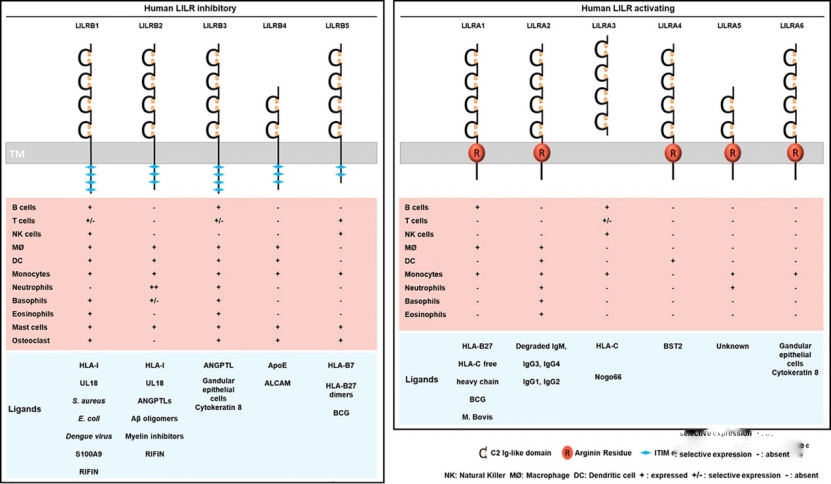
Structure, Cellular Distribution, and Ligands of Inhibitory LILRB (Left) and Activating LILRA (Right)
Inhibitory LILRB1-B5: Contain ITIM domains in their cytoplasmic regions (left).
Activating LILRA1, LILRA2, LILRA4, LILRA5, LILRA6: Feature arginine residues (red) in their transmembrane regions and short cytoplasmic tails (right).
LILRA3: Soluble due to the absence of transmembrane and cytoplasmic domains.
Below is the distribution of LILRs in immune cell populations (e.g., MØ, macrophages). Known ligands are shown in blue.
Advances in LILR Family Research
The LILRB family represents a novel class of therapeutic targets, with limited global R&D pipelines disclosed. Notable companies exploring LILRB family targets include Immune-Onc, Merck, Biond Biologics, Jounce Therapeutics, and NGM Biopharmaceuticals. Jounce Therapeutics and NGM Biopharmaceuticals are also users of HD-BIOP3 commercially licensed CHO cell lines distributed by UniProt.
| Drug Name | Development Phase | Target | Company |
|---|---|---|---|
|
MK-4830 |
Phase II |
LILRB2 |
Merck&Co/Agenus |
|
BND-22 |
Phase I/II |
LILRB1 |
Biond Biologics |
|
NGM-707 |
Phase I/II |
LILRB1/ LILRB2 |
NGM Biopharmaceuticals |
|
NGM831 |
Phase I |
LILRB4 |
NGM Biopharmaceuticals |
|
IO-108 |
Phase I |
LILRB2 |
Immune-Onc Therapeu |
|
IO-202 |
Phase I |
LILRB4 |
Immune-Onc Therapeu |
|
JTX-8064 |
Phase I |
LILRB2 |
Immune-Onc Therapeu |
|
IOS-1002(formerly iosH2) |
Preclinical |
LILRB1/LILRB2/KIR3DL1. |
ImmunOsTherapeutics |
|
CDX-585 |
Phase I |
LILRB2 |
Celldex/Biosion |
UA BIOSCIENCE has developed a series of LILR proteins to support research and drug development targeting LILRs.
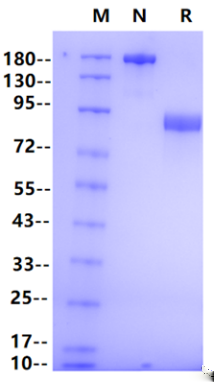
LILRB3/CD85a/LIT5 Fc Chimera, Human ,1μg(R: reducing conditions, N: non-reducing conditions).
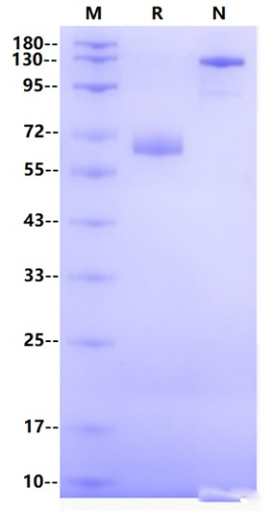
LILRA5/CD85f/ILT11 Fc Chimera, Human ,1μg(R: reducing conditions, N: non-reducing conditions).
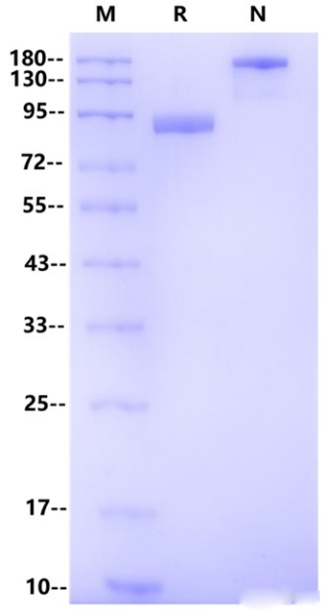
LILRA6/CD85b/ILT8 Fc Chimera, Human ,1μg(R: reducing conditions, N: non-reducing conditions).
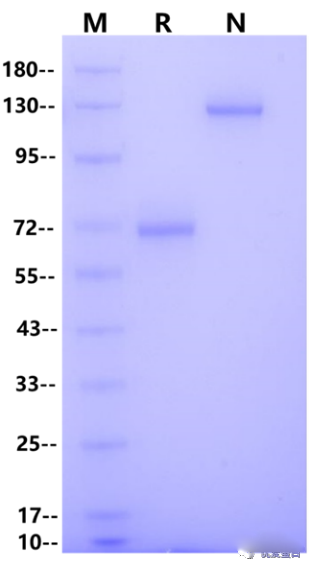
LILRB4/CD85k/ILT3 mFc Chimera, Human ,1μg(R: reducing conditions, N: non-reducing conditions).
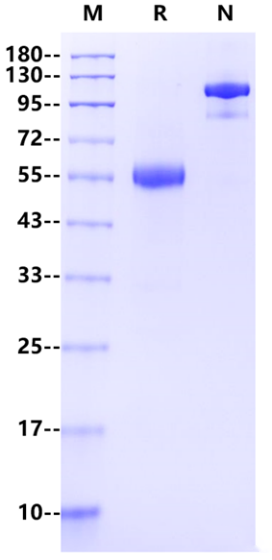
LAIR1/CD305 Fc Chimera, Human,2μg(R: reducing conditions, N: non-reducing conditions).
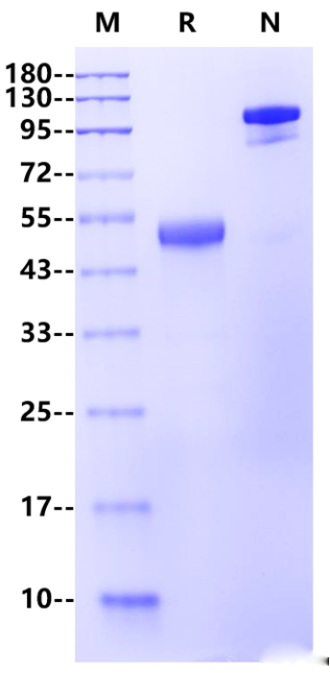
LAIR2/CD306 Fc Chimera, Human ,2μg(R: reducing conditions, N: non-reducing conditions).
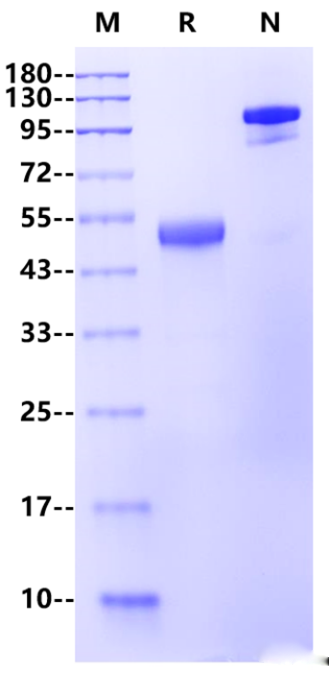
LILRB1/CD85j/ILT2 Fc Chimera, Human,1μg(R: reducing conditions, N: non-reducing conditions).
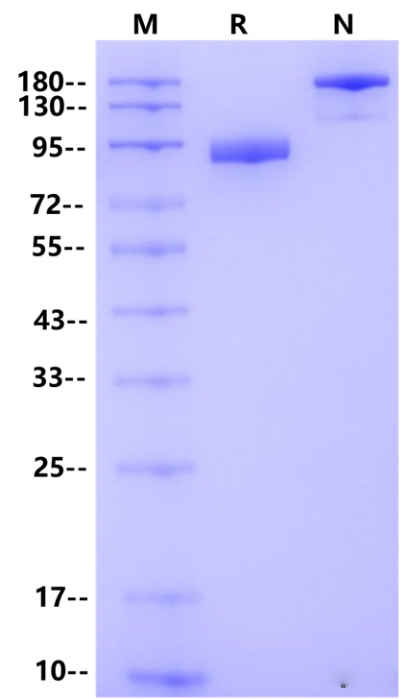
LILRB2/CD85d/ILT4 Fc Chimera, Human,1μg(R: reducing conditions, N: non-reducing conditions).
More LILR Proteins Under Development
This article is reviewed and published by the technical expert team of UA
Disclaimer: This article partially utilizes artificial intelligence assistance in its creation. If any content involves copyright or intellectual property issues, please let us know and we promise to verify and remove it as soon as possible.
Purchase recombinant protein, choose Nanjing UA-Bio
UA protein focuses on providing various protein reagents, raw materials, and services required for drug research and development, cell therapy, gene therapy, and basic scientific research, including drug target proteins, immune checkpoint proteins, cytokines, tool enzymes, customized protein expression, and full-length transmembrane protein development. Youai is committed to providing customers with high-quality products and professional services, and building a High-tech Biological Enterprise with International Competitiveness.







 Business license (three certificates in one)