




If anyone is still unaware of the availability of Nectin1-4 proteins, I would be genuinely disappointed, OK?


The transformation of normal cells into cancer cells is accompanied by progressive changes in multiple molecules, which often lead to abnormal expression of specific genes and disruption of tissue homeostasis. These changes include: activation of proliferative signaling, resistance to apoptosis, unlimited replicative potential, immune evasion, and ultimately activation of invasion and metastasis pathways, resulting in uncontrolled tumor growth and proliferation. Simultaneously, these changes facilitate the generation of genetically heterogeneous cells within the same tumor microenvironment, posing challenges for tumor diagnosis and treatment. Several key cell surface proteins that mediate cell signaling, adhesion, and immune evasion are frequently exploited by tumor cells to promote their own growth and proliferation.
- Recent Advances
- Product Information
- Reference
The transformation of normal cells into cancer cells is accompanied by progressive changes in multiple molecules, which often lead to abnormal expression of specific genes and disruption of tissue homeostasis. These changes include: activation of proliferative signaling, resistance to apoptosis, unlimited replicative potential, immune evasion, and ultimately activation of invasion and metastasis pathways, resulting in uncontrolled tumor growth and proliferation. Simultaneously, these changes facilitate the generation of genetically heterogeneous cells within the same tumor microenvironment, posing challenges for tumor diagnosis and treatment. Several key cell surface proteins that mediate cell signaling, adhesion, and immune evasion are frequently exploited by tumor cells to promote their own growth and proliferation.
Nectin belongs to the single-pass transmembrane, type I immunoglobulin superfamily. The extracellular region of Nectin proteins consists of a membrane-distal IgV-like domain and two IgG-like domains. The transmembrane region is a single-pass structure, and the intracellular portion includes a C-terminal domain. Nectin 1-4 has an afadin-binding region at its C-terminus.
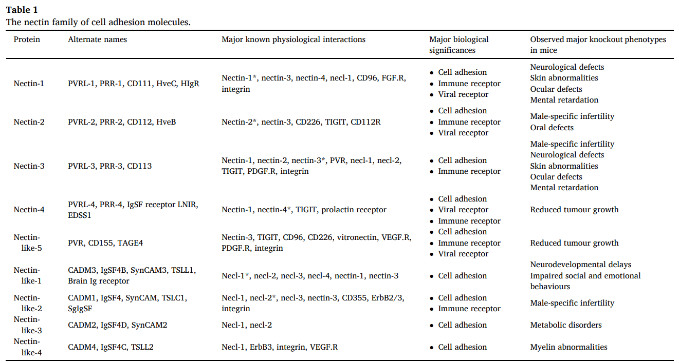
Figure 1: Summary of Nectin Family Members, Targets, and Functions
Initially, Nectin family members were classified into two subtypes based on their ability to interact with afadin:
Nectin1-4: Can interact with afadin.
Necl1-5: Cannot interact with afadin. However, recent studies suggest that Necl-5's extracellular sequence and gene structure are more similar to Nectin.
Nectin connects adjacent cells through homophilic and heterophilic interactions. Unlike cadherins, which mediate homophilic cell-cell adhesion in a calcium-dependent manner, Nectin mediates adhesion in a calcium-independent manner.
Nectin is also involved in host-pathogen interactions, serving as a receptor for herpes simplex virus and measles virus entry into host cells.
Nectin-1 is typically expressed in various epidermal tissues. Its low expression has been observed in epidermal-derived tumors such as cervical squamous cell carcinoma, pancreatic ductal carcinoma-associated fibroblasts, colorectal cancer, gastric cancer, and malignant transformation of keratinocytes. Studies indicate that reduced Nectin-1 levels at the leading edge of migrating cells during the early stages of keratinocyte malignant transformation suggest its role in reducing cell-cell adhesion and increasing invasiveness and metastasis. Nectin-1, also known as CD111, interacts with CD96 to regulate NK cell and T cell functions.
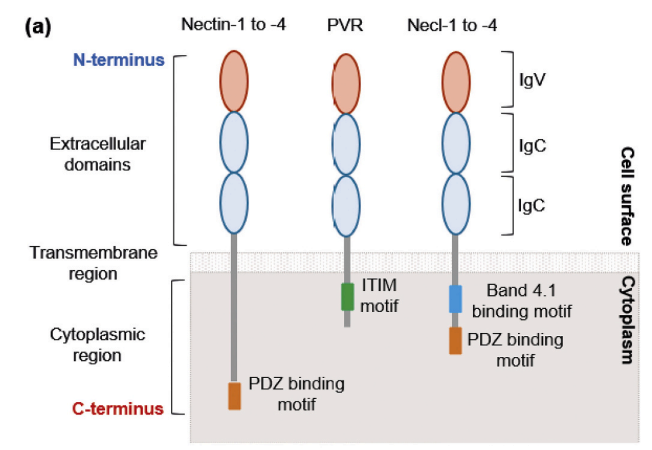
Figure 2: Structural Diagram of Nectin Family Members
Nectin-2 is a typical Nectin protein that interacts with other Nectin family members to mediate cell-cell adhesion. It also binds to immune receptors CD226 and TIGIT to regulate immune functions and interacts with viral glycoproteins as a receptor for herpes simplex virus entry. While Nectin-2 is expressed in normal cells, its overexpression has been observed in gallbladder, breast, ovarian, lung, prostate, pancreatic ductal, esophageal, colorectal cancers, and acute myeloid leukemia, promoting tumor cell invasion, migration, and lymph node metastasis.
Nectin-3 is widely expressed in various normal tissues but shows low expression in breast and pancreatic cancer cells, where its downregulation facilitates tumor cell metastasis and invasion. However, high expression of Nectin-3 has been observed in lung and ovarian cancers.
Nectin-4 (PVRL4, poliovirus receptor-related protein 4) is a type I transmembrane protein with three Ig-like extracellular domains. It is highly expressed in triple-negative breast cancer and urothelial carcinoma cells.
In urothelial carcinoma treatment, cisplatin-based combination chemotherapy is the primary therapy for advanced or metastatic disease, with an overall survival rate of approximately 14 months. However, nearly half of the patients cannot receive this treatment due to renal insufficiency or other comorbidities.
In recent years, the FDA has approved four PD-1/PD-L1 inhibitors for patients who fail or are ineligible for combination chemotherapy. However, only a minority of patients respond to PD-1/PD-L1 inhibitors, highlighting the urgent need for more effective treatments for urothelial carcinoma. In 2019, the FDA approved the Nectin-4-based ADC drug EV (enfortumab vedotin) for the treatment of locally advanced or metastatic urothelial carcinoma. Developed by Astellas Pharma, EV was launched in China in 2020 for the same indication.
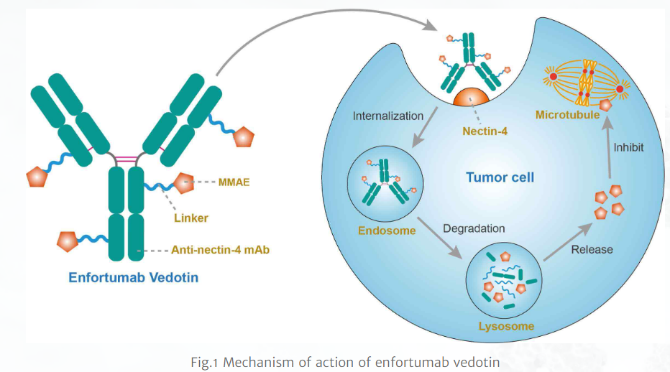
Figure 3: Mechanism of Action of EV
Composition of EV
EV consists of three components:
A fully human IgG1 antibody targeting Nectin-4 for tumor cell targeting.
MMAE (Monomethyl auristatin E), a synthetic small molecule with potent toxicity that inhibits microtubule formation during cell division, inducing apoptosis. Two auristatin-based drugs are already on the market.
A protease-cleavable linker (SGD-1006) connecting the antibody and MMAE.
UA BIOSCIENCE Nectin-Related Protein Catalog
Click on the product catalog numbers below to be redirected to the official website for more details.
This article is reviewed and published by the technical expert team of UA
Disclaimer: This article partially utilizes artificial intelligence assistance in its creation. If any content involves copyright or intellectual property issues, please let us know and we promise to verify and remove it as soon as possible.
Purchase recombinant protein, choose Nanjing UA-Bio
UA protein focuses on providing various protein reagents, raw materials, and services required for drug research and development, cell therapy, gene therapy, and basic scientific research, including drug target proteins, immune checkpoint proteins, cytokines, tool enzymes, customized protein expression, and full-length transmembrane protein development. Youai is committed to providing customers with high-quality products and professional services, and building a High-tech Biological Enterprise with International Competitiveness.

1.Nectin-4: a new prognostic biomarker for efficient therapeutic targeting of primary and metastatic triple-negative breast cancer. M.Mrabet, O.Cabaud, E. Josselin etc.
2.Poliovirus receptor (PVR)-like protein cosignaling network: new opportunities for cancer immunotherapy. Baokang Wu,etc.
3.Enfortumab Vedotin-ejfv: A First-in-Class Anti–Nectin-4 Antibody-Drug Conjugate for the Management of Urothelial Carcinoma. Zachery Halford, PharmD etc.






 Business license (three certificates in one)