




MHC antigen peptide oligomerization technology: unlocking new dimensions of T cell immune research


MHC antigen peptide oligomerization technology is a breakthrough tool in modern immunology research. How can it help researchers accurately identify and track antigen-specific T cells? The core of this technology is to utilize the complex formed by the binding of major histocompatibility complex (MHC) molecules with specific antigen peptides, and then enhance the detection sensitivity through polymerization.
- Recent Advances
- Product Information
What is MHC-Peptide Multimer Technology?
MHC-peptide multimer technology is a groundbreaking tool in modern immunology research. How does it help researchers accurately identify and track antigen-specific T cells? The core of this technology lies in utilizing complexes formed by major histocompatibility complex (MHC) molecules binding with specific antigen peptides, which are then multimerized to enhance detection sensitivity. This sophisticated design enables researchers to directly observe, isolate, and analyze T cells targeting specific antigens, providing unprecedented resolution for immune response studies.
In fields such as tumor immunology, viral infections, autoimmune diseases, and vaccine development, this technology is playing an increasingly important role. It not only addresses the difficulty of detecting antigen-specific T cells but also offers reliable technical support for immune monitoring and immunotherapy.
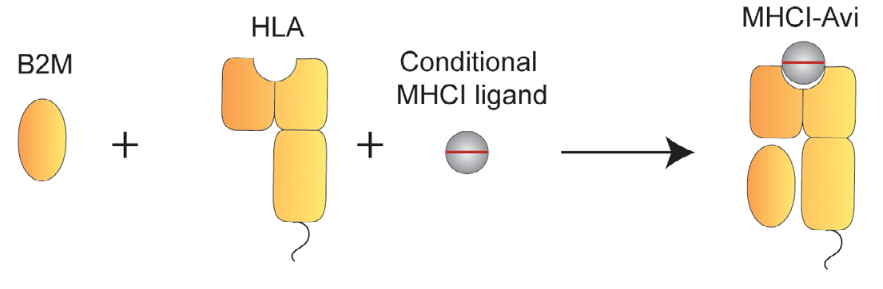
How is the technical principle implemented?
What is the scientific basis of MHC-peptide multimer technology? Its principle is built upon the biological process of T cell antigen recognition: when MHC molecules successfully present antigen peptides, stable pMHC complexes are formed, which can be specifically recognized by corresponding T cell receptors (TCRs).
Technicians reconstruct this process in vitro by first folding recombinant MHC heavy chains, β2-microglobulin (β2M), and specific antigen peptides under appropriate conditions to form stable pMHC complexes. These complexes are then multimerized using a biotin-streptavidin system, significantly enhancing their binding avidity to T cell receptors. This multimerization design enables detectable signals even for low-affinity T cell receptors, greatly improving detection sensitivity.
How is the stability of the complexes ensured? During preparation, conditions such as buffer composition, pH, and temperature are optimized to ensure the pMHC complexes maintain correct conformation and functional integrity. Quality control steps, such as ELISA, are used to verify the formation efficiency and stability of the complexes, ensuring reliability for subsequent experiments.
What are the important application values of this technology?
How does this technology help identify truly immunogenic epitopes in tumor neoantigen screening? With the rise of personalized cancer treatment, accurately screening mutant antigens that can be effectively presented by MHC molecules and elicit T cell responses has become a critical challenge. Using this technology, researchers can efficiently evaluate the binding ability of tumor-specific mutant peptides to HLA molecules, prioritizing antigen epitopes most likely to trigger anti-tumor immune responses, thereby providing a scientific basis for personalized cancer vaccine development.
How does this technology assess vaccine immune efficacy in viral vaccine development? For viral diseases, vaccine effectiveness often depends on the ability to induce T cell immune responses. Using MHC multimer technology, researchers can accurately quantify the number and functional status of antigen-specific T cells induced by vaccines, providing valuable data for vaccine optimization and immunization strategy development.
What unique advantages does this technology offer in autoimmune disease research? The occurrence of autoimmune diseases is closely related to self-reactive T cells. By using self-antigen peptide-loaded MHC multimers, researchers can directly identify and characterize these pathogenic T cells, gain deeper insights into disease mechanisms, and identify potential targets for specific immune interventions.
How does this technology improve transplant outcomes in the field of organ transplantation? Transplant rejection is primarily mediated by donor-specific T cells. Using MHC multimer technology, dynamic changes in donor-specific T cells in recipients can be monitored, enabling early warning of rejection reactions and guiding personalized adjustment of immunosuppressive therapies, ultimately improving transplant outcomes.
How do different detection modes meet diverse research needs?
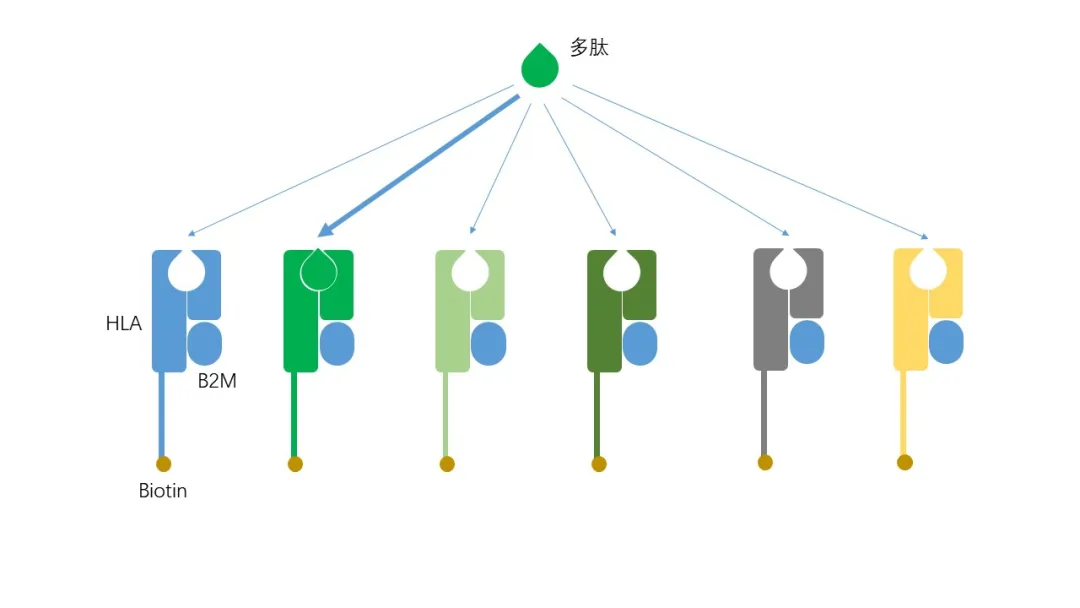
How does the antigen peptide screening mode work? When researchers need to screen immunogenic epitopes from a large number of candidate peptides, this mode provides an efficient solution. By fixing the HLA type and systematically evaluating the binding ability of multiple antigen peptides, the most valuable candidate peptides can be quickly identified, significantly accelerating the antigen discovery process.
What is the feature of the HLA adaptation mode? In some scenarios, researchers have identified target antigen peptides but need to understand their binding characteristics with different HLA types. This mode allows simultaneous testing of the binding ability of antigen peptides to various HLA variants, providing critical data for studying the population coverage of immune responses and developing broadly applicable immunotherapy strategies.
Why is the complex verification mode important? For research projects entering the translational application stage, ensuring the quality and stability of pMHC complexes is crucial. This mode focuses on verifying the correct folding and functional integrity of the complexes, providing quality assurance for downstream applications such as TCR sequencing, T cell sorting, and therapeutic multimer preparation.
What are the technical advantages and future prospects?
What significant advantages does MHC multimer technology have compared to traditional methods? This technology provides the ability to directly detect antigen-specific T cells, avoiding the indirectness and potential biases of functional assays. Meanwhile, its single-cell resolution allows deep integration of phenotypic analysis and functional assessment of T cells, offering a multidimensional perspective for understanding T cell immunity.
How will this technology develop in the future? With the integration of multicolor-coded multimers, single-cell sequencing, and microfluidic technologies, MHC multimer technology is moving toward higher throughput, greater multiplexing, and higher sensitivity. These advancements will further enhance our ability to understand adaptive immune responses at a systemic level and accelerate the development of new immunotherapy strategies.
Through continuous innovation and refinement, MHC-peptide multimer technology will continue to play a key role in basic immunology and clinical immunology applications, providing a powerful technical weapon for humanity to overcome diseases.
This article is reviewed and published by the technical expert team of UA
Disclaimer: This article partially utilizes artificial intelligence assistance in its creation. If any content involves copyright or intellectual property issues, please let us know and we promise to verify and remove it as soon as possible.
Purchase recombinant protein, choose Nanjing UA-Bio
UA protein focuses on providing various protein reagents, raw materials, and services required for drug research and development, cell therapy, gene therapy, and basic scientific research, including drug target proteins, immune checkpoint proteins, cytokines, tool enzymes, customized protein expression, and full-length transmembrane protein development. Youai is committed to providing customers with high-quality products and professional services, and building a High-tech Biological Enterprise with International Competitiveness.







 Business license (three certificates in one)