




Exploring IdeS Enzyme: A Revolutionary Protease from Mechanism to Treatment


deS(IgG-degrading enzyme of Streptococcus pyogenes) It is a specific protease derived from Streptococcus pyogenes, also known as Imlifidase.
- Recent Advances
- Product Information
Q1: What is the IdeS enzyme? What are its origin and basic characteristics?
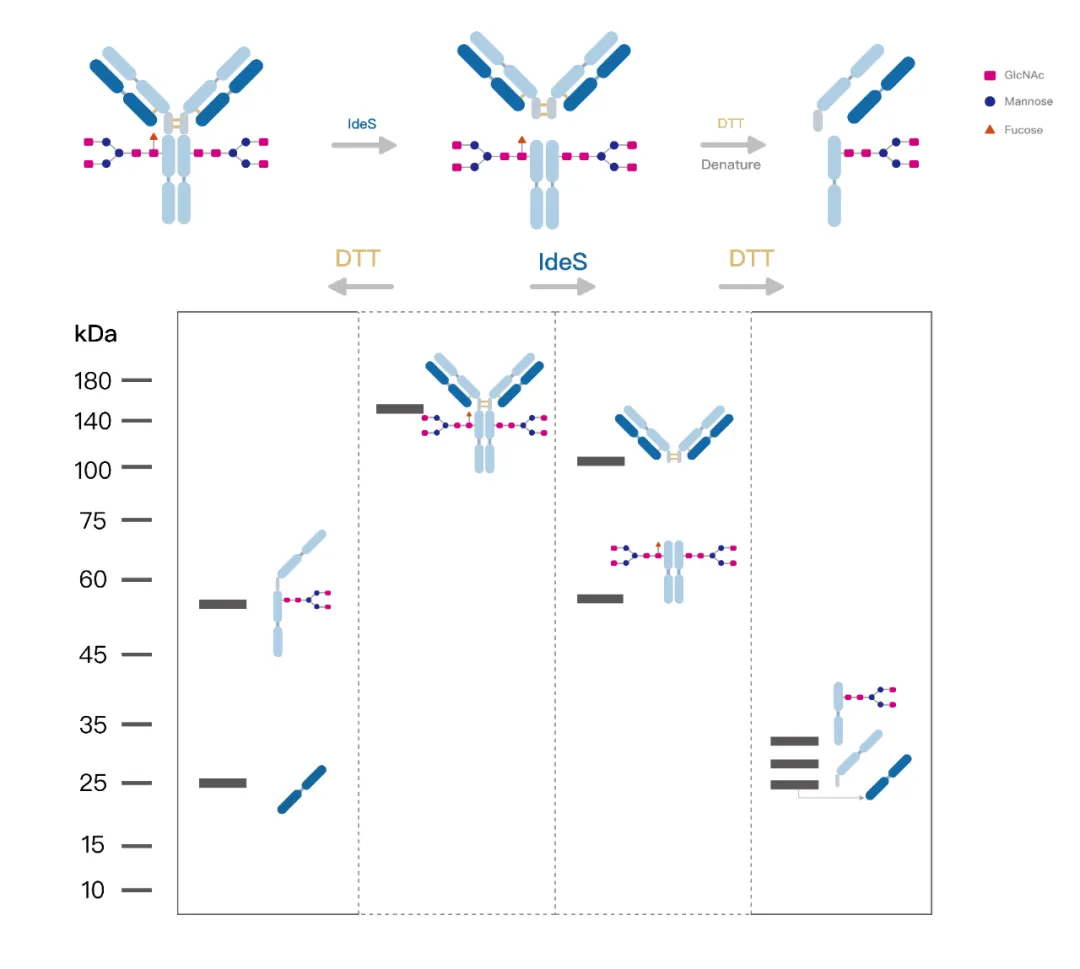
IdeS (IgG-degrading enzyme of Streptococcus pyogenes) is a highly specific protease derived from Streptococcus pyogenes, also known as Imlifidase. This enzyme exhibits exceptional hydrolytic activity by efficiently cleaving the heavy chains of human immunoglobulin G (IgG), producing F(ab')₂ and Fc fragments. IdeS demonstrates optimal activity within a pH range of 6–8 and operates without the need for cofactors. It rapidly and irreversibly degrades IgG both in vitro and in vivo. Due to its unique mechanism of action, IdeS has been developed as a novel biological therapeutic agent for intervening in antibody-mediated immune diseases.
Q2: What makes the mechanism of IdeS enzyme unique?
IdeS cleaves IgG at a specific site (Gly236) below the hinge region of the heavy chain, rapidly disrupting the interaction between IgG molecules and immune effector cells (such as macrophages and NK cells) as well as the complement system. This cleavage significantly reduces plasma IgG levels within hours, thereby inhibiting immune responses like antibody-dependent cellular cytotoxicity (ADCC) and complement-dependent cytotoxicity (CDC). This mechanism provides an "emergency brake" for controlling immune reactions triggered by high antibody levels, such as hyperacute rejection and flares of autoimmune diseases—a capability traditional immunosuppressants lack.
Q3: In which disease treatments has IdeS shown potential?
The primary applications of IdeS currently focus on organ transplantation and autoimmune diseases:
Organ Transplantation: In highly sensitized kidney transplant recipients, IdeS can rapidly clear anti-HLA antibodies, significantly reducing the risk of antibody-mediated rejection (AMR) and enabling transplantation within a short timeframe.
Autoimmune Diseases: For antibody-driven conditions such as anti-glomerular basement membrane disease (anti-GBM disease) and Guillain-Barré syndrome, IdeS can quickly remove pathogenic IgG, alleviating acute symptoms.
Other Areas: Research is also exploring its potential in treating myasthenia gravis, immune thrombocytopenia (ITP), and systemic lupus erythematosus (SLE).
Q4: What are the therapeutic advantages of IdeS compared to traditional immunosuppressive regimens?
IdeS offers several groundbreaking advantages over conventional multi-drug immunosuppressive therapies:
Rapid Onset of Action: IdeS significantly reduces IgG levels within hours of administration, whereas traditional plasmapheresis or IVIG takes longer to show effects.
High Specificity: It targets only IgG, sparing other immunoglobulins (e.g., IgA, IgM) and cellular immune functions.
Short-Term Dosing: Typically, only a single dose or a few doses are needed to achieve therapeutic effects, avoiding long-term risks associated with chronic immunosuppressant use, such as infections and tumors.
Reversible Effects: The action of IdeS is temporary; immune function gradually recovers as new IgG is synthesized, reducing the side effects of prolonged immunosuppression.
Q5: Has IdeS been approved for clinical use?
Yes. IdeS (Imlifidase) received conditional marketing authorization in Europe in 2020 for desensitization treatment in highly sensitized adult kidney transplant patients. The U.S. FDA has also granted it Breakthrough Therapy designation. Multiple Phase III clinical trials are underway, and the drug is currently used in numerous centers worldwide for rescue therapy and pre-transplant conditioning, significantly increasing transplant opportunities for sensitized patients.
Q6: Are there any safety concerns associated with IdeS use?
Despite its strong clinical potential, the safety of IdeS requires careful attention. Common adverse reactions include infusion-related responses (e.g., fever, chills), nausea, and a mildly increased risk of temporary infections due to reduced IgG levels. As IdeS is derived from bacteria, its immunogenicity may lead to the production of anti-drug antibodies (ADA). However, observed ADA levels have not significantly impacted efficacy or caused severe sequelae. Close monitoring for signs of infection and precautionary measures against opportunistic pathogens are recommended during treatment.
Q7: What are the future research directions for IdeS?
Current research focuses on the following areas:
Expanding Indications: Exploring its use in non-kidney transplants (e.g., heart, liver) and more autoimmune diseases.
Optimizing Combination Therapies: Using IdeS in combination with anti-CD20 monoclonal antibodies, IVIG, etc., to prolong efficacy and reduce recurrence.
Engineering Improvements: Utilizing protein engineering to reduce immunogenicity, increase half-life, or broaden substrate specificity.
Personalized Treatment Strategies: Developing differentiated dosing protocols based on patients' baseline IgG levels and immune status.
Q8: How does IdeS impact the field of immunotherapy as a whole?
IdeS represents a novel "immune reset" strategy. It not only provides a precise and rapid tool for addressing antibody-mediated immune responses but also advances the paradigm of drug design targeting specific immune components. Furthermore, the success of IdeS lays a solid foundation for developing similar enzyme-based therapies (e.g., IgA proteases, IgM proteases), potentially protease-based immune regulation treatments in the future.
This article is reviewed and published by the technical expert team of UA
Disclaimer: This article partially utilizes artificial intelligence assistance in its creation. If any content involves copyright or intellectual property issues, please let us know and we promise to verify and remove it as soon as possible.
Purchase recombinant protein, choose Nanjing UA-Bio
UA protein focuses on providing various protein reagents, raw materials, and services required for drug research and development, cell therapy, gene therapy, and basic scientific research, including drug target proteins, immune checkpoint proteins, cytokines, tool enzymes, customized protein expression, and full-length transmembrane protein development. Youai is committed to providing customers with high-quality products and professional services, and building a High-tech Biological Enterprise with International Competitiveness.







 Business license (three certificates in one)