




How Does DNase I Recognize and Cleave DNA?


Deoxyribonuclease I (DNase I) is an endonuclease that hydrolyzes phosphodiester bonds in DNA. It acts on both single-stranded DNA (ssDNA) and double-stranded DNA (dsDNA), generating oligonucleotide fragments with 5′-phosphate and 3′-hydroxyl termini.
- Recent Advances
- Product Information
- Reference
I. What is DNase I and What Are Its Basic Characteristics?
Deoxyribonuclease I (DNase I) is an endonuclease that hydrolyzes phosphodiester bonds in DNA. It acts on both single-stranded DNA (ssDNA) and double-stranded DNA (dsDNA), generating oligonucleotide fragments with 5′-phosphate and 3′-hydroxyl termini. Although traditionally considered non-sequence-specific, studies indicate that DNase I preferentially targets the minor groove of DNA and exhibits higher cleavage efficiency toward purine-pyrimidine sequences. However, when acting on heteroduplex DNA, the cleavage difference among all four bases is less than 3-fold, making it generally regarded as non-specific in most applications.
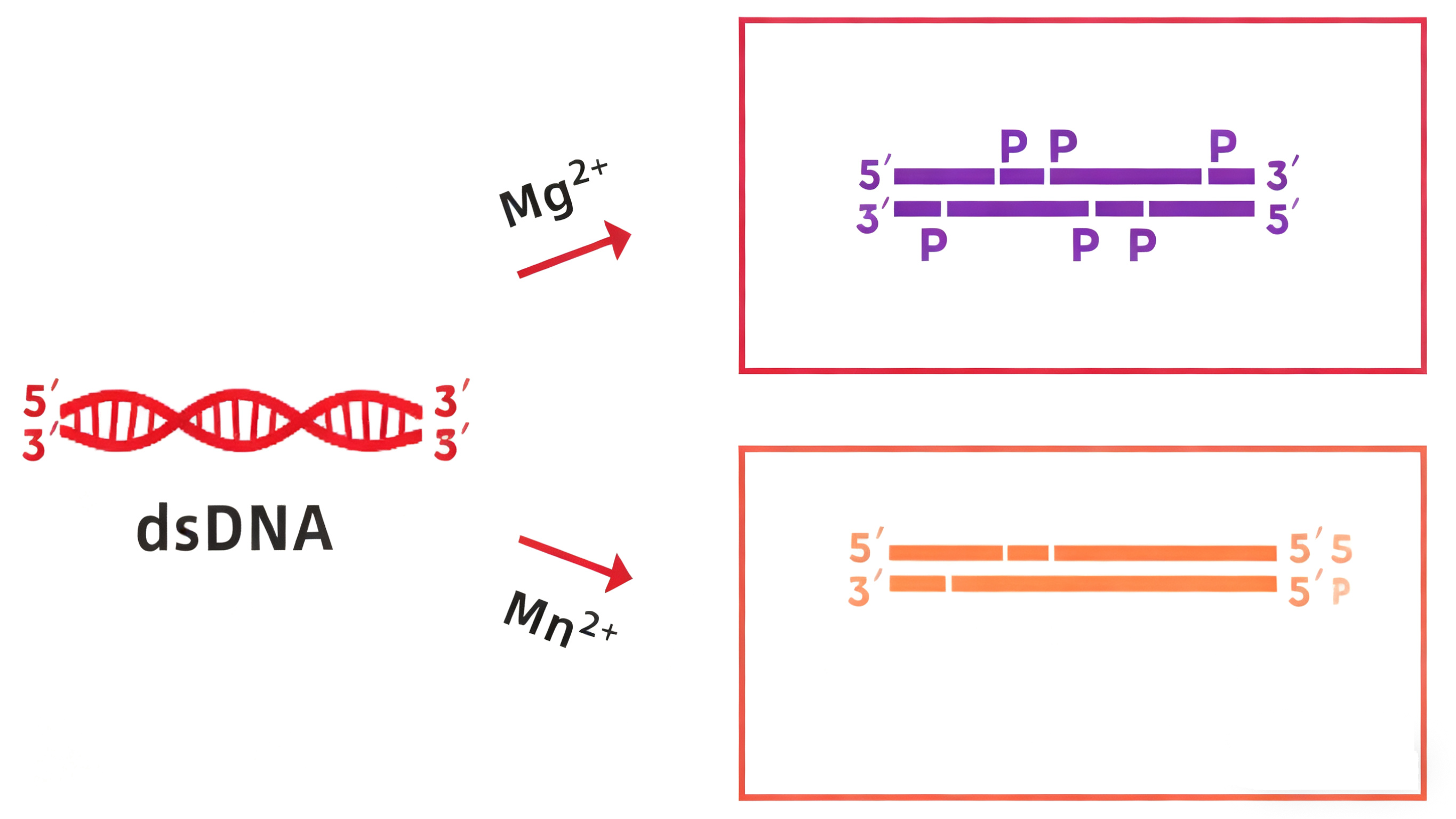
DNase I activity is highly dependent on divalent metal ions: its active center requires calcium ions for structural stability, while enzymatic cleavage is activated by magnesium or manganese ions. In the presence of magnesium ions, DNase I cleaves DNA strands randomly; with manganese ions, it tends to cleave both strands of DNA at the same position, producing blunt ends or cohesive ends with 1–2 nucleotide overhangs.
Notably, DNase I activity can be inhibited by various factors: 2.5 mM EDTA combined with heating at 65°C for 10 minutes completely inactivates it; phenol-chloroform extraction also effectively removes enzymatic activity. Additionally, millimolar concentrations of zinc ions, 0.1% SDS, reducing agents like DTT, and high salt concentrations (50–100 mM) significantly inhibit its activity.
II. What Is the Substrate Specificity of DNase I? Is It Limited to Double-Stranded DNA?
Although DNase I exhibits the highest activity toward dsDNA, it can also cleave ssDNA and the DNA component of RNA-DNA hybrids, albeit with significantly reduced efficiency. Experimental data show that the specific activity of DNase I for ssDNA is only about 1/500 of that for dsDNA, while its activity toward RNA-DNA hybrids is less than 1–2% of that for dsDNA. However, in practical applications, due to the typically used excess enzyme concentrations, effective cleavage of these non-preferred substrates can still be achieved. For example, Ambion experiments demonstrated that 2 U of DNase I can digest 1 µg of a 100-mer oligonucleotide to fragments <5-mer within 15 minutes. Therefore, the degradation of ssDNA and RNA-DNA hybrids in actual experiments needs to be optimized based on specific reaction conditions.
III. What Are the Core Applications of DNase I in Molecular Biology?
-
DNA Removal in Nucleic Acid Sample Preparation
During RNA extraction, DNase I is widely used to remove genomic DNA contamination, ensuring the accuracy of subsequent experiments such as RT-PCR and RNA-seq. Additionally, after in vitro transcription, it effectively degrades DNA templates to obtain high-purity RNA products. -
Protein-DNA Interaction Studies (DNase I Footprinting)
When a protein specifically binds to DNA, it protects the binding region from DNase I cleavage. By comparing DNA band patterns after enzymatic digestion, protein binding sites on DNA can be precisely identified—a technique known as DNase I footprinting. -
Probe Labeling and Fragmentation
In nick translation labeling experiments, DNase I works synergistically with DNA polymerase I to introduce nicks into DNA strands and incorporate labeled nucleotides, producing high-specific-activity nucleic acid probes. Additionally, DNase I is commonly used to generate random DNA fragment libraries. -
Epigenetics and Chromatin Structure Analysis
DNase I hypersensitive sites (DHS) are regions of chromatin highly sensitive to DNase I, often marking open states of gene regulatory elements (e.g., promoters, enhancers). DNase I-based sequencing technologies (e.g., DNase-seq, scDNase-seq) enable genome-wide identification of these regions, revealing chromatin accessibility. -
3D Genomics and Chromatin Interaction Analysis
In chromatin conformation capture techniques, DNase I can replace restriction enzymes for chromatin fragmentation (e.g., in situ DNase Hi-C). Due to the more uniform distribution of DNase I cleavage sites, this method significantly improves the resolution and coverage of chromatin interaction maps. -
rRNA Removal and Transcriptome Analysis
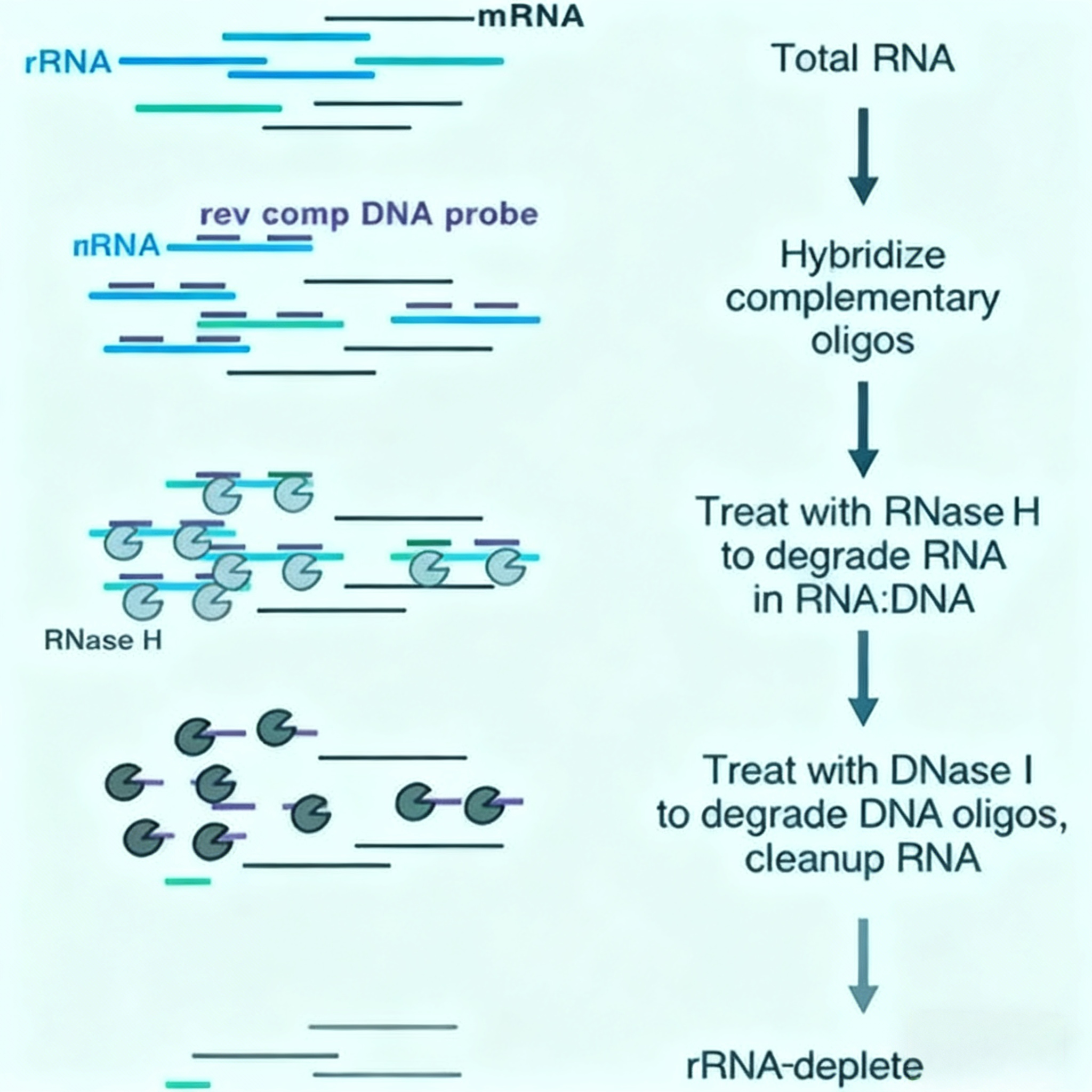
Prior to RNA-seq library construction, high-abundance rRNA often needs to be removed to enrich target RNA. Using DNA probes complementary to rRNA, RNase H first degrades the hybridized rRNA, followed by DNase I to clear the DNA probes, effectively increasing the proportion of valid sequences in transcriptome data.
-
Apoptosis Detection and Quality Control
In TUNEL assays, DNase I treatment serves as a positive control, mimicking the DNA fragmentation pattern in apoptotic cells. Additionally, it can be used to degrade DNA released from dead cells, reducing experimental interference.
IV. How Does DNase I Drive High-Throughput Genomics Technologies?
With advancements in high-throughput sequencing, the applications of DNase I have expanded from basic molecular operations to genome-wide analyses. For example:
-
DNase-seq captures DNase I cleavage sites genome-wide to identify regulatory elements, providing a key tool for understanding gene expression regulation.
-
Single-cell DNase-seq (scDNase-seq) combines single-cell technology to analyze chromatin accessibility at the individual cell level, revealing cellular heterogeneity.
-
DNase Hi-C utilizes DNase I for chromatin fragmentation, significantly enhancing the precision and resolution of chromatin interaction maps, offering new perspectives for 3D genomics research.
The continuous development of these technologies has established DNase I as a critical enzymatic tool in functional genomics, epigenetics, and 3D genomics.
V. What Precautions Should Be Taken When Using DNase I?
Despite its broad utility, the following considerations are essential for practical applications:
-
Activity Optimization: Enzyme concentration, reaction time, and ion conditions should be optimized based on substrate type and reaction system.
-
Contamination Control: For RNA sample processing, ensure DNase I is thoroughly inactivated or removed to prevent interference with subsequent experiments.
-
Quality Control: Include negative and positive controls to verify cleavage efficiency and specificity.
Conclusion
From basic DNA digestion to complex genomic analyses, DNase I has become an indispensable tool in molecular biology research. Its unique enzymatic properties, diverse applications, and critical role in high-throughput technologies continue to add value in functional genomics, epigenetics, and 3D genomics. As new technologies and methods emerge, the applications of DNase I will further expand, offering more possibilities for life sciences research.
This article is reviewed and published by the technical expert team of UA
Disclaimer: This article partially utilizes artificial intelligence assistance in its creation. If any content involves copyright or intellectual property issues, please let us know and we promise to verify and remove it as soon as possible.
Purchase recombinant protein, choose Nanjing UA-Bio
UA protein focuses on providing various protein reagents, raw materials, and services required for drug research and development, cell therapy, gene therapy, and basic scientific research, including drug target proteins, immune checkpoint proteins, cytokines, tool enzymes, customized protein expression, and full-length transmembrane protein development. Youai is committed to providing customers with high-quality products and professional services, and building a High-tech Biological Enterprise with International Competitiveness.

https://www.thermofisher.com/us/en/home/references/ambion-tech-support/nuclease-enzymes/general-articles/dnase-i-demystified.reg.in.html
Song L, Crawford GE. DNase-seq: a high-resolution technique for mapping active gene regulatory elements across the genome from mammalian cells. Cold Spring Harbor Protocols. 2010 Feb;2010(2):pdb-rot5384.
Carey MF, Peterson CL, Smale ST. DNase I footprinting. Cold Spring Harbor protocols. 2013 May 1;2013(5):pdb-rot074328.
Ma W, Ay F, Lee C, Gulsoy G, Deng X, Cook S, Hesson J, Cavanaugh C, Ware CB, Krumm A, Shendure J. Fine-scale chromatin interaction maps reveal the cis-regulatory landscape of human lincRNA genes. Nature methods. 2015 Jan;12(1):71-8.
Ramani V, Cusanovich DA, Hause RJ, Ma W, Qiu R, Deng X, Blau CA, Disteche CM, Noble WS, Shendure J, Duan Z. Mapping 3D genome architecture through in situ DNase Hi-C. Nature protocols. 2016 Nov;11(11):2104-21.






 Business license (three certificates in one)