




Rewriting the Rules: Harnessing IL-33 with Novel Antibodies to Treat Inflammation


Interleukin-33 (IL-33) is a key "alarmin" cytokine that plays a central role in immune defense and tissue homeostasis.
- Recent Advances
- Product Information
Interleukin-33 (IL-33) – The "Alarmin" Cytokine
Interleukin-33 (IL-33) is a crucial "alarmin" cytokine that plays a central role in immune defense and tissue homeostasis.
Unlike other cytokines, IL-33 is pre-synthesized and stored within the nucleus of cells in barrier tissues (such as epithelial and endothelial cells) under healthy conditions. When tissue damage or infection occurs, cell necrosis leads to its rapid release, acting as a danger signal to alert the immune system.
Its activity is precisely regulated by redox status: the reduced form (redIL-33) is the biologically active conformation capable of binding to the cell surface receptor ST2/IL-1RAcP, thereby potently activating type 2 immune responses. This drives Th2 cells, ILC2s, and others to produce IL-5 and IL-13, leading to hallmark features like eosinophilic inflammation and mucus secretion. In contrast, the oxidized form (IL-33-DSB) loses this activity and may instead participate in tissue repair processes.
Due to its central role in initiating inflammation, IL-33 is considered a key driver of allergic and inflammatory diseases such as asthma, atopic dermatitis, and chronic obstructive pulmonary disease (COPD). Consequently, it has emerged as a highly promising therapeutic target, with neutralizing antibody drugs against it being actively developed.
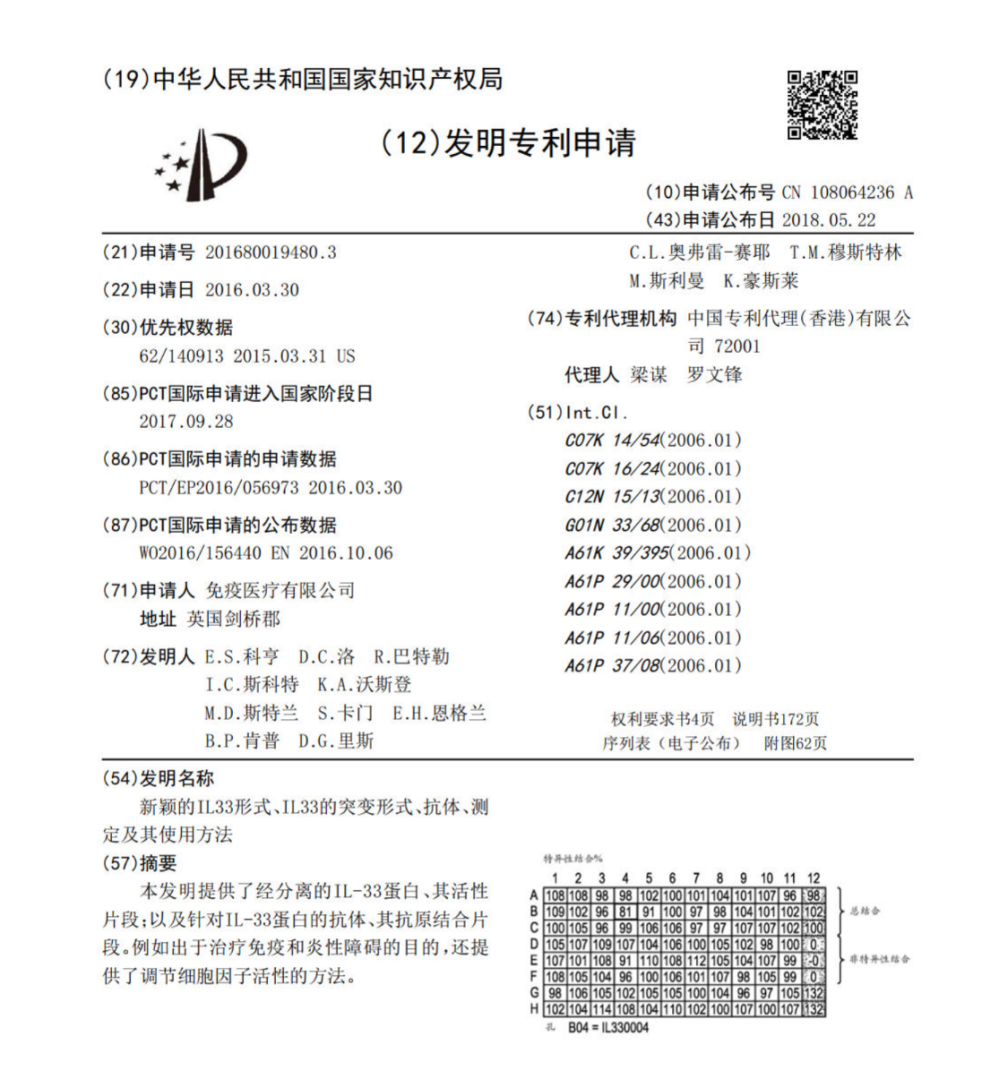
Immune Therapeutics Ltd. has filed an invention concerning novel forms of IL-33, mutant forms of IL-33, antibodies, assays, and methods of their use. The invention provides isolated IL-33 proteins, their active fragments; as well as antibodies against the IL-33 protein, and their antigen-binding fragments. Methods for modulating the activity of the cytokine are also provided, for example, for the purpose of treating immune and inflammatory disorders.
Aspect 1: Basic Scientific Discovery – The Dual Conformation and Functional Paradox of IL-33
The patent clearly identifies, for the first time, two stable forms of IL-33:
-
Reduced IL-33 (redIL-33):
-
Function: This is the biologically active form that can bind its canonical receptor ST2, activate downstream signaling pathways (e.g., NF-κB), drive Th2-type immune responses, and lead to the release of cytokines like IL-4, IL-5, and IL-13.
-
Characteristic: Its cysteine residues (Cys208, Cys227, Cys232, Cys259) are in a free, reduced state.
-
-
Oxidized IL-33 (IL-33-DSB):
-
Function: This is an inactive form that cannot bind ST2 and therefore cannot initiate classical pro-inflammatory signaling.
-
New Functional Discovery: The patent reveals for the first time that this oxidized form can bind another receptor – RAGE – potentially mediating non-canonical signaling pathways related to tissue repair and epithelial migration.
-
Characteristic: Stabilized by the formation of disulfide bonds between the aforementioned cysteines.
-
Embodiment of Innovativeness:
-
Paradigm-Shifting: Traditionally, IL-33 was viewed as a homogeneous pro-inflammatory factor. This discovery shows it has an "activity switch" (redox status), and the body naturally terminates inflammatory signals in vivo by oxidizing redIL-33 to IL-33-DSB.
-
Explaining Disease Mechanisms: Provides a new perspective for understanding the initiation and resolution of inflammation.
-
Redefining Detection Standards: Points out that commercial detection methods at the time primarily recognized the abundantly present oxidized form and could not accurately reflect the biologically active reduced form, indicating a direction for developing new diagnostic methods.
Aspect 2: Technical Tool Innovation – Stabilized Mutants and Novel Antibodies
Traditional target screening uses wild-type protein, but wild-type IL-33 rapidly oxidizes and cannot stably present the redIL-33 conformation. The innovation of this patent lies in:
-
Creating Stable, "Locked" Targets: Through site-directed mutagenesis (e.g., Cys→Ser) or site-specific biotinylation, a series of engineered IL-33 mutants were generated. These mutants are "locked" in the reduced, active redIL-33 conformation and cannot form the oxidized IL-33-DSB.
-
Acting as Specific "Bait": These stable redIL-33 mutants are used as immunogens (for animal immunization) or screening tools (for in vitro screening like phage display libraries). This ensures that the screened antibodies target the biologically active form of IL-33 from the outset, rather than the abundant, ST2-binding-incompetent oxidized form.
To screen for true functional inhibitors from binding molecules, the patent employed a multi-layered functional phenotypic screening:
-
Primary Screen: Blocking Interaction: Using biophysical techniques like Surface Plasmon Resonance (SPR) or ELISA to verify whether candidate antibodies effectively block the interaction between redIL-33 and its receptor ST2. This is the most direct mechanistic validation.
-
Secondary Screen: Inhibiting Cellular Signaling: Testing in cell lines expressing the ST2/IL-1RAcP receptor (e.g., engineered HEK-293 cells) whether the antibody inhibits IL-33-induced NF-κB reporter gene activation or MAPK pathway activation. This validates the antibody's function at the cellular level.
-
Tertiary Screen: Inhibiting Functional Cytokine Release: Assessing the antibody's ability to inhibit the release of key inflammatory cytokines (e.g., IL-5, IL-6, IL-8, IL-13) driven by IL-33 in primary human mast cells or endothelial cells, which more closely mimic the physiological environment. This is the most crucial pharmacodynamic phenotypic validation, ensuring antibody efficacy in complex biological settings.
Aspect 3: Application and Diagnostic Method Innovation
-
Redefining Therapeutic Utility:
-
The patent not only covers the traditional approach of using antibodies to inhibit the ST2 pathway for treating inflammation (e.g., asthma, COPD) but also proposes new therapeutic paradigms. These include modulating tissue repair processes by inhibiting the IL-33-DSB/RAGE interaction, or using catalytic antibodies to "mimic physiological inactivation."
-
-
Novel Detection Methods:
-
Based on the distinction between the two forms, the patent claims methods for specifically detecting redIL-33 (the active form) in samples. This addresses a blind spot in existing detection technologies, allowing for a more accurate assessment of disease activity status and target burden, which is significant for precision medicine and companion diagnostics.
-
PROTAC and Small Molecules: Challenges and Potential Opportunities
Compared to the prominent antibody strategy in the patent, small molecules and PROTACs face unique challenges and opportunities in targeting IL-33.
-
Small Molecule Inhibitors
-
Challenge: The interaction between IL-33 and ST2 is a typical, large protein-protein interaction interface. Such interfaces often lack deep pockets suitable for small molecule binding, making the development of high-affinity, high-specificity oral small molecule inhibitors extremely difficult. To date, there are few successful reports in this area.
-
Potential Path: If specific sites on ST2 or IL-33 suitable for small molecule binding are discovered, or if allosteric modulation mechanisms can be used to indirectly disrupt their binding, small molecule drugs remain an attractive direction, particularly due to the advantage of oral administration.
-
-
PROTAC Strategy
-
Challenge: PROTAC technology aims to induce the degradation of intracellular target proteins. However, IL-33 is a secreted cytokine that primarily functions in the extracellular space. Traditional PROTACs need to enter the cell to recruit E3 ubiquitin ligases and are therefore ineffective against extracellular proteins. This is a major obstacle for targeting IL-33 itself.
-
Innovative Opportunities:
-
Targeting Receptor Degradation: A more feasible PROTAC strategy is to target the degradation of the IL-33 receptor, ST2. By designing a bifunctional molecule that simultaneously binds ST2 and an E3 ligase, it could induce the internalization and degradation of ST2 from the cell membrane, thereby reducing cellular sensitivity to IL-33 at the source.
-
Targeting the Intracellular Precursor: Although mature IL-33 is secreted, its precursor is synthesized in the nucleus. Theoretically, PROTACs targeting the IL-33 precursor could be designed to degrade it before its release. However, this requires precise discrimination of the precursor from other nuclear proteins and might interfere with its unknown nuclear functions, making the strategy more complex.
-
-
UA BIOSCIENCE IL-33 Full-Length Protein: Unlocking the Active Conformation, Empowering Innovative Drug Discovery
The Recombinant Human IL-33 Full-Length Protein offered by UA BIOSCIENCE is not an ordinary cytokine reagent. It is a key tool specifically designed for Structure-Based Drug Discovery (SBDD) and functional screening. Especially in the development of innovative therapies (such as neutralizing antibodies, receptor antagonists) targeting the highly challenging IL-33 target, this product, with its exceptional conformational authenticity and functionality, becomes an indispensable asset for researchers.
Accurately Mimicking the Natural Active Conformation, Overcoming the Primary Hurdle in R&D
In traditional IL-33 protein preparations, the active reduced form (redIL-33) and the inactive oxidized form (IL-33-DSB) coexist and dynamically convert, causing significant interference in screening. UA BIOSCIENCE's IL-33 Full-Length Protein, through proprietary production processes and quality control systems, ensures the product maximally maintains or mimics the natural, biologically active reduced form (redIL-33). This enables researchers to directly use the most relevant physiological target structure for:
-
High-Specificity Antibody Screening: As an immunogen, it can induce antibodies that directly target redIL-33 epitopes, rather than antibodies cross-reacting with the oxidized form, enhancing the efficacy and specificity of candidate drugs from the source.
-
Epitope Mapping and Competitive Binding Analysis: Precisely mapping the binding sites of antibodies or small molecules to active IL-33, distinguishing their mechanism of action as direct ST2 binding blockade or allosteric modulation.
Functionally Validated Activity Across Multiple Levels, Ensuring Data Reliability!
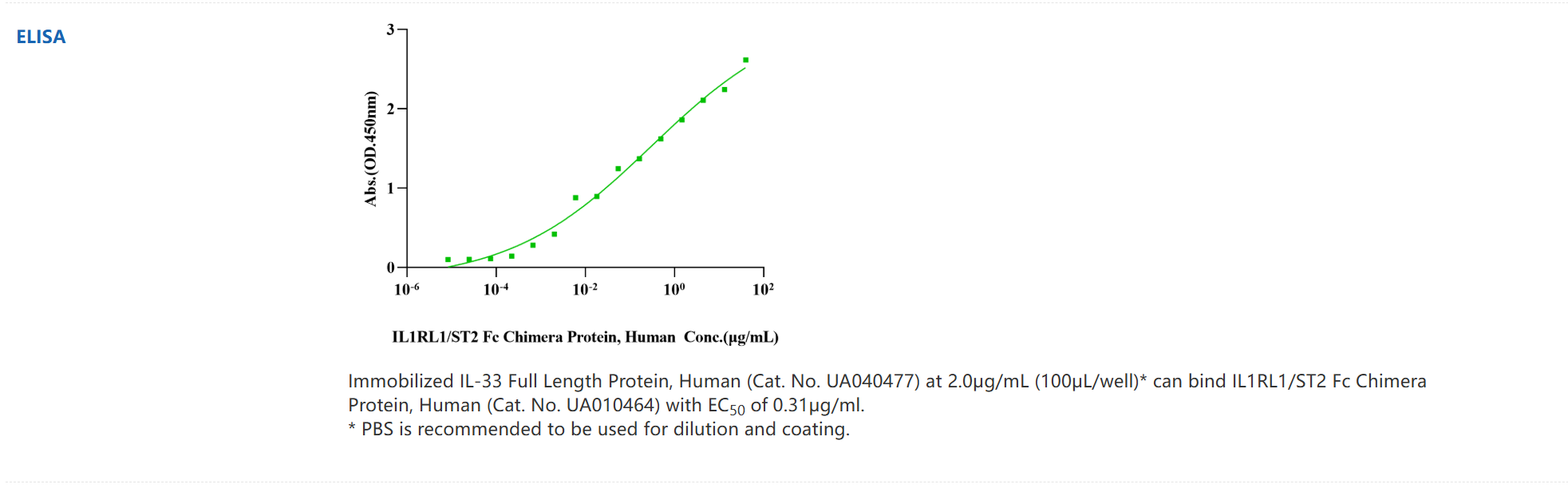
IL-33 Full Length Protein, Human_UA040477_优爱(UA BIOSCIENCE)官网
IL-33 Full Length Protein, Human_UA040477_ UA BIOSCIENCE Official Website
This article is reviewed and published by the technical expert team of UA
Disclaimer: This article partially utilizes artificial intelligence assistance in its creation. If any content involves copyright or intellectual property issues, please let us know and we promise to verify and remove it as soon as possible.
Purchase recombinant protein, choose Nanjing UA-Bio
UA protein focuses on providing various protein reagents, raw materials, and services required for drug research and development, cell therapy, gene therapy, and basic scientific research, including drug target proteins, immune checkpoint proteins, cytokines, tool enzymes, customized protein expression, and full-length transmembrane protein development. Youai is committed to providing customers with high-quality products and professional services, and building a High-tech Biological Enterprise with International Competitiveness.







 Business license (three certificates in one)