




Novel 7-Azaindole Small Molecule Inhibitors Targeting ActRIIB: A New Strategy to Tackle Cancer Cachexia


ActRIIB (Activin Type IIB Receptor) and ACTRIIA (Activin Type IIA Receptor) are structurally similar transmembrane receptors belonging to the TGF-β receptor superfamily. They collectively function to receive extracellular "growth regulatory signals," yet exhibit key distinctions in their physiological roles and their value as drug targets.
- Recent Advances
ActRIIB (Activin Type IIB Receptor) and ACTRIIA (Activin Type IIA Receptor) are transmembrane receptors that share structural similarities and belong to the TGF-β receptor superfamily. They are collectively responsible for receiving extracellular "growth regulatory signals," but they exhibit key differences in their physiological functions and their value as drug targets. ActRIIB is considered the "master switch" leading to muscle atrophy because it has high affinity for Myostatin. When Myostatin binds to ActRIIB, it initiates a series of signals that inhibit muscle growth and promote protein degradation, ultimately leading to muscle loss. Therefore, in the treatment of wasting diseases such as cancer cachexia, precisely inhibiting ActRIIB can most directly and effectively reverse muscle atrophy. In contrast, although ACTRIIA also binds some of the same ligands, its primary functions are more involved in fundamental physiological processes such as erythropoiesis, reproduction, and immune regulation. If a drug non-selectively inhibits ACTRIIA, it may cause serious side effects, such as anemia.
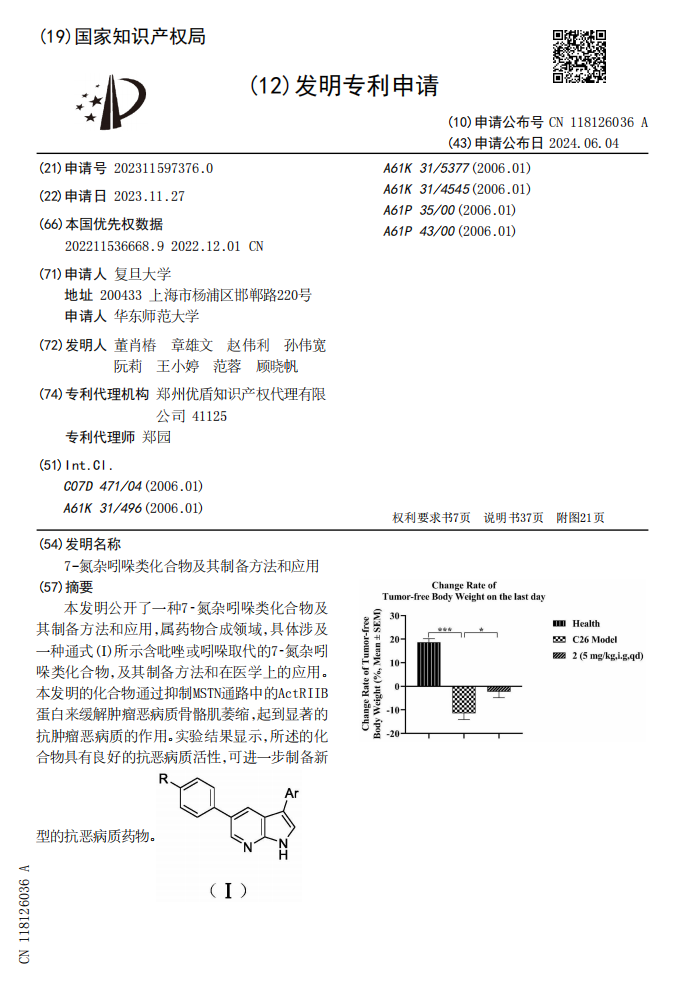
Fudan University and East China Normal University have filed a patent for 7-azaindole compounds, their preparation methods, and applications. This invention discloses a 7-azaindole compound and its preparation method and application, belonging to the field of drug synthesis. Specifically, it relates to a compound of general formula (I) containing pyrazole or indole-substituted 7-azaindole, its preparation method, and its medical application. The compound of this invention alleviates skeletal muscle atrophy in cancer cachexia by inhibiting the ActRIIB protein in the MSTN pathway, exerting a significant anti-cancer cachexia effect. Experimental results show that the said compound has good anti-cachexia activity and can be further developed into novel anti-cachexia drugs.
Summary of the Patent's Innovative Points
The main innovative points of this patent can be summarized as follows:
-
First-in-Class Small Molecule ActRIIB Inhibitors: The core innovation of the patent lies in being the first to provide a class of small molecule compounds capable of efficiently inhibiting ActRIIB. Currently, investigational drugs targeting the MSTN/ActRIIB pathway, such as monoclonal antibodies (e.g., Bimagrumab) or fusion proteins (e.g., Ramatercept), are all biological macromolecules. While effective, these large molecule drugs face challenges including high development difficulty, expensive production costs, typically requiring injection, and potential immunogenicity. The small molecule inhibitor approach of this patent represents a major breakthrough in medicinal chemistry, offering a new path for developing orally effective anti-cachexia drugs.
-
Clear Chemical Structure Innovation: The patent designs and synthesizes specific chemical structures based on a 7-azaindole (pyrrolo[2,3-b]pyridine) core. Key substituents are introduced at the 3 and 5 positions:
-
Position 5: Typically linked to a phenyl group substituted with a nitrogen-containing heterocycle (e.g., 4-methylpiperazine, morpholine, piperazine). This part is considered the key pharmacophore for binding the ActRIIB receptor, providing good solubility and target affinity.
-
Position 3: Linked to a diverse aromatic heterocycle, such as pyrazole (unsubstituted or methyl-substituted), indole, isoxazole, pyrimidine, pyridine, etc. The exploration of diversity in this part forms the basis for the 25 specific compounds in the patent, aimed at optimizing compound activity, selectivity, and drug-like properties through structural modifications. The patent constructs a well-structured and reasonably scoped compound fortress through detailed claims.
-
-
Novel Clinical Application Direction: The patent explicitly assigns these compounds for the treatment of cancer cachexia. Cachexia, particularly cancer cachexia, is a devastating complication lacking effective treatment options. By closely linking ActRIIB small molecule inhibitors with this indication, the patent not only validates the feasibility of the new target but also provides highly promising drug candidates to address this significant unmet clinical need.
Target-Based and Phenotypic Screening Strategies
The patent skillfully combines target-based screening and phenotypic screening in the drug discovery process, forming a rigorous and complementary validation system.
-
Target-Based Screening
The starting point of the research is based on a deep understanding of the pathological mechanism of cancer cachexia, namely that overactivation of the MSTN-ActRIIB-Smad signaling pathway is the core link leading to skeletal muscle atrophy. Therefore, ActRIIB was selected as the clear molecular target.-
Screening Method: In Example 27, the patent employs the ADP-Glo™ kinase assay to directly evaluate the compound's ability to inhibit ActRIIB kinase activity. This is a homogeneous, high-throughput detection method that quantifies kinase activity by measuring the remaining ATP in the reaction. The patent first performed a concentration titration of ActRIIB to determine the optimal assay conditions (20 ng/μL), then tested the inhibition rates of series of compounds at different concentrations (0.1 nM to 100 nM) under these conditions, and calculated the half-maximal inhibitory concentration (IC50).
-
Screening Results: Table 3 shows the IC50 values of some compounds, with very significant results. Multiple compounds exhibited potent inhibitory activity at the nanomolar level. For example, Compound 3 had an IC50 of 1.1 nM, Compound 2 was 1.8 nM, and Compounds 5, 6, and 25 were in the range of 1.2-1.4 nM. These data strongly prove that this class of compounds are highly efficient, high-affinity inhibitors of ActRIIB, establishing their direct target engagement mechanism.
-
-
Phenotypic Screening
After confirming target inhibition activity, the patent further conducted phenotypic screening in models closer to the disease state to verify whether the compounds could reverse the core phenotype of cachexia—muscle atrophy.-
Screening Method: In Example 26, the patent established an in vitro cell model to simulate tumor cachexia-induced muscle atrophy. This model uses mouse C2C12 myoblasts, induced to differentiate into mature myotubes. Then, the myotubes are treated with conditioned medium from mouse colon carcinoma C26 cells (containing factors causing muscle atrophy) to induce atrophy. On this model, the patent compounds were tested for their ability to alleviate or reverse myotube atrophy.
-
Screening Results and Evaluation Metrics: Myotube diameter was quantitatively measured using HE staining and ImageJ software analysis. The "muscle atrophy reversal rate" was used as the core evaluation indicator. Results in Table 2 show that the vast majority of tested compounds significantly reversed C26 medium-induced myotube atrophy at different concentrations, showing a clear concentration dependence. For instance, Compound 2 at concentrations of 2.5 μM and 5 μM achieved reversal rates of 97.61% and 130.63%, respectively. This result directly confirms at the cellular level that these compounds possess the functional phenotype for treating muscle atrophy, forming a perfect closed-loop verification with their molecular mechanism of ActRIIB inhibition.
-
This dual "target-phenotype" screening strategy means the patent's value lies not only in discovering a class of active compounds but also in comprehensively demonstrating the scientific rationale and great potential for treating cancer cachexia from the molecular mechanism to the functional phenotype level.
Brief Analysis of PROTAC vs. Small Molecule Inhibitor Therapeutic Strategies
The strategy adopted in this patent is the classic small molecule inhibitor approach. Meanwhile, PROTAC (Proteolysis-Targeting Chimera) is a revolutionary new paradigm in drug development that has emerged in recent years. Comparing the two can better understand the characteristics and prospects of the strategy used in this patent.
-
Small Molecule Inhibitor Strategy (e.g., the compounds in this patent):
Its role is "inhibition" rather than "elimination." They work by binding with high affinity to the active site of the target protein (e.g., ActRIIB), like a "key" jamming a "lock," thereby competitively preventing the binding of its natural ligands (e.g., MSTN) or interfering with its conformational changes, ultimately inhibiting downstream signal transduction. This strategy is mature, reliable, often allows for oral administration, and can possess favorable pharmacokinetic properties. The compounds in this patent have demonstrated excellent efficacy in animal models, effectively mitigating weight loss, muscle atrophy, and loss of muscle strength without affecting tumor growth, which is a testament to the success of the small molecule inhibitor strategy. -
PROTAC Strategy:
This is an "event-driven" rather than "occupancy-driven" strategy. A PROTAC molecule is a heterobifunctional small molecule, with one end binding the target protein (POI) and the other end binding an E3 ubiquitin ligase, connected by a linker. It "recruits" the E3 ligase to the vicinity of the target protein, inducing its ubiquitination and subsequent degradation by the cell's proteasome system. Compared to inhibitors, the advantages of PROTAC include:-
Unique Mechanism of Action: It does not require continuous occupancy of the active site to function and may be effective against traditionally "undruggable" targets.
-
High Efficiency and Durability: It degrades the target protein catalytically, leading to a more thorough effect, and the effect of a single dose may last longer.
-
Potential to Overcome Resistance: It may address resistance to inhibitors caused by target mutation or overexpression.
-
-
Application Prospects in the Anti-Cachexia Field:
For the ActRIIB target, developing PROTACs is also attractive. A well-designed ActRIIB-PROTAC could completely degrade the ActRIIB receptor on the cell membrane, thereby more thoroughly blocking signals from ligands like MSTN, potentially resulting in stronger and more durable anti-muscle atrophy effects than inhibitors. However, PROTAC technology also faces challenges, such as its typically larger molecular weight, potentially poor oral bioavailability, and the "hook effect."
Summary
In summary, the CN118126036A patent is a highly valuable invention. Through rational drug design, it has successfully developed a series of first-in-class, highly potent 7-azaindole class small molecule ActRIIB inhibitors. The patent comprehensively utilized modern methods of target-based and phenotypic screening to systematically validate its anti-cancer cachexia activity and mechanism of action from the molecular mechanism to the functional phenotype level. Compared to the large molecule drugs currently at the forefront of research, the small molecule solution of this patent holds clear advantages in terms of administration convenience, production cost, and patient compliance. Although emerging technologies like PROTAC offer more possibilities for the future, the classic small molecule inhibitor strategy represented by this patent undoubtedly represents a solid and crucial step in the field of anti-cancer cachexia drug development, possessing significant clinical translation potential and market prospects.
How to Solve the Challenge of ActRIIB and ACTRIIA Enzyme Activity Inhibitor Screening Kits?
Based on an in-depth interpretation of the patent CN118126036A target, UA BIOSCIENCE launches the ActRIIB Enzyme Activity Inhibitor Screening Kit and the ActRIIA Enzyme Activity Inhibitor Screening Kit, providing key tools for new drug research and development targeting the muscle atrophy pathway.
The core value of these two kits lies in enabling precise dual-target evaluation of candidate compounds:
-
ActRIIB Enzyme Activity Inhibitor Screening Kit
-
Specifically designed for high-throughput screening of inhibitors targeting ActRIIB.
-
Precisely measures IC50 values to assess compound potency.
-
Directly verifies the inhibition mechanism of compounds on the main pathway of muscle atrophy.
-
-
ActRIIA Enzyme Activity Inhibitor Screening Kit
-
Professionally evaluates the inhibitory activity of compounds against ACTRIIA.
-
Accurately identifies off-target risks to ensure medication safety.
-
Used in conjunction with the ActRIIB kit to calculate the selectivity index.
-
Application Advantages
By using the two kits in parallel, researchers can:
-
Rapidly screen out highly effective candidates similar to Compound 3 (IC50 1.1 nM) from the patent.
-
Precisely evaluate the selectivity of compounds for ActRIIB/ACTRIIA, avoiding side effects like anemia.
-
Establish a comprehensive evaluation system for target activity and safety.
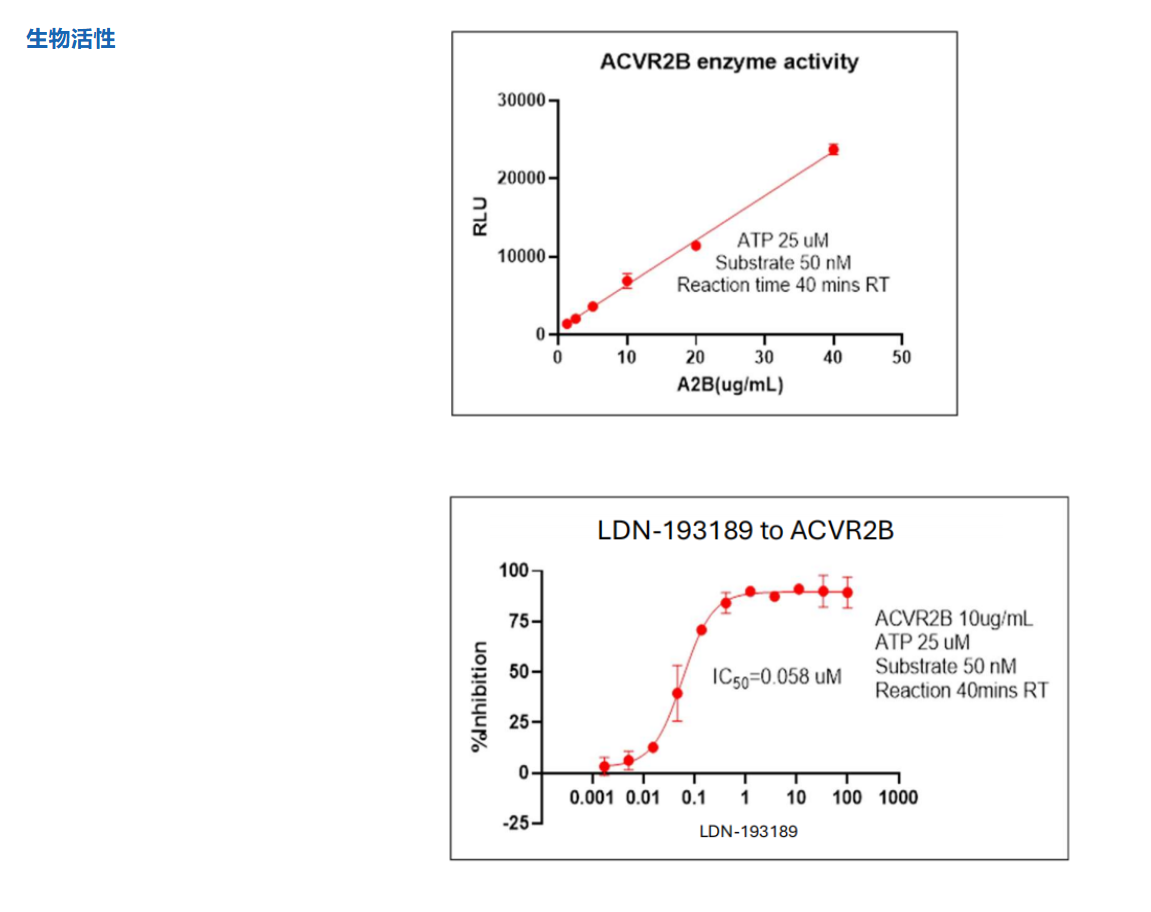
ActRIIB Enzyme Activity Inhibitor Screening Kit_UA080464_UA BIOSCIENCE Official Website
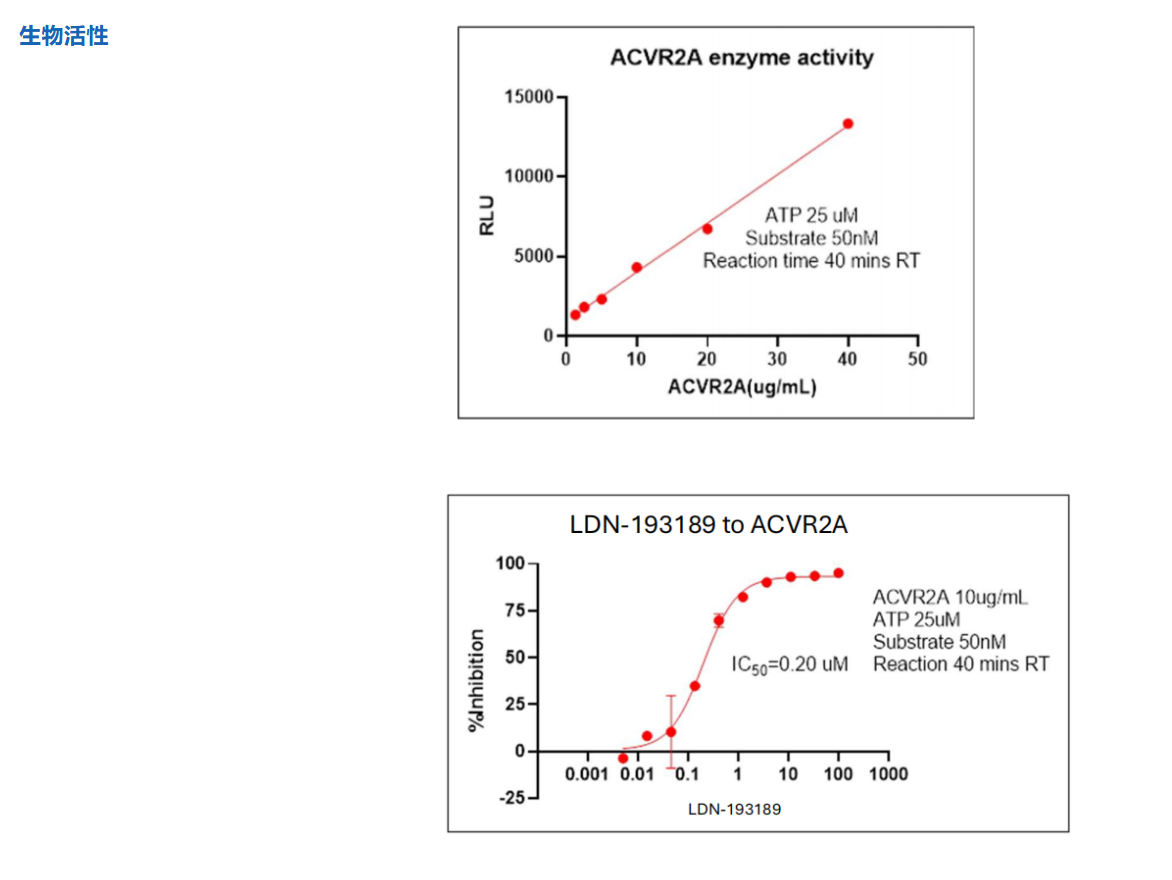
ActRIIA Enzyme Activity Inhibitor Screening Kit_UA080465_UA BIOSCIENCE Official Website
This article is reviewed and published by the technical expert team of UA
Disclaimer: This article partially utilizes artificial intelligence assistance in its creation. If any content involves copyright or intellectual property issues, please let us know and we promise to verify and remove it as soon as possible.
Purchase recombinant protein, choose Nanjing UA-Bio
UA protein focuses on providing various protein reagents, raw materials, and services required for drug research and development, cell therapy, gene therapy, and basic scientific research, including drug target proteins, immune checkpoint proteins, cytokines, tool enzymes, customized protein expression, and full-length transmembrane protein development. Youai is committed to providing customers with high-quality products and professional services, and building a High-tech Biological Enterprise with International Competitiveness.







 Business license (three certificates in one)