




In which applications can biotinylated target proteins be utilized?


Biotin is a small, soluble molecule produced by plants or prokaryotic organisms. It can form a non-covalent bond with avidin or streptavidin, exhibiting an exceptionally high binding affinity with a dissociation constant (Kd) of up to 10^-15 mol/L. The binding strength between biotin and avidin is one million times greater than that of antigen-antibody interactions.
- Recent Advances
- Product Information
- Reference
Biotin Labeling
What is Biotin?
Biotin is a small, soluble molecule produced by plants or prokaryotic organisms. It can form a non-covalent bond with avidin or streptavidin, exhibiting an exceptionally high binding affinity with a dissociation constant (Kd) of up to 10^-15 mol/L. The binding strength between biotin and avidin is one million times greater than that of antigen-antibody interactions.
Biotin consists of an imidazolidone ring and a thiophene ring. The imidazolidone ring is primarily responsible for binding to avidin, while the carboxyl group at the end of the thiophene ring side chain is used to conjugate with antibodies and other macromolecules.
Applications of the Biotin-Avidin System
Histochemistry
Immunofluorescence, immunoradiometric techniques, colloidal gold techniques
Molecular Biology,Gene expression regulation
Applications of Biotinylated Proteins: Examples
Antibody Affinity Maturation - ELISA
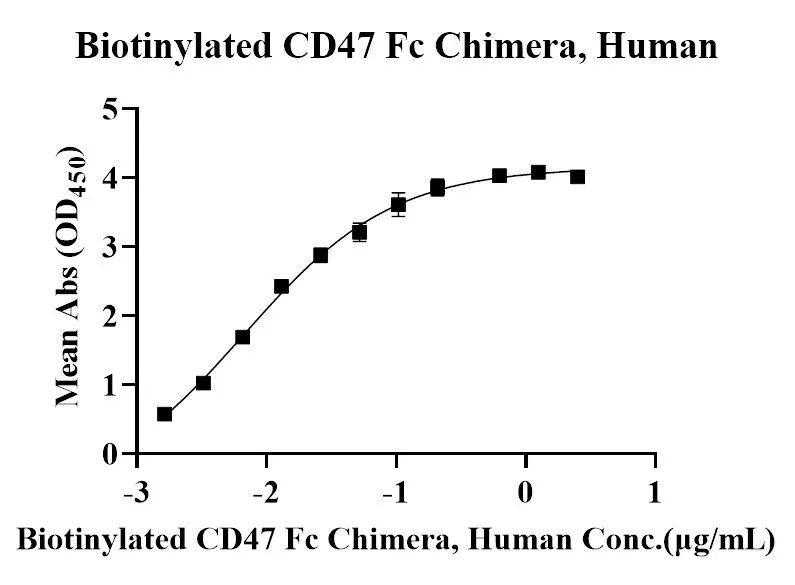
Immobilized Human SIRP-α Fc Chimera, Human (Cat. No. UA010005) at 1 μg/mL (100μL/well) can bind Biotinylated Human CD47 Fc Chimera (Cat. No. UA010007) with EC50 of 0.067 μg/ml.
Case Study: SIRP was immobilized, and biotinylated CD47 was serially diluted to assess the binding affinity between the two.
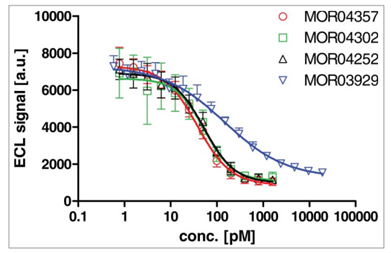
Case Study: In a study investigating the in vitro affinity maturation of human GM-CSF antibodies, the authors used a receptor inhibition ELISA to demonstrate the mutual exclusivity of GM-CSF binding to four antibodies and the GM-CSFR-alpha chain. The results showed that antibody binding to GM-CSF prevented the binding of GM-CSFR, with the parental MOR03929 exhibiting lower receptor inhibition (IC50: 50 pM).
CAR-T - FACS Detection
CD19 is one of the critical targets in CAR-T research. As a type I transmembrane protein of the immunoglobulin superfamily, CD19 is exclusively expressed in B cells and regulates B cell development through both B cell receptor-dependent and independent mechanisms.
Case Study: In a study monitoring the blood status of patients treated with approved CAR-T drugs, researchers used recombinant biotinylated Fc-tagged CD19 to label cells, followed by staining with phycoerythrin-labeled streptavidin. Classic T cell surface markers, including CD3, were then labeled with antibodies. After lysing red blood cells, flow cytometry analysis was performed.
Biopanning for Biopharmaceuticals
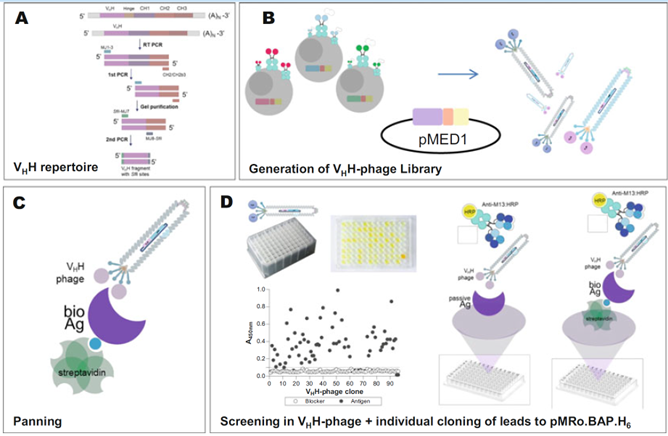
Case Study: In the study titled "Isolation and Characterization of Single-Domain Antibodies from Immune Phage Display Libraries," the authors aimed to isolate target-specific VHHs. During the biopanning process, streptavidin was pre-coated onto a 96-well plate, and biotinylated target proteins were bound to the streptavidin to immobilize the target. A phage library containing 10^12 phages was added to each well, and both unbound and bound phages were eluted. After multiple rounds of screening, suitable VHHs were obtained.
In addition to the above applications in ELISA, FACS, and Biopanning, biotinylated proteins are also widely used in SPR assays, BLI assays, purification, enrichment, and other experiments.
For more UA BIOSCIENCE biotinylated proteins, click here >>>
Catalog number: UA010035
Purity: >95% by SDS-PAGE
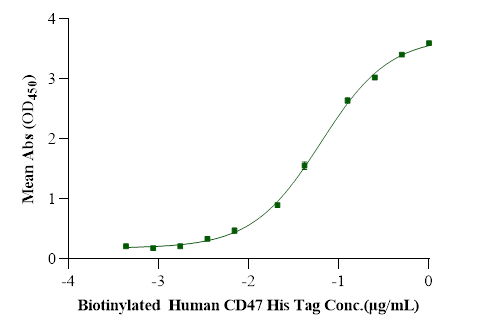
Immobilized Human SIRPα Fc Chimera (Cat. No. UA010005) at 1 μg/mL (100 μL/well) can bind Biotinylated CD47 His Tag, Human with EC50 of 0.063 μg/ml.
Click on the product catalog numbers below to access detailed information on our official website.
This article is reviewed and published by the technical expert team of UA
Disclaimer: This article partially utilizes artificial intelligence assistance in its creation. If any content involves copyright or intellectual property issues, please let us know and we promise to verify and remove it as soon as possible.
Purchase recombinant protein, choose Nanjing UA-Bio
UA protein focuses on providing various protein reagents, raw materials, and services required for drug research and development, cell therapy, gene therapy, and basic scientific research, including drug target proteins, immune checkpoint proteins, cytokines, tool enzymes, customized protein expression, and full-length transmembrane protein development. Youai is committed to providing customers with high-quality products and professional services, and building a High-tech Biological Enterprise with International Competitiveness.

1.Molecular basis of in vitro affinity maturation and functional evolution of a neutralizing anti-human GM-CSF antibody.
2.Droplet digital PCR allows vector copy number assessment andmonitoring of experimental CAR T cells in murine xenograft models or approved CD19 CAR T cell-treated patients.
3.Isolation and Characterization of Single-Domain Antibodies from Immune Phage Display Libraries.






 Business license (three certificates in one)