




Full-Speed Support for Small Molecule Drug Development: All the Hot USPs Are Here!


Ubiquitin is a 76-amino acid molecule with a relative molecular mass of 8.5 kDa. In the human genome, four genes encode ubiquitin: UBC, UBB, UBA52, and UBA80. In an ATP-dependent manner, ubiquitin conjugates to substrate lysine residues through the action of the E1-E3 enzyme cascade, leading to mono-ubiquitination, multiple mono-ubiquitination, or poly-ubiquitination of the substrate. Proteins covalently modified by ubiquitin are recognized and degraded by the proteasome, representing a universal pathway for the degradation of short-lived and misfolded proteins within cells.
- Recent Advances
- Product Information
Ubiquitin-Proteasome System (UPS)

Figure 1: Ubiquitination and Deubiquitination System
Breast cancer is one of the most frequently diagnosed cancers in female patients, accounting for 30% of newly diagnosed cancers in women. Studies have shown that ubiquitin and ubiquitination play significant roles in the pathogenesis and progression of breast cancer.
Ubiquitin is a 76-amino acid molecule with a relative molecular mass of 8.5 kDa. In the human genome, four genes encode ubiquitin: UBC, UBB, UBA52, and UBA80. In an ATP-dependent manner, ubiquitin conjugates to substrate lysine residues through the action of the E1-E3 enzyme cascade, leading to mono-ubiquitination, multiple mono-ubiquitination, or poly-ubiquitination of the substrate. Proteins covalently modified by ubiquitin are recognized and degraded by the proteasome, representing a universal pathway for the degradation of short-lived and misfolded proteins within cells.
As research progresses, scientists have gradually uncovered that ubiquitination and deubiquitinating enzymes (DUBs) regulate various cellular activities, including DNA repair, gene transcription, membrane trafficking, cell cycle, stress responses, cell differentiation, apoptosis, and cancer progression.
The ubiquitination process is as follows:
E1 (Ubiquitin-Activating Enzyme): Activates the C-terminal carboxyl group of ubiquitin in an ATP-dependent manner, forming a thioester bond between the cysteine residue of E1 and the C-terminal glycine of ubiquitin.
E2 (Ubiquitin-Conjugating Enzyme): The activated ubiquitin is transferred to the cysteine residue of E2, forming a new thioester bond.
E3 (Ubiquitin Ligase): Facilitates or directly catalyzes the transfer of ubiquitin from E2 to the substrate, forming an isopeptide bond between the ε-amino group of the lysine residue on the target protein and the C-terminal carboxyl group of ubiquitin, completing the ubiquitination modification.
The ubiquitin-proteasome system (UPS) is a critical regulator of cellular function and stability, with over 80% of intracellular proteins degraded via UPS. Deubiquitinating enzymes (DUBs) are integral components of UPS, primarily involved in maintaining the balance between protein ubiquitination and deubiquitination.
DUBs can reverse the covalent binding of ubiquitin to substrate proteins, thereby reversing ubiquitination and recycling ubiquitin molecules.
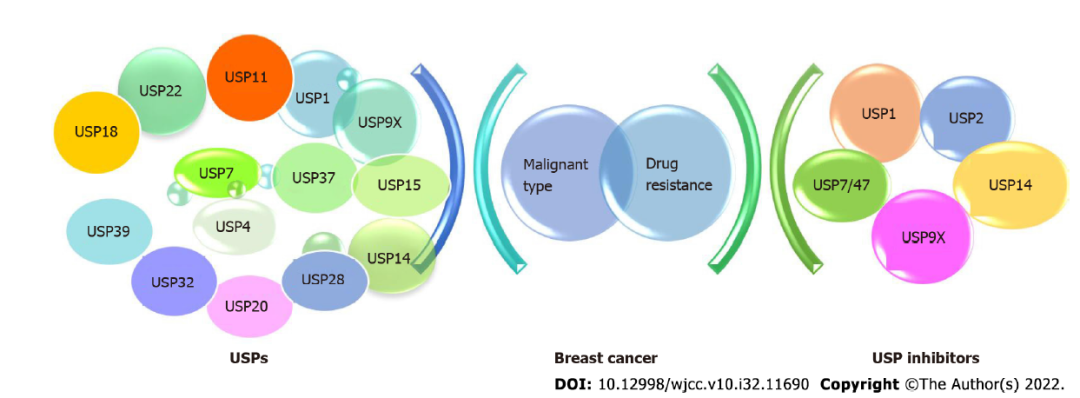
Figure 2: Different Deubiquitinating Proteins
Based on the homology of their active sites, DUBs can be classified into six major families.
Ubiquitin-specific proteases (USPs), a subclass of cysteine proteases, are aberrantly expressed in tumors or their microenvironments, making them attractive targets for drug development. Most USPs, including USP1, USP4, USP7, USP9X, USP14, USP18, USP20, USP22, USP25, USP37, and USP3, are overexpressed in various cancers.
USP11
USP11 is widely distributed in human tissues, with the highest concentration in the retina, which is 5-10 times higher than in other tissues. The human USP11 gene is located on the short arm of the X chromosome (Xp11.3), spanning 3300 bp and containing 22 exons. The USP11 protein consists of 963 amino acids, with a 921-amino acid form predominantly present in HeLa cells. USP11 is primarily localized in the nucleus, with a small fraction in the cytoplasm.
Mediating Nuclear Import and Export:
Ran-GTP is essential for nuclear import and export, as well as spindle formation during mitosis and meiosis. USP11 specifically binds to the SPRY domain of RanBPM, a centrosomal protein, and dose-dependently reverses its ubiquitination, preventing its degradation by the proteasome.
DNA Damage Repair:
BRCA2, a tumor suppressor gene, is involved in DNA repair and cell cycle regulation. USP11 stabilizes BRCA2 by deubiquitinating its C-terminal region (2281-3418), promoting cell survival after DNA damage.
Regulation of Signal Transduction:
USP11 deubiquitinates IκBα, stabilizing it and inhibiting TNF-alpha-mediated NF-κB activation. It also enhances IKKα transcription, upregulating p53 expression and its downstream gene transcription.
Additionally, USP11 participates in the TGF-beta signaling pathway and apoptosis. Diseases associated with USP11 include brain tumors, breast cancer, cervical cancer, influenza, and hepatitis C.
USP7
USP7 is one of the most important members of the ubiquitin-specific protease family. Recent studies have shown that USP7 regulates the activity and function of numerous proteins, including tumor suppressors, DNA repair proteins, immune response proteins, viral proteins, and epigenetic regulators, playing a critical role in disease development.
The human USP7 gene is located on chromosome 16p13.2, spanning 4013 bp and containing 31 exons. The USP7 protein consists of 1102 amino acids with a molecular weight of 135 kDa, primarily localized in the nucleus and partially in the cytoplasm.
USP7 is highly conserved in mammals, with 98.6% amino acid sequence identity between humans, mice, and rats. The USP7 protein contains four domains: an N-terminal domain (NTD), a catalytic domain (aa208-560), and two C-terminal protease-resistant domains (CTDs). The NTD and CTDs are critical for protein interactions.
Cell Survival:
USP7 interacts with survival-related regulatory proteins, including DNMT1, RAE1, Bub3, and Nup3. It stabilizes DNMT1 and enhances its DNA methylation activity.
Cell Cycle Regulation:
USP7 interacts with UHRF1, ensuring faithful DNA methylation transmission during replication and regulating the cell cycle.
Chromatin Remodeling:
USP7 deubiquitinates histone H2A and indirectly regulates H2B through HDM2, influencing transcriptional regulation.
Signal Transduction:
USP7 is the first identified deubiquitinase for p53, stabilizing p53 and promoting apoptosis and cell cycle arrest. It also interacts with HDM2, a negative regulator of p53.
The USP family plays a crucial role in tumorigenesis and signal transduction regulation. UA BIOSCIENCE focuses on developing USP family proteins, including USP4, USP7, USP11, UAP13, and USP14, with activity validation to accelerate small molecule drug development!
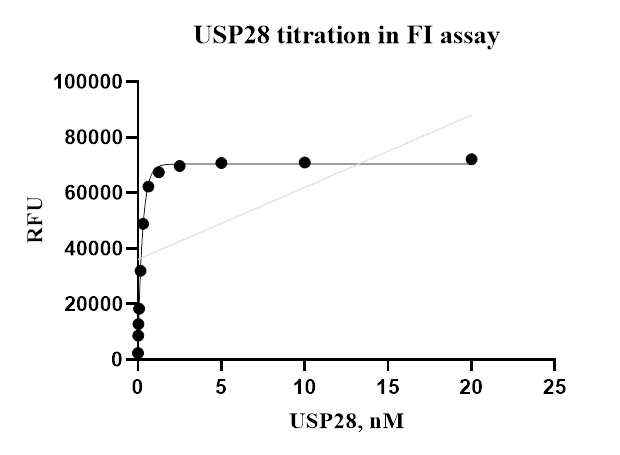
The USP28 activity was detected by cleaving the fluorogenic peptide substrate in FI assay. The reaction was performed by incubating the USP28 protein and substrate at 25℃ for 30 min, then reading RFU with BMG.
Click on the product catalog numbers below to access detailed information on our official website.
This article is reviewed and published by the technical expert team of UA
Disclaimer: This article partially utilizes artificial intelligence assistance in its creation. If any content involves copyright or intellectual property issues, please let us know and we promise to verify and remove it as soon as possible.
Purchase recombinant protein, choose Nanjing UA-Bio
UA protein focuses on providing various protein reagents, raw materials, and services required for drug research and development, cell therapy, gene therapy, and basic scientific research, including drug target proteins, immune checkpoint proteins, cytokines, tool enzymes, customized protein expression, and full-length transmembrane protein development. Youai is committed to providing customers with high-quality products and professional services, and building a High-tech Biological Enterprise with International Competitiveness.







 Business license (three certificates in one)