Biological functions and detection applications of interleukin-4 (IL-4)


Interleukin-4 (IL-4) is a key cytokine in the chemokine family, produced by various immune cells such as activated T cells, basophils, and mast cells.
- Recent Advances
- Product Information
1. What are the basic characteristics and historical development of IL-4?
Interleukin-4 (IL-4) is a key cytokine in the chemokine family, produced by various immune cells such as activated T cells, basophils, and mast cells. Its discovery dates back to 1982 when researchers led by Howard first identified a factor in T cell culture supernatants that promoted B cell proliferation. Initially named B cell growth factor-1 (BCGF-1), it was also referred to as B cell stimulating factor-1 (BSF-1) or T cell growth factor-2 (TCGF-2) by some laboratories. It wasn't until 1986, after the gene was successfully cloned, that it was uniformly named interleukin-4 (IL-4) internationally. As a core regulator of Th2-type immune responses, IL-4 plays a crucial role in adaptive immunity and humoral immune regulation.
2. What are the key functions of IL-4 in the immune system?
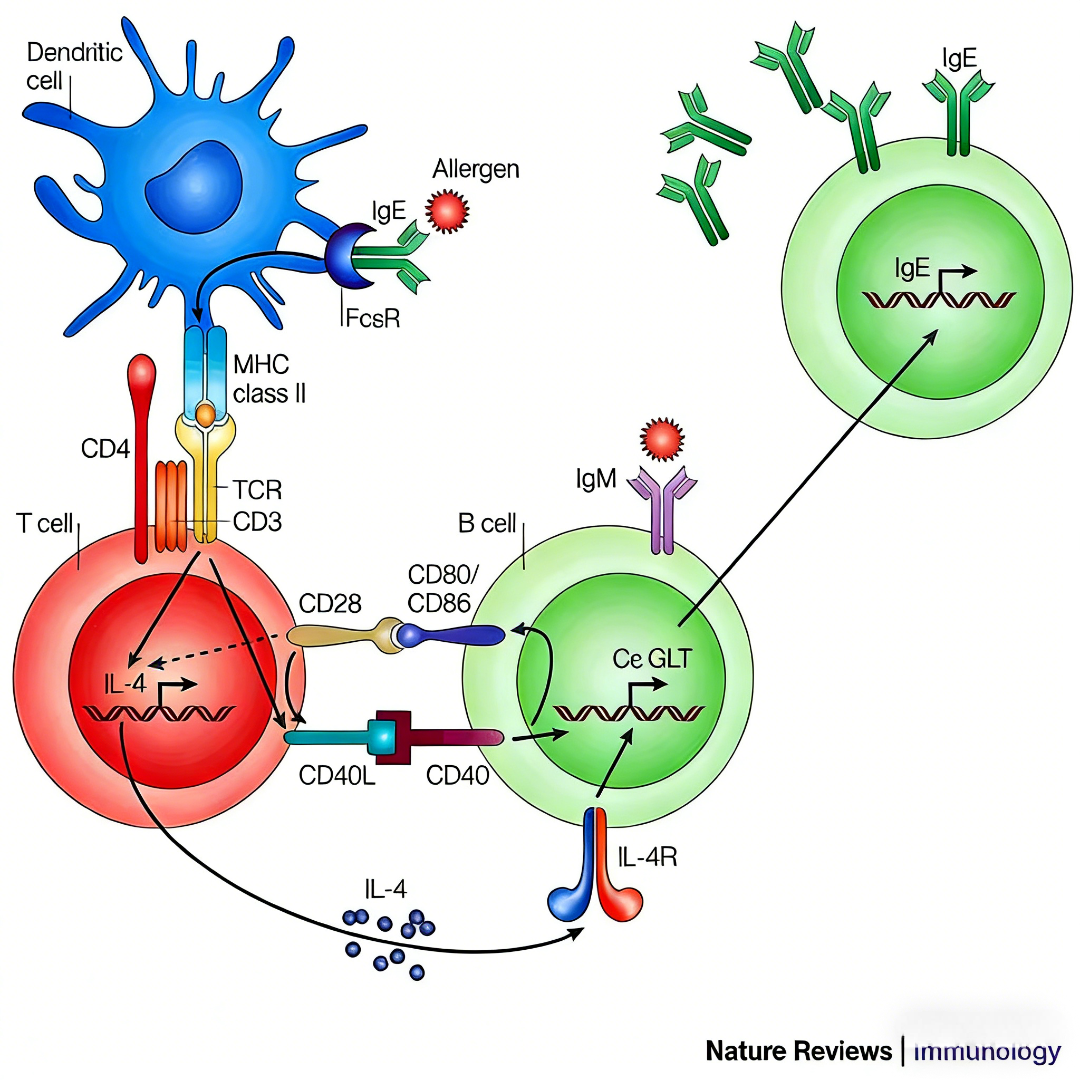
IL-4 has broad biological functions across multiple levels of the immune system. One of its core roles is directing the differentiation of naive CD4⁺ T cells (Th0) into Th2 cell subsets and further promoting Th2 cells to produce more IL-4 through positive feedback regulation. In B cell regulation, IL-4 stimulates the proliferation of activated B cells and guides immunoglobulin class switching, particularly promoting switching to IgG1 and IgE. Simultaneously, IL-4 upregulates the expression of MHC class II molecules on antigen-presenting cells, enhancing their antigen-presenting capacity. Additionally, this cytokine can inhibit Th1 cell differentiation and the production of related cytokines (such as IFN-γ and IL-12), playing a pivotal role in Th1/Th2 immune balance.
3. How does the IL-4 signaling pathway operate?
IL-4 initiates downstream signaling by binding to its specific receptor complex. The IL-4 receptor (IL-4R) primarily exists in two types: Type I receptor, composed of the IL-4Rα chain and γc chain (CD132), is mainly expressed on immune cells; Type II receptor consists of the IL-4Rα chain and IL-13Rα1 chain. Upon IL-4 binding to the receptor, it primarily activates the JAK-STAT signaling pathway, particularly the phosphorylation and nuclear translocation of STAT6, which regulates the transcriptional expression of downstream target genes. The STAT6 signaling pathway is essential for IL-4-mediated biological effects such as B cell class switching and Th2 cell differentiation.
4. Which diseases are associated with the development and progression of IL-4?
Abnormal expression of IL-4 is closely linked to various immune-related diseases. In allergic diseases, IL-4 plays a central role in the pathogenesis of conditions like asthma and allergic rhinitis by promoting IgE production and eosinophil activation. In parasitic infections, the Th2-type immune response mediated by IL-4 provides protective effects against parasitic infections. Furthermore, IL-4 is involved in the regulation of certain autoimmune diseases and tumor microenvironments. Research indicates that blocking the IL-4/IL-4R signaling pathway may serve as a novel strategy for treating related diseases.
5. What are the key applications of IL-4/IL-4R detection kits?
High-sensitivity and high-specificity IL-4/IL-4R detection kits hold significant value in clinical diagnostics and basic research:
1. Disease Diagnosis and Classification: Detecting IL-4 levels in serum, plasma, or cell culture supernatants can aid in diagnosing Th2-type immune-related diseases, such as allergic diseases and specific types of immunodeficiency.
2. Treatment Monitoring and Prognostic Assessment: For patients undergoing immunomodulatory therapy, dynamic monitoring of IL-4 level changes helps evaluate treatment efficacy and predict disease outcomes.
3. Drug Development and Mechanism Research: In the development of IL-4/IL-4R-targeted drugs, precise detection of IL-4 and its receptor levels is critical for drug screening, efficacy evaluation, and mechanism studies.
4. Immune Status Evaluation: Indicators such as the IL-4/IL-13 ratio can be used to assess the Th1/Th2 immune balance in the body, providing reference for personalized immunotherapy.
6. Which manufacturers provide IL-4/IL-4R detection kits?
Nanjing YouAi Protein independently developed the "Human IL-4/IL-4R Binding Kit", a high-performance in vitro detection platform focused on type 2 immune responses and key pathways of immune regulation. This kit is designed to accurately and sensitively quantify the binding activity between interleukin-4 (IL-4) and its specific receptor IL-4R, offering a stable and reliable standardized solution for research in areas such as allergic diseases, autoimmune disorders, tumor immunology, and immunotherapeutic drug development, including mechanism exploration, antibody screening, and efficacy evaluation.
| Core Product Advantages |
|---|
| High Purity and Natural Bioactivity: The kit provides rigorously validated high-purity, high-activity human IL-4 protein and its receptor IL-4R. Both maintain complete native conformation and biological function, accurately simulating high-affinity specific binding of ligand-receptor under physiological conditions, ensuring experimental data accuracy and physiological relevance. |
| Excellent Batch-to-Batch Consistency and Stability: Utilizing advanced recombinant expression systems and stringent purification processes, combined with comprehensive quality control, we ensure protein products exhibit high purity, exceptional long-term storage stability, and outstanding batch-to-batch consistency, providing reliable quality assurance for long-term, continuous research. |
| Ready-to-Use Flexible Detection System: Based on optimized enzyme-linked immunosorbent assay (ELISA) principles, the kit provides pre-coated strips, detection antibodies, standards, and a complete set of optimized buffer systems. The operation is simple and fast, offering both high sensitivity and specificity, suitable for various applications such as neutralizing antibody screening, competitive binding assays, affinity determination, and cell signaling studies. |
| Complete Solutions and Professional Support: We provide detailed, optimized standard protocols, typical data curves, and result interpretation guides to help you quickly establish stable, reproducible detection processes. Our technical team also offers comprehensive professional consultation and technical support for research design, experimental optimization, and data analysis. |
Nanjing YouAi Protein is committed to providing cutting-edge, high-quality core reagents and tools for immunology, cell therapy, and innovative drug development. For detailed technical parameters, validation data, or specific application inquiries regarding the "Human IL-4/IL-4R Binding Kit" (Catalog No.: UA086012), please feel free to contact us.
This article is reviewed and published by the technical expert team of UA
Disclaimer: This article partially utilizes artificial intelligence assistance in its creation. If any content involves copyright or intellectual property issues, please let us know and we promise to verify and remove it as soon as possible.
Purchase recombinant protein, choose 
UA protein focuses on providing various protein reagents, raw materials, and services required for drug research and development, cell therapy, gene therapy, and basic scientific research, including drug target proteins, immune checkpoint proteins, cytokines, tool enzymes, customized protein expression, and full-length transmembrane protein development. Nanjing Univ is committed to providing customers with high-quality products and professional services, and building a High-tech Biological Enterprise with International Competitiveness.







 Business license (three certificates in one)