




NGS-Selected Dedicated Enzymes Enhance Library Construction Efficiency


With the rapid advancement of biotechnology, Next Generation Sequencing (NGS) technology has emerged as a pivotal tool in biological and medical research. Within the intricate workflow of NGS, a variety of dedicated enzymes play a critical role.
- Recent Advances
- Product Information
Introduction
With the rapid advancement of biotechnology, Next Generation Sequencing (NGS) technology has become an indispensable tool in biological and medical research. In the complex workflow of NGS, various dedicated enzymes play a critical role.
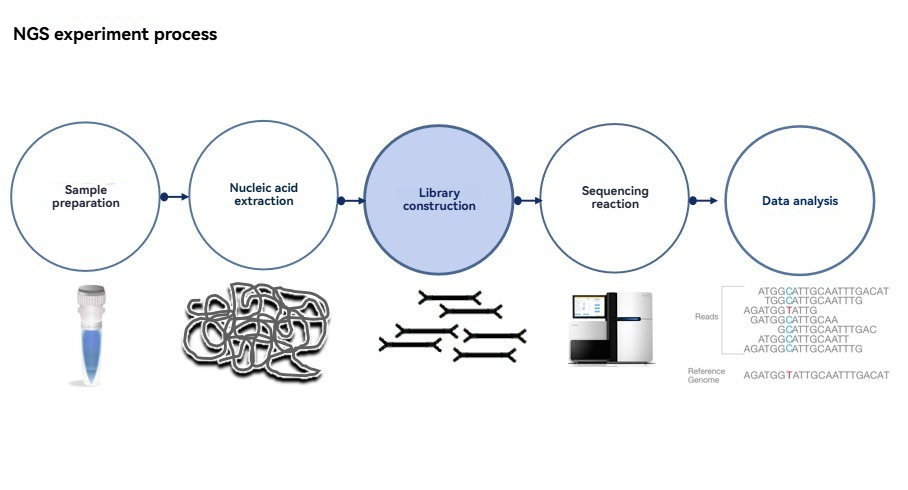
End Repair and A-Tailing
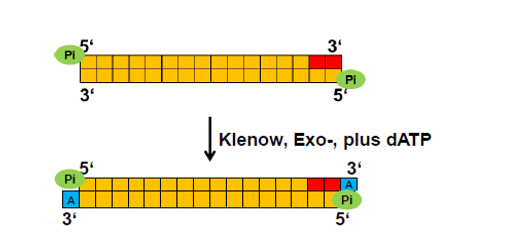
During DNA fragmentation, the resulting DNA fragments may have either blunt ends or sticky ends, and their termini may lack phosphate or hydroxyl groups. Blunt ends can undergo A-tailing to facilitate ligation with T-overhang adapters, while sticky ends require end repair before A-tailing.
The Klenow fragment is primarily used for end repair and blunt-ending of DNA fragments. In the library preparation process, the terminal state of DNA fragments is crucial for subsequent sequencing reactions. If DNA fragments contain nicks or overhangs, the accuracy and efficiency of sequencing may be compromised.
Adapter Ligation
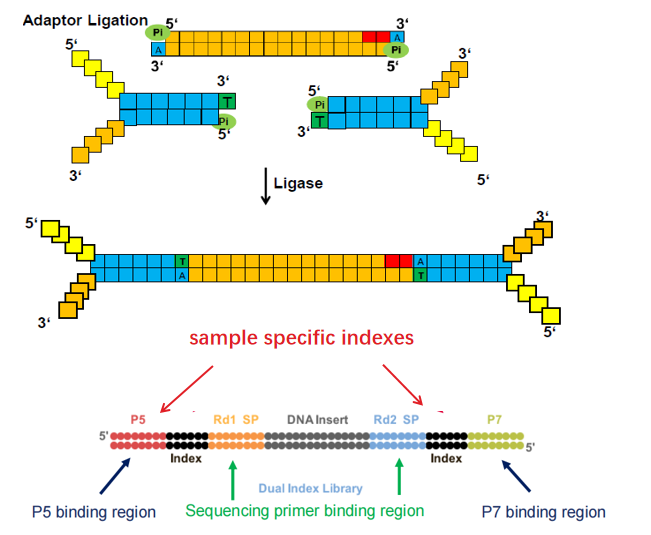
In the library preparation and sequencing workflow, adapters play an indispensable role. Commonly used Y-shaped adapters on the Illumina platform include P5/P7, Index, and Rd1/Rd2 SP sequences. Among these, the P5/P7 sequences are used to pair with sequences on the sequencing chip, anchoring the fragments to the flowcell for bridge amplification. The Index distinguishes different samples within a pooled sequencing library, while the Rd1/Rd2 SP regions serve as binding sites for the Read1 and Read2 sequencing primers.
Adapter ligation typically employs T4 DNA ligase, which can repair single-strand nicks in double-stranded DNA, rejoining adjacent nucleotides. In adapter ligation, T4 DNA ligase connects adapters with T-overhangs to DNA fragments with A-overhangs, forming a complete double-stranded structure.
Prospects
The DNA Polymerase I Large (Klenow) Fragment and T4 DNA Ligase are two indispensable enzymes in NGS. They perform unique functions at different stages of NGS library preparation: the Klenow fragment is primarily used for end repair and blunt-ending of DNA fragments to ensure their termini are suitable for subsequent sequencing reactions, while T4 DNA Ligase is employed to ligate DNA fragments with sequencing adapters, providing the foundation for subsequent sequencing. The application of these enzymes not only enhances the efficiency and accuracy of NGS but also offers robust technical support for biological and medical research.
This article is reviewed and published by the technical expert team of UA
Disclaimer: This article partially utilizes artificial intelligence assistance in its creation. If any content involves copyright or intellectual property issues, please let us know and we promise to verify and remove it as soon as possible.
Purchase recombinant protein, choose Nanjing UA-Bio
UA protein focuses on providing various protein reagents, raw materials, and services required for drug research and development, cell therapy, gene therapy, and basic scientific research, including drug target proteins, immune checkpoint proteins, cytokines, tool enzymes, customized protein expression, and full-length transmembrane protein development. Youai is committed to providing customers with high-quality products and professional services, and building a High-tech Biological Enterprise with International Competitiveness.







 Business license (three certificates in one)