

Tumor Necrosis Factor-α: Dual Mechanisms of Physiological and Pathological Roles and Detection Applications


Tumor necrosis factor-α (TNF-α), as a key regulator of the immune system, is primarily secreted by activated macrophages and T lymphocytes
- Recent Advances
- Product Information
1. How does TNF-α maintain physiological homeostasis?
Tumor necrosis factor-alpha (TNF-α), as a key regulator of the immune system, is primarily secreted by activated macrophages and T lymphocytes, playing multiple physiological roles in maintaining host defense and tissue homeostasis. During anti-infection processes, TNF-α enhances vascular permeability, promotes leukocyte recruitment to infection sites, and establishes effective local immune barriers. Simultaneously, it induces fever responses, inhibits pathogen proliferation, and activates neutrophil bactericidal functions. In tumor immune surveillance, TNF-α constructs a multi-layered anti-tumor defense network by directly inducing tumor cell apoptosis, inhibiting tumor angiogenesis, and activating natural killer cells and cytotoxic T lymphocytes. Additionally, in tissue repair, TNF-α synergizes with transforming growth factor-beta (TGF-β) to promote fibroblast proliferation and collagen synthesis, accelerating wound healing.
2. What pathological effects result from dysregulation of TNF-α signaling pathways?
When TNF-α signaling becomes imbalanced, its overexpression triggers a series of pathological cascades. In autoimmune diseases like rheumatoid arthritis, sustained TNF-α production by synovial cells leads to synovial inflammation, cartilage erosion, and bone destruction. Similar mechanisms occur in ankylosing spondylitis and psoriatic arthritis. In inflammatory bowel diseases, including Crohn's disease and ulcerative colitis, excessive TNF-α expression in intestinal mucosa disrupts epithelial barrier function, causing persistent intestinal inflammation. During severe infections, abnormal TNF-α release may trigger cytokine storms, leading to vascular endothelial damage, microthrombosis, and subsequent sepsis and multi-organ failure. Moreover, in obesity-related metabolic syndrome, upregulated TNF-α expression in adipose tissue promotes insulin resistance by interfering with insulin receptor signaling, increasing type 2 diabetes risk and potentially accelerating atherosclerosis development.
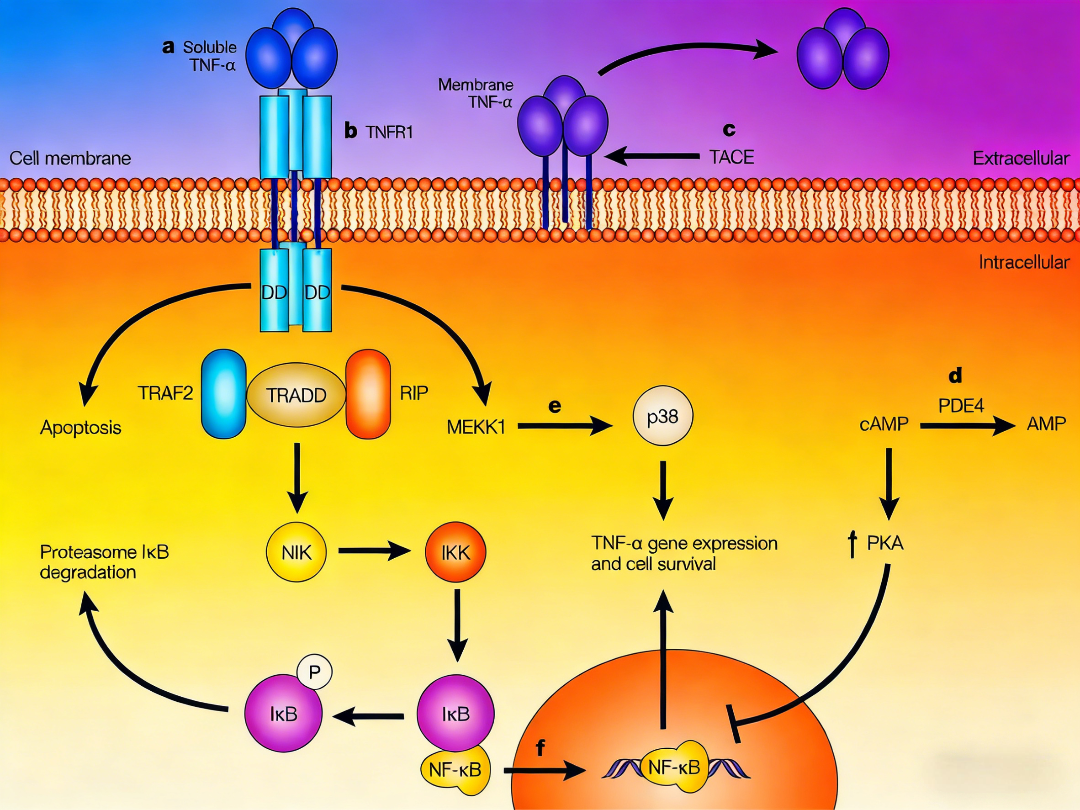
3. What are the biological characteristics of the TNF-α/TNFR2 signaling pathway?
TNF-α exerts its biological effects by binding to specific receptors, with TNF receptor 2 (TNFR2) playing a distinctive role in TNF-α signal transduction. Unlike the widely expressed TNFR1, TNFR2 expression is primarily restricted to specific cell types like immune cells and endothelial cells. Research indicates that TNFR2 activation may produce different biological outcomes compared to TNFR1, including immunomodulatory and tissue-protective effects in certain contexts. This receptor specificity enables more precise therapeutic strategies targeting TNF-α signaling. Understanding TNFR2 expression patterns and signaling properties is crucial for elucidating TNF-α's dual roles in physiological and pathological conditions.
4. What are the clinical applications of TNF-α/TNFR2 detection kits?
Accurate detection of TNF-α and its receptors holds significant value in clinical diagnosis and research. The primary applications of TNF-α/TNFR2 detection kits include:
1. Disease activity assessment: In autoimmune diseases like rheumatoid arthritis and inflammatory bowel disease, quantitative measurement of TNF-α levels in serum or synovial fluid helps evaluate disease activity and severity. Soluble TNFR2 levels can serve as supplementary indicators.
2. Treatment response monitoring: For patients receiving anti-TNF-α biologics, regular monitoring of TNF-α and receptor levels helps assess therapeutic efficacy and predict treatment response, guiding clinical decision-making.
3. Prognostic evaluation: In critical conditions like sepsis, TNF-α levels correlate with disease outcomes, aiding early identification of high-risk patients and clinical intervention.
4. Research tool: High-sensitivity, specific detection kits are essential for studying TNF-α signaling mechanisms, developing novel targeted drugs, and exploring the TNF-α/TNFR2 axis in diseases.
5. Drug development support: These kits facilitate screening and evaluation of candidate drugs targeting this signaling pathway during drug discovery.
5. Which manufacturers provide TNF-α/TNFR2 detection kits?
Nanjing U-Protein has independently developed the "TR-FRET Human TNF-α/TNFR2 Binding Kit" (Catalog No.: UA086008), a high-sensitivity detection platform based on time-resolved fluorescence energy transfer (TR-FRET) technology. This kit enables precise and efficient detection of specific binding between tumor necrosis factor-alpha (TNF-α) and its receptor TNFR2, offering rapid, homogeneous, and reliable standardized solutions for inhibitor screening, mechanism studies, and affinity analysis in autoimmune diseases, chronic inflammation, cancer immunology, and drug development.
| Key Product Advantages |
|---|
| High sensitivity with low background interference: Utilizing TR-FRET technology with time-resolved dual-wavelength detection, it effectively reduces sample autofluorescence and compound interference, significantly improving signal-to-noise ratio and detection sensitivity, particularly suitable for accurate analysis of low-affinity interactions. |
| Native-like binding state: The kit provides rigorously validated high-purity, high-activity human TNF-α and TNFR2 proteins, both maintaining correct spatial conformation and full biological functionality to ensure binding experiments reflect physiological receptor-ligand interactions. |
| Homogeneous detection with simple operation: Featuring a "mix-incubate-detect" homogeneous format without washing or separation steps, the streamlined workflow is compatible with high-throughput screening systems, greatly enhancing experimental efficiency and data consistency. |
| Excellent stability and batch consistency: Advanced recombinant expression systems and stringent quality control ensure high purity, superior long-term stability, and exceptional batch-to-batch consistency, supporting continuous drug screening and functional studies. |
| Complete solution with professional support: We provide detailed optimized protocols, representative data curves, interpretation guides, and customized technical support for various applications (e.g., antibody competition assays, small-molecule inhibitor evaluation). |
Nanjing U-Protein is committed to providing high-performance, high-quality core tools and solutions for inflammation/immunology research and innovative drug development. For detailed technical specifications, validation data, or application inquiries regarding the TR-FRET Human TNF-α/TNFR2 Binding Kit (Catalog No.: UA086008), please feel free to contact us.
This article is reviewed and published by the technical expert team of UA
Disclaimer: This article partially utilizes artificial intelligence assistance in its creation. If any content involves copyright or intellectual property issues, please let us know and we promise to verify and remove it as soon as possible.
Purchase recombinant protein, choose 
UA protein focuses on providing various protein reagents, raw materials, and services required for drug research and development, cell therapy, gene therapy, and basic scientific research, including drug target proteins, immune checkpoint proteins, cytokines, tool enzymes, customized protein expression, and full-length transmembrane protein development. Nanjing Univ is committed to providing customers with high-quality products and professional services, and building a High-tech Biological Enterprise with International Competitiveness.







 Business license (three certificates in one)