

Functional study of Bromodomain proteins based on active probe strategy


Bromodomains are a class of highly conserved epigenetic reader modules that specifically recognize and bind to acetylated lysine residues (KAc) on histones, playing a central role in chromatin remodeling and transcriptional regulation.
- Recent Advances
- Product Information
I. Research Value of Bromodomain Family as Epigenetic Regulators
Bromodomains are highly conserved epigenetic reader modules that specifically recognize and bind to acetylated lysine residues (KAc) on histones, playing a central role in chromatin remodeling and transcriptional regulation. Their dysfunction is closely associated with various pathological processes, including cancer, autoimmune diseases, and inflammation. Therefore, developing research tools that can specifically recognize and label Bromodomain proteins holds significant scientific importance for elucidating their biological functions, screening modulators, and discovering new drug targets. However, members of this family typically lack catalytic activity, and their ligand-binding pockets often lack reactive amino acid residues, posing substantial challenges for designing highly selective and active chemical probes.
II. Design Principles of the Novel Pan-Bromodomain Activity Probe BTZ
To overcome these challenges, a research team at the University of Oxford proposed an innovative probe design strategy. The core idea of this strategy is to develop active probes capable of covalent labeling by targeting conserved non-catalytic amino acid residues within the binding pocket.
1. Probe Scaffold Design Based on the Broad-Spectrum Inhibitor BSP: The researchers selected the known broad-spectrum Bromodomain inhibitor BSP as the starting scaffold for probe design. Through sequence alignment and molecular docking simulations of the Bromodomain protein family, they found that the methylsulfonamide group of BSP faces a relatively conserved lysine (Lys) residue within the binding pocket.
2. Introduction of a Covalent Warhead (Electrophilic Group): Given the nucleophilic nature of the lysine side-chain amino group, the researchers chose the dichlorotriazine group as the covalent reactive warhead based on literature review. Docking simulations showed that this group could be well positioned within the target pocket, forming effective spatial proximity with the conserved lysine residue.
3. Synthesis and Validation of the BTZ Probe: Based on this design, the research team successfully synthesized the active probe BTZ, which retains the binding scaffold of BSP and incorporates the dichlorotriazine warhead. By incubating with recombinantly expressed Bromodomain proteins (e.g., BRD4, BRD3) in vitro, mass spectrometry analysis successfully detected covalently bound products, preliminarily validating the probe's effectiveness.
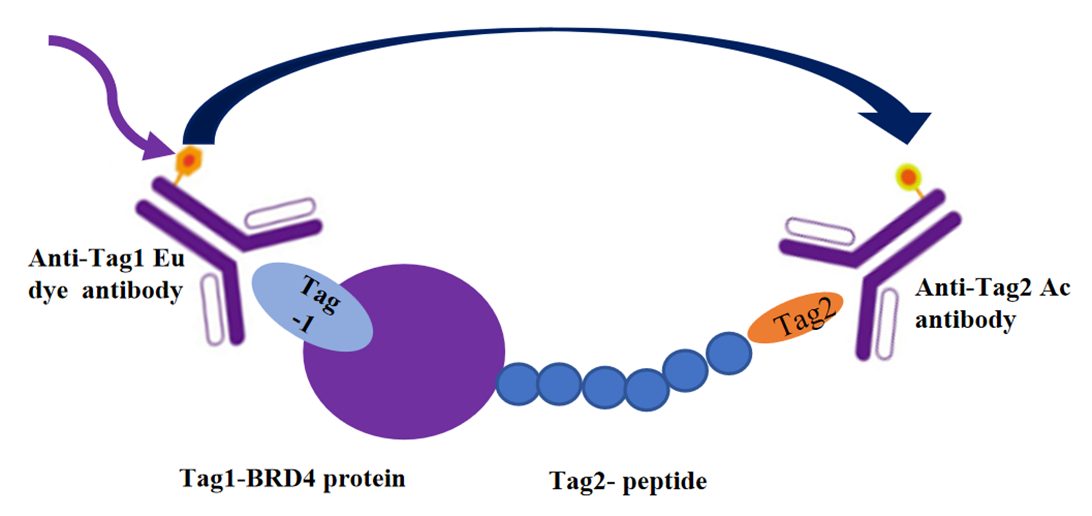
III. Labeling Characteristics and Mechanism Study of the BTZ Probe for Different Bromodomain Proteins
Using the standardized Epigeneous Bromodomain Kit for reaction and detection, the researchers systematically evaluated the labeling performance of the BTZ probe and revealed its mechanism of action.
1. Labeling Breadth and Selectivity: Quantitative analysis showed that the labeling efficiency of the BTZ probe for different Bromodomain family members was highly consistent with the affinity trend of its parent inhibitor BSP, indicating that the probe retains intrinsic selectivity based on binding affinity while achieving broad-spectrum labeling.
2. Specific Site Identification and Unexpected Findings: For BRD4 (1) and BRD3 (2), tandem mass spectrometry (MS/MS) precisely identified that the covalent modification site of BTZ was the predicted conserved lysine residue, consistent with the design. However, the labeling results for BRD9 were unexpected—its KAc-binding pocket lacks a conserved lysine, yet BTZ achieved a high modification rate of 77%. X-ray crystallography revealed a unique binding mode: one BTZ molecule simultaneously binds two BRD9 protein molecules, forming an "interlocked" structure. The probe not only occupies the binding pocket of one protein but also forms a covalent linkage with a tyrosine residue (Tyr106) of another BRD9 molecule. This 2:1 stoichiometry aligns with previously reported functional dimer complexes of BRD9, suggesting that the BTZ probe may capture its physiological interaction state. Further kinetic experiments confirmed that the covalent reaction efficiency between the tyrosine residue and the probe was indeed higher than that with lysine.
IV. Application of the Epigeneous Bromodomain Kit in Probe Development and Research
The Epigeneous Bromodomain Kit provides an integrated, standardized solution for Bromodomain functional research based on active probes:
1. Probe Activity Screening and Optimization: Offers standardized protein incubation and mass spectrometry pre-processing workflows for high-throughput screening and evaluation of the covalent labeling efficiency and selectivity of different probe structures.
2. Labeling Site Confirmation: Includes mass spectrometry-compatible sample preparation protocols and data analysis guidelines to accurately identify covalently modified amino acid sites and reveal binding modes.
3. Target Enrichment and Identification in Complex Samples: Features optimized click chemistry labeling, biotin pulldown, and protein elution steps to support highly specific enrichment of Bromodomain family proteins from complex systems (e.g., cell lysates) for downstream mass spectrometry identification.
4. Functional Validation Platform: Provides validation modules based on gel electrophoresis, fluorescence imaging, and immunoblotting for multidimensional confirmation of probe labeling effects.
V. Which Manufacturers Provide the Epigeneous Bromodomain Kit?
Nanjing U-Protein independently developed the TR-FRET Human Epigenous Bromodomain Binding Kit (Catalog No.: UA086018), a high-performance detection platform based on advanced time-resolved fluorescence energy transfer (TR-FRET) technology, designed for rapid and sensitive screening and analysis of small-molecule compound binding to the epigenetic target Bromodomain. This kit is suitable for drug screening, epigenetic mechanism research, tumor therapeutic target validation, and other fields, providing a homogeneous, high-throughput, and highly stable standardized solution.
| Core Product Advantages |
|---|
| High Sensitivity and Low Background Interference: Utilizes TR-FRET detection technology with time-resolved and dual-wavelength detection advantages, effectively reducing compound autofluorescence and background interference, significantly improving signal-to-noise ratio, and enabling high-sensitivity detection of weak binding interactions. |
| Broad Coverage of Bromodomain Targets: The kit provides rigorously validated high-purity, high-activity human Bromodomain proteins, covering multiple important subtypes (e.g., BRD4, BRD3), supporting specific binding analysis for various targets. |
| Ready-to-Use Homogeneous Detection Workflow: Features a homogeneous "mix-incubate-detect" operation mode without washing steps, simplifying procedures and enabling compatibility with automated workstations, significantly improving screening efficiency and data reproducibility. |
| Excellent Stability and Batch Consistency: Ensures high purity, superior long-term stability, and outstanding batch consistency through advanced recombinant expression systems and strict quality control processes, supporting large-scale screening and long-term research needs. |
| Complete Solution and Professional Support: Provides detailed optimized experimental protocols, standard curve examples, and data analysis guidelines, along with customized screening strategies and technical support tailored to different target characteristics. |
Nanjing U-Protein is committed to providing high-performance, high-quality research tools for epigenetic research, tumor drug development, and innovative target screening. For detailed technical information, validation data, or application inquiries regarding the TR-FRET Human Epigenous Bromodomain Binding Kit (Catalog No.: UA086018), please feel free to contact us.
This article is reviewed and published by the technical expert team of UA
Disclaimer: This article partially utilizes artificial intelligence assistance in its creation. If any content involves copyright or intellectual property issues, please let us know and we promise to verify and remove it as soon as possible.
Purchase recombinant protein, choose 
UA protein focuses on providing various protein reagents, raw materials, and services required for drug research and development, cell therapy, gene therapy, and basic scientific research, including drug target proteins, immune checkpoint proteins, cytokines, tool enzymes, customized protein expression, and full-length transmembrane protein development. Nanjing Univ is committed to providing customers with high-quality products and professional services, and building a High-tech Biological Enterprise with International Competitiveness.







 Business license (three certificates in one)