

The IL-21/IL-21R Signaling Pathway: From Biological Functions to Precision Therapeutic Strategies of Antibody-Cytokine Fusion Proteins


Interleukin-21 is a pleiotropic cytokine primarily produced by activated CD4+ T cells and natural killer T cells.
- Recent Advances
- Product Information
I. Biological Functions and Therapeutic Potential of IL-21
Interleukin-21 (IL-21) is a pleiotropic cytokine primarily produced by activated CD4+ T cells and natural killer T (NKT) cells. Its core functions involve regulating adaptive and innate immune responses, with particularly critical roles in cytotoxic effector cells:
• Enhancing Cytotoxicity and Proliferation: IL-21 significantly promotes the maturation, proliferation, and cytotoxic functions of CD8+ T cells and natural killer (NK) cells, serving as a key driver for inducing antitumor immune effects.
• Promoting Immune Memory Formation: It facilitates the differentiation and maintenance of memory CD8+ T cells, which is crucial for establishing long-lasting antitumor immune memory.
• Regulating B Cell Function: IL-21 also participates in modulating B cell proliferation, differentiation, and antibody class switching.
Due to its potent immunomodulatory functions, IL-21 is regarded as a highly promising candidate molecule in tumor immunotherapy. However, its direct clinical application faces two major challenges: first, its widely expressed receptors may trigger systemic toxicity; second, its extremely short in vivo half-life limits sustained efficacy.
II. Design Principles and Progress of Antibody-IL-21 Fusion Proteins
To overcome the clinical application hurdles of IL-21, researchers have proposed the "antibody-cytokine fusion protein" strategy, aiming to achieve targeted delivery to the tumor microenvironment via the antibody component and prolong the half-life of IL-21.
1. Targeting the Tumor Microenvironment: By fusing IL-21 with antibodies targeting tumor-associated antigens (e.g., EGFR) or immune checkpoints (e.g., PD-1), IL-21 activity can be "navigated" to tumor sites, locally enhancing antitumor immunity while minimizing off-target activation of the systemic immune system.
2. Prolonging In Vivo Half-Life: Leveraging the Fc fragment of antibodies or the inherent long half-life of antibodies themselves can significantly improve the pharmacokinetic properties of IL-21, maintaining effective concentrations in vivo for extended periods.
Recent advancements in this field have been notable. Studies show that fusing IL-21 with the EGFR-targeting antibody cetuximab effectively accumulates in EGFR-positive tumors, demonstrating comparable antitumor activity to IL-2 fusion proteins but with significantly reduced toxicity.
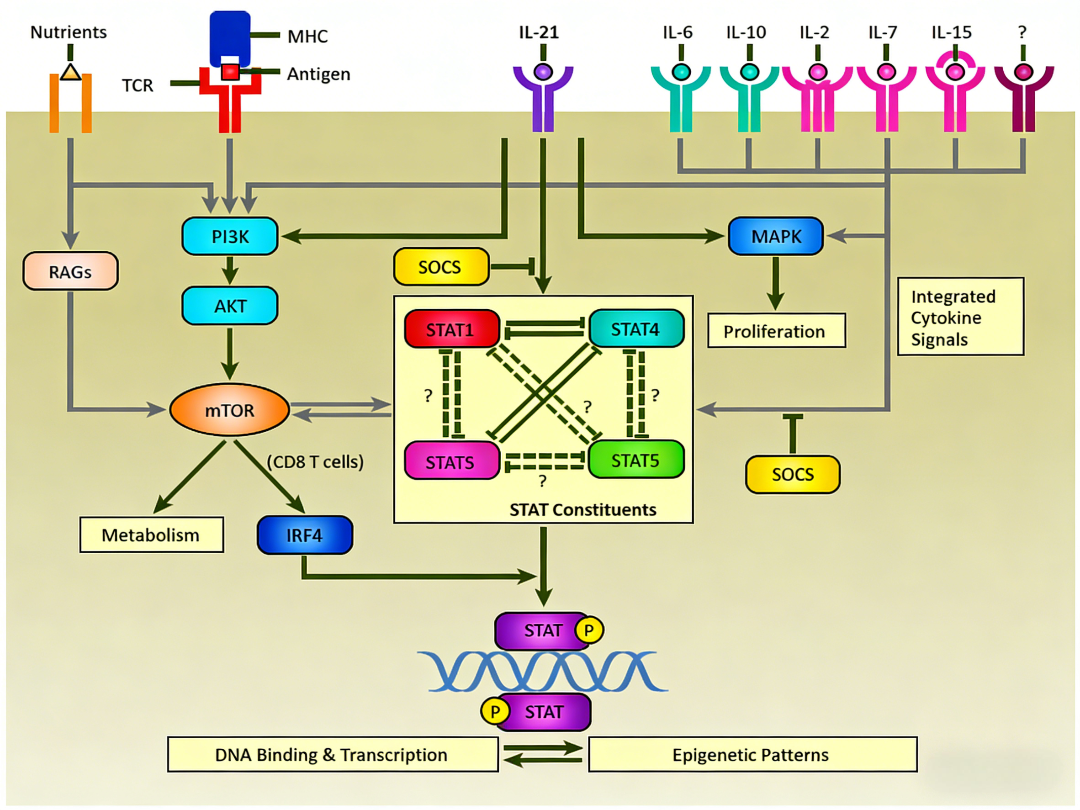
III. Key Applications of IL21/IL21R Research Kits in Fusion Protein Development
In the rational design, screening, and functional evaluation of antibody-IL-21 fusion proteins, precisely analyzing the interaction between IL-21 and its receptor (IL-21R) and downstream signaling is crucial. Professional IL21/IL21R research kits provide standardized tools for this purpose.
1. Binding Affinity and Kinetic Analysis:
• Using technologies such as surface plasmon resonance (SPR) or enzyme-linked immunosorbent assay (ELISA), these kits can quantitatively measure the binding affinity and dissociation rates of wild-type IL-21, mutants, or fusion proteins with IL-21R, serving as the primary step in evaluating modifications and screening candidate molecules.
2. Signal Pathway Activation Assessment:
• By detecting phosphorylation levels of key downstream signaling molecules (e.g., STAT3, STAT1) or using reporter gene cell lines (e.g., STAT reporter genes), these kits can quantitatively evaluate the ability and intensity of different IL-21 variants or fusion proteins to activate IL-21R signaling pathways, directly correlating with their functional activity.
3. Functional Validation at the Cellular Level:
• The kits provide standardized cell-based functional assays to evaluate the impact of IL-21 fusion proteins on specific target cells (e.g., PD-1-positive T cell lines, primary NK cells, or tumor-specific T cells). Key detection indicators include:
- Cell Proliferation: Measured via CFSE dilution or BrdU/EdU incorporation assays.
- Cytotoxicity Enhancement: Assessing their effect on effector cells' ability to kill tumor cells.
- Cytokine Secretion: Detecting the production of effector molecules such as IFN-γ and granzyme B.
• These functional data serve as the critical bridge linking binding activity to ultimate biological effects.
4. Specificity and Targeting Validation:
• By comparing the signal activation and functional effects of fusion proteins on target-positive versus target-negative cell lines, along with blocking or competition assays provided in the kits, researchers can validate the targeting specificity mediated by the antibody component and evaluate the reduction in off-target activity of modified IL-21.
IV. Which Manufacturers Provide IL21/IL21R Research Kits?
Nanjing U-APEX Biotech independently developed the TR-FRET Human IL21/IL21R Binding Kit (Catalog No.: UA086015), a high-performance detection platform based on advanced time-resolved fluorescence resonance energy transfer (TR-FRET) technology, specifically designed for accurately quantifying the binding activity between interleukin-21 (IL-21) and its specific receptor IL-21R. This kit is suitable for drug screening, mechanism studies, and efficacy evaluation in fields such as T-cell and B-cell immune regulation, tumor immunology, autoimmune diseases, and immune cell therapy, offering a sensitive, rapid, and homogeneous in vitro detection solution.
| Core Product Advantages |
|---|
| High Sensitivity and Low Background Interference: Utilizing TR-FRET technology with time-resolved and dual-wavelength detection, it effectively eliminates sample autofluorescence and compound interference, significantly improving the signal-to-noise ratio, especially for high-precision analysis of low-affinity interactions. |
| Native Conformation Simulation and High-Affinity Binding: The kit provides rigorously validated high-purity, high-activity human IL-21 and IL-21R proteins, both maintaining correct spatial conformations and full biological functions, authentically simulating high-affinity ligand-receptor binding under physiological conditions. |
| Homogeneous Detection and Operational Convenience: Based on a "mix-incubate-detect" homogeneous workflow, it requires no washing steps, features a simple and rapid operation process, is compatible with automated workstations, and supports high-throughput screening, greatly enhancing experimental efficiency. |
| Excellent Stability and Batch-to-Batch Consistency: Through advanced recombinant expression systems and stringent quality control processes, the protein products exhibit high purity, superior long-term stability, and outstanding batch-to-batch consistency, providing reliable support for long-term continuous research. |
| Comprehensive Solutions and Professional Support: We provide detailed optimized protocols, standard curve examples, result interpretation guides, and professional technical support for various application needs, including antibody/antagonist screening, affinity determination, competition binding assays, and signaling pathway studies. |
Nanjing U-APEX Biotech remains committed to providing cutting-edge, high-quality core reagents and tools for immunology, cell therapy, and innovative drug development. For detailed technical information, validation data, or specific application inquiries regarding the TR-FRET Human IL21/IL21R Binding Kit (Catalog No.: UA086015), please feel free to contact us.
This article is reviewed and published by the technical expert team of UA
Disclaimer: This article partially utilizes artificial intelligence assistance in its creation. If any content involves copyright or intellectual property issues, please let us know and we promise to verify and remove it as soon as possible.
Purchase recombinant protein, choose 
UA protein focuses on providing various protein reagents, raw materials, and services required for drug research and development, cell therapy, gene therapy, and basic scientific research, including drug target proteins, immune checkpoint proteins, cytokines, tool enzymes, customized protein expression, and full-length transmembrane protein development. Nanjing Univ is committed to providing customers with high-quality products and professional services, and building a High-tech Biological Enterprise with International Competitiveness.







 Business license (three certificates in one)