




Targeted NK Immunotherapy: A Focused Approach


Natural Killer (NK) cells are a critical component of the innate immune system, constituting approximately 15% of all circulating lymphocytes. Unlike T cells and B cells, NK cells can directly recognize and eliminate tumor cells and virus-infected cells without prior sensitization. They exert their potent anti-tumor and anti-viral functions primarily through the release of cytotoxic substances such as perforin and granzymes, as well as the production of cytokines like IFN-γ and TNF-α.
- Recent Advances
- Product Information
- Reference
Introduction
In the vast field of medicine, immunotherapy has provided novel therapeutic avenues for many previously intractable diseases through its unique mechanisms and strategies. Among these, Natural Killer (NK) cells, as a crucial component of the human immune system, have become a focal point of research in immunotherapy due to their distinctive anti-tumor and anti-viral capabilities.
NK cells are a vital subset of innate immune cells, constituting approximately 15% of all circulating lymphocytes. Unlike T cells and B cells, NK cells can directly recognize and eliminate tumor cells and virus-infected cells without prior sensitization. They exert their potent anti-tumor and anti-viral functions primarily through the release of cytotoxic substances such as perforin and granzymes, as well as the production of cytokines like IFN-γ and TNF-α.

NK Cells Respond to Virus-Infected and Transformed Cells Through Balanced Signaling
Source: Reviews
Natural Killer (NK) cells express a variety of receptors with activating or inhibitory functions (or both). The balance of signaling inputs from these receptors determines whether NK cells exhibit tolerance or cytotoxic activation toward target cells.
a. When the overall level of inhibitory receptor signaling exceeds that of activating receptor signaling, NK cell activation is hindered, leading to tolerance toward the signaling cells.
b. Upon viral infection or cellular transformation, cells often upregulate stimulatory ligands for NK cell activating receptors (e.g., NKG2D). The resulting interactions induce a level of activating signals that surpass the constitutive signals from inhibitory receptors (e.g., killer immunoglobulin-like receptors (KIRs) and NKG2A), thereby activating NK cells to release cytokines and exert cytotoxicity against target cells. This scenario is termed "induced self" response.
c. When the ligands for inhibitory receptors, such as MHC class I molecules, are downregulated (commonly observed in tumor cells), the loss of inhibitory signals and the resulting unopposed positive signals also lead to NK cell activation. This phenomenon is referred to as "missing self" response.
Various Methods to Enhance NK Cell Effector Functions
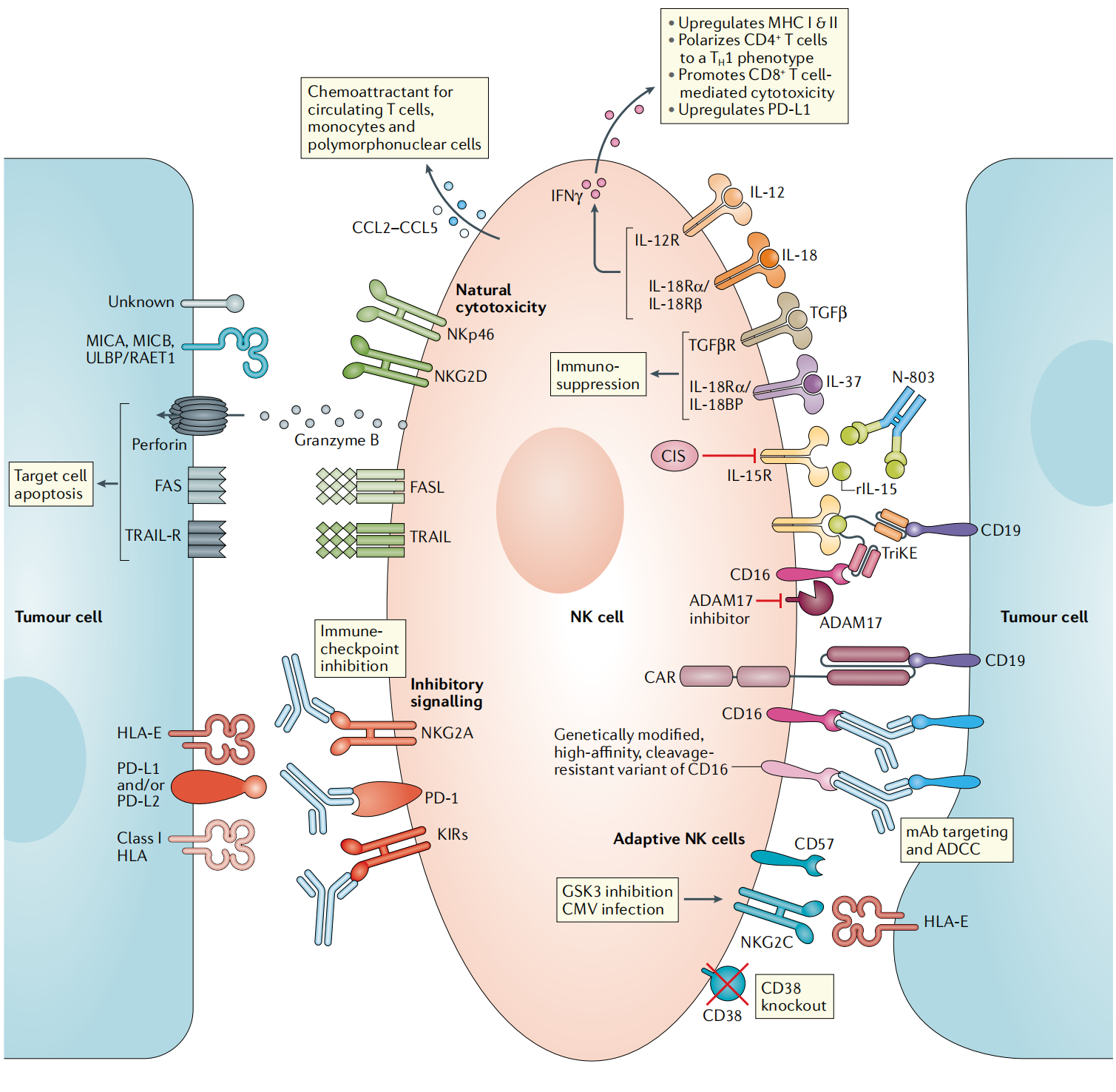
Source: Reviews
Starting from the top right and moving clockwise: Pro-inflammatory cytokines (e.g., IL-12 and IL-18) enhance NK cell effector functions and cytokine secretion, while anti-inflammatory cytokines (e.g., IL-37 and TGF-β) suppress NK cell activity. IL-15 is a key homeostatic cytokine for NK cells; cytokine-inducible SH2-containing protein (CIS) is a negative regulator of IL-15 signaling and thus a potential therapeutic target. Recombinant IL-15 (rIL-15) and the IL-15 superagonist N-803 promote NK cell proliferation and persistence in the tumor microenvironment. NK cell engagers (e.g., trispecific killer cell engagers (TriKEs), which also include an IL-15 domain to enhance NK cell activation) and monoclonal antibodies (mAbs) capable of binding and activating CD16 (the low-affinity IgG Fc receptor III) on NK cells enable these cells to target tumor cells expressing specific antigens (e.g., CD19). Inhibitors of ADAM17 (a disintegrin and metalloproteinase domain-containing protein 17) reduce CD16 cleavage from the cell surface, potentially enhancing NK cell activity. Genetically modified cell products, such as chimeric antigen receptor (CAR) NK cells or NK cells with modified forms of CD16 (e.g., FT-516), are also being investigated as means to improve the anti-tumor efficacy of adoptive NK cell therapies. Additionally, GSK3 inhibition and cytomegalovirus (CMV) infection lead to hyperfunctional NKG2C+ CD57+ adaptive NK cells, which are associated with favorable clinical outcomes. During treatment with mAbs targeting CD38 (e.g., daratumumab), knockout of CD38 in adoptively transferred NK cells can prevent antibody-dependent cell-mediated cytotoxicity (ADCC)-related fratricide. Immune checkpoint inhibitors may alleviate suppression of NK cell-mediated cytotoxicity by blocking inhibitory signaling through PD-1, NKG2A, and killer immunoglobulin-like receptors (KIRs). Finally, signaling induced by Fas ligand (FASL) and TNF-related apoptosis-inducing ligand (TRAIL) on NK cells can trigger apoptosis in target cells. Moreover, activation of natural cytotoxicity receptor family members (e.g., NKp46 and NKG2D) leads to the release of pre-formed cytolytic granules containing granzyme B and perforin. NK cells also secrete chemokines that attract various immune cell subsets with potential anti-tumor functions.
Advances in NK Cell Target Research
NK cells exhibit immense potential in immunotherapy, but their functionality is regulated by multiple factors. Therefore, identifying and studying NK cell targets is of great significance for improving the efficacy and safety of immunotherapy. Current research on NK cell targets primarily focuses on the following areas:
Immune Checkpoint Inhibition: Tumors exploit NK cell inhibitory receptors for immune evasion, a mechanism known as immune checkpoint inhibition. Immunotherapeutic strategies targeting these inhibitory receptors, such as inhibitors of KIRs, LIRs, and NKG2A, have shown significant clinical efficacy.
NK Cell Activating Receptors: Activating receptors on NK cells, such as IL-2/15R, TLR4, and NKG2D, can stimulate NK cell activation and proliferation. Activating these receptors enhances the anti-tumor and anti-viral capabilities of NK cells.
Antibody-Dependent Cell-Mediated Cytotoxicity (ADCC): NK cells express the low-affinity receptor FcγRIII (CD16) for IgG1 and IgG3, which can bind to the Fc region of tumor antigen-specific antibodies, enabling NK cells to recognize and kill antibody-coated tumor cells. This provides a basis for combining NK cell immunotherapy with other therapies, such as antibody therapy.
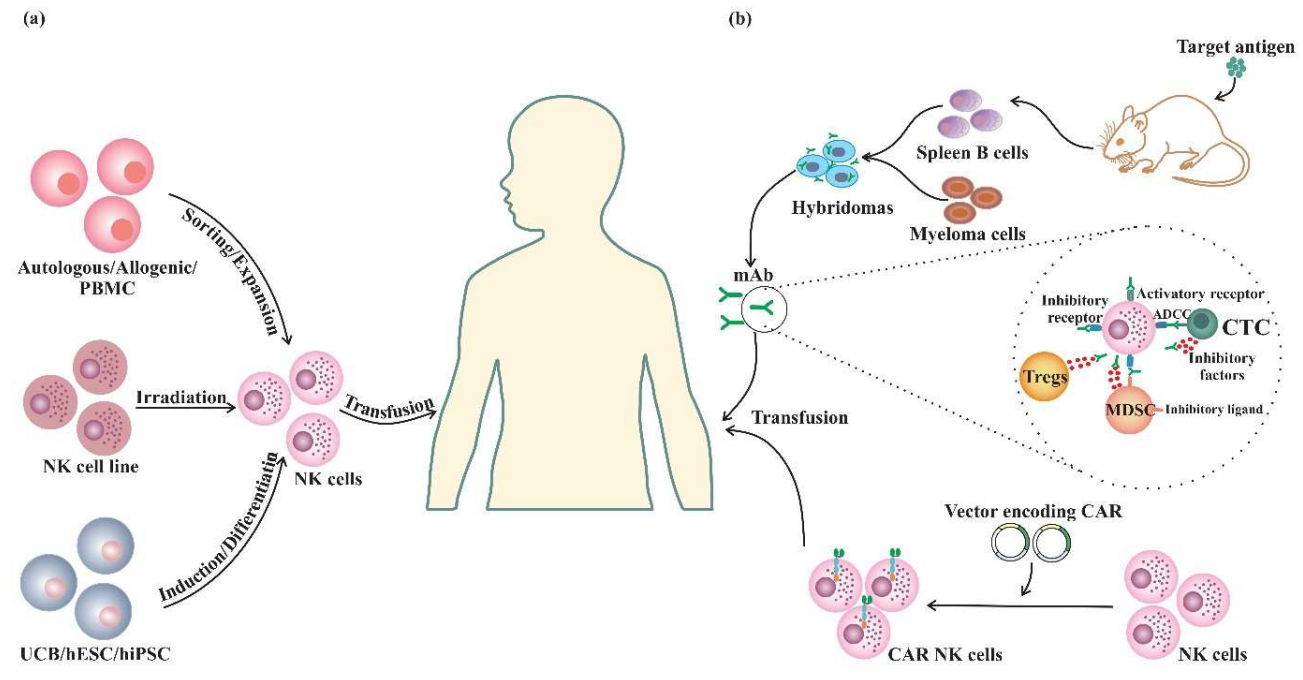
Clinical Applications of NK Cell Infusion and Adoptive Cell Therapy (ACT) in Cancer Patients Targeting Circulating Tumor Cells (CTCs)
Source: Cancer Letters
a. For cell therapy, NK cells are derived from three sources: donor or autologous peripheral blood mononuclear cells (PBMCs), NK cell lines, and umbilical cord blood (UCB), human embryonic stem cells (hESCs), and human induced pluripotent stem cells (hiPSCs).
b. Targeted NK cell therapies include the production of versatile monoclonal antibodies (mAbs) (e.g., inducing ADCC, stimulating NK activating receptors, and blocking NK inhibitory receptors/MDSC inhibitory ligands/inhibitory soluble factors), as well as the infusion of genetically modified CAR NK cells targeting specific tumor biomarkers to eliminate CTCs in the bloodstream or metastatic sites. Abbreviations: ADCC, antibody-dependent cellular cytotoxicity; CAR, chimeric antigen receptor; PBMC, peripheral blood mononuclear cells; MDSC, myeloid-derived suppressor cells; UCB, umbilical cord blood; hESC, human embryonic stem cells; hiPSC, human induced pluripotent stem cells.
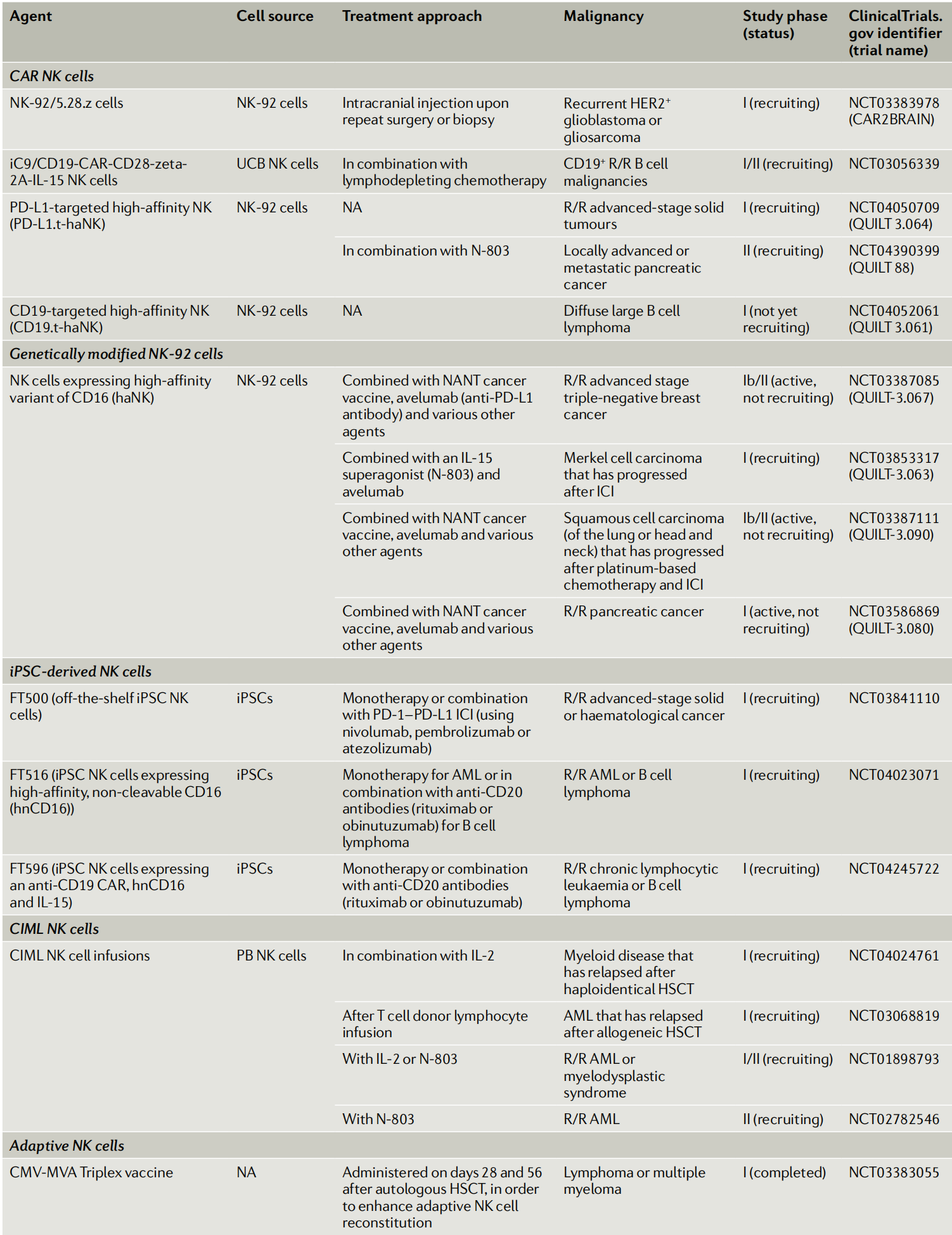
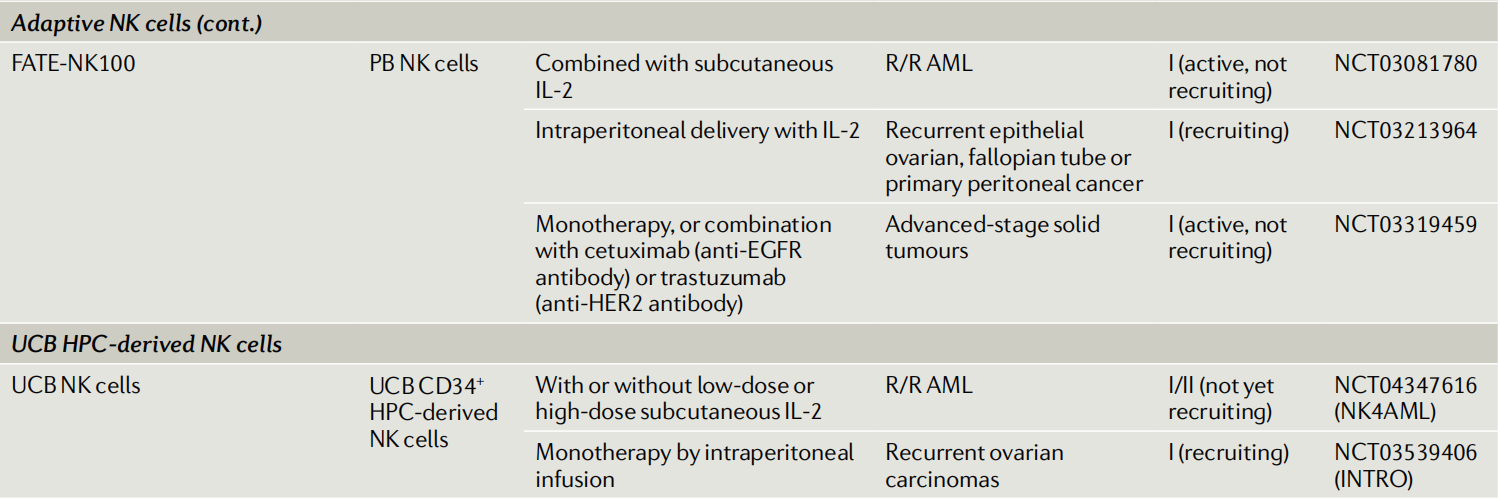
Table 1: Ongoing Clinical Trials of Therapeutic NK Cell Products
Conclusion
As a critical cell type in immunotherapy, research on NK cell targets is essential for improving the efficacy and safety of immunotherapeutic approaches. With continuous advancements in science and technology, it is anticipated that NK cell targets will play an increasingly important role in the field of immunotherapy. At the same time, attention must be paid to the potential side effects and safety concerns associated with NK cell immunotherapy to ensure its safety and efficacy in clinical applications.
This article is reviewed and published by the technical expert team of UA
Disclaimer: This article partially utilizes artificial intelligence assistance in its creation. If any content involves copyright or intellectual property issues, please let us know and we promise to verify and remove it as soon as possible.
Purchase recombinant protein, choose Nanjing UA-Bio
UA protein focuses on providing various protein reagents, raw materials, and services required for drug research and development, cell therapy, gene therapy, and basic scientific research, including drug target proteins, immune checkpoint proteins, cytokines, tool enzymes, customized protein expression, and full-length transmembrane protein development. Youai is committed to providing customers with high-quality products and professional services, and building a High-tech Biological Enterprise with International Competitiveness.

1. Jacob A. Myers and Jeffrey S. Miller.Exploring the NK cell platform for cancer immunotherapy. REVIEWS(2021).
2. H. Dianat-Moghadam, A. Mahari, M. Heidarifard, N. Parnianfard, L.Pourmousavi-Kh, R. Rahbarghazi, Z. Amoozgar, NK cells-directed therapies target circulating tumor cells and metastasis, Cancer Letters (2020).






 Business license (three certificates in one)