




Merck Acquires $2 Billion Licensing Deal from Hengrui: Transforming Lp(a) from "Genetic Destiny" to "Treatable Disorder"


Lp(a), the abbreviated form of lipoprotein(a), represents a distinctive class of plasma lipoprotein. This macromolecular complex consists of apolipoprotein B-100 covalently linked to apolipoprotein(a) via a disulfide bond. While structurally analogous to low-density lipoprotein (LDL), Lp(a) possesses unique pathogenicity conferred by its characteristic multikringle-domain apolipoprotein(a) moiety.
- Recent Advances
- Product Information
- Reference

Lp(a): The Overlooked Code of Cardiovascular Risk
Lp(a), the abbreviated form of lipoprotein(a), represents a distinctive atherogenic lipoprotein particle. This macromolecular complex consists of apolipoprotein B-100 covalently linked to apolipoprotein(a) via a disulfide bond. While structurally homologous to low-density lipoprotein (LDL), its unique pathogenicity stems from the characteristic multikringle-domain apolipoprotein(a) moiety.
Genetic Determinants
Lp(a) levels exhibit >1000-fold interindividual variability, with >90% heritability determined by the LPA gene locus. Notably, these concentrations remain unaffected by dietary modifications or exercise interventions.
Lp(a) exerts combined atherogenic and thrombogenic effects:
LDL-like cholesterol deposition in vascular walls
Direct impairment of fibrinolysis through structural mimicry of plasminogen
Molecular Pathogenesis: Precision Strikes from Molecules to Vasculature
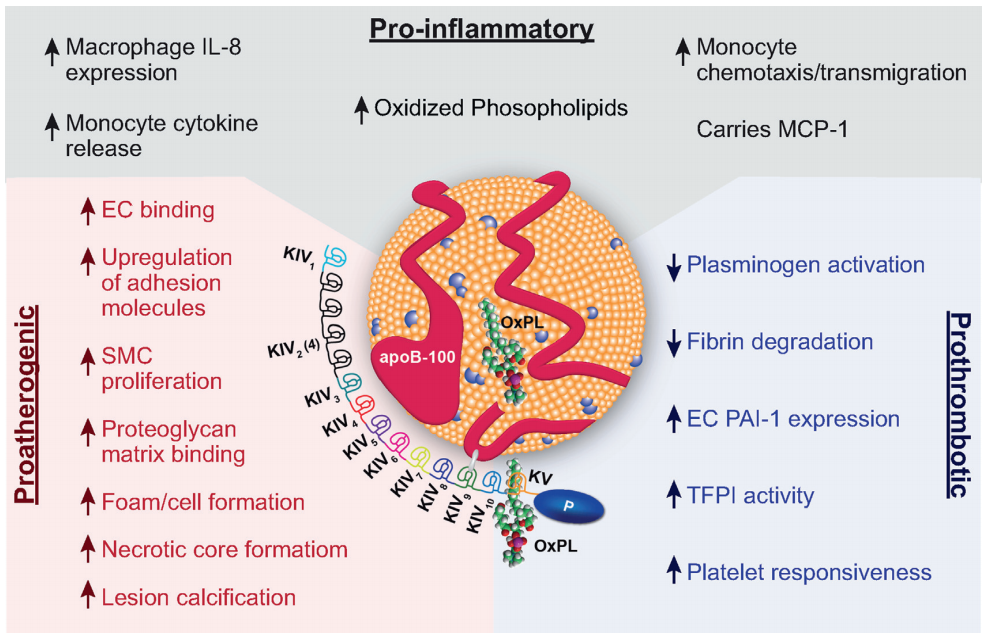
Fibrinolytic System Inhibition
Lp(a)'s structural homology with plasminogen (PLG) enables competitive binding to fibrin sites, forming quaternary complexes (t-PA-plasminogen-fibrin-Lp(a)) that reduce fibrinolytic efficiency by >80%, significantly impeding thrombus resolution.
Inflammatory Amplification
The LDL moiety carries oxidized phospholipids (oxPL) that activate endothelial proinflammatory pathways, accelerating atherosclerotic plaque formation.
Coagulation Cascade Activation
Enhances platelet aggregation (2-3-fold increased sensitivity to thrombin receptor agonists)
Inactivates tissue factor pathway inhibitor (TFPI), elevating thrombotic risk by 40%
Therapeutic Revolution: From Intractable to Targetable
Emerging Targeted Therapies
Small Molecule Inhibitors:
HRS-5346 (Hengrui/Merck): Oral administration demonstrating 85% Lp(a) reduction in Phase II trials (12 weeks), potentially becoming the first oral Lp(a) inhibitor.
Muvalaplin (Eli Lilly): Blocks Apo(a)-ApoB interaction with once-daily dosing, achieving 85.8% reduction.
Antisense Oligonucleotides (ASO):
Pelacarsen: Reduces Lp(a) by 98% through Apo(a) mRNA suppression, with Phase III data showing 30% cardiovascular event reduction.
Olpasiran: Subcutaneous quarterly injections sustain >90% Lp(a) reduction for 48 weeks.
Gene Editing Advancements
CRISPR Therapeutics' CTX320 demonstrates 94% Lp(a) reduction persisting to 224 days post-single infusion via hepatic Apo(a) gene knockout, currently in Phase I trials.
Clinical Strategy: Three Proactive Approaches
High-Risk Population Screening
Routine testing for:
Familial hypercholesterolemia (FH) patients
Those with premature CAD family history
Recurrent cardiovascular event sufferers
Intervention thresholds: >50 mg/dL (actionable), >150 mg/dL (extreme risk)
Multidisciplinary Management
Cardiology: Novel targeted agents for optimized lipid profiles
Genetic counseling: Familial cascade screening for significant Lp(a) elevation
Future Directions
Combination therapies: ASO + PCSK9 inhibitors for dual Lp(a)/LDL-C reduction
Predictive modeling: Lp(a)-based atherosclerosis progression algorithms
Conclusion
The discovery of Lp(a) unveiled cardiovascular disease's "genetic dark matter." With oligonucleotide therapies and small molecule inhibitors now emerging, this once "untreatable" risk factor approaches a therapeutic inflection point. Through early screening and precision interventions, we may ultimately overcome genetic determinism in cardiovascular health.
Recommended Product
Lp(a) His Tag Protein, Human
Catalog No.: UA011166
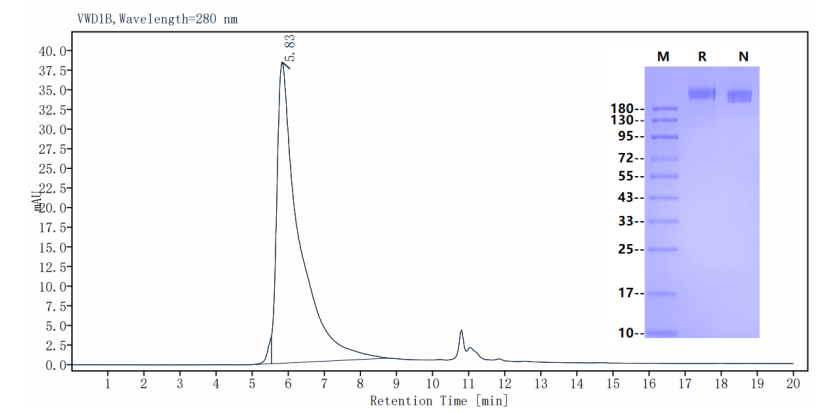
>95% by SDS-PAGE & >90% by SEC-HPLC
Click on the product catalog numbers below to access detailed information on our official website.
This article is reviewed and published by the technical expert team of UA
Disclaimer: This article partially utilizes artificial intelligence assistance in its creation. If any content involves copyright or intellectual property issues, please let us know and we promise to verify and remove it as soon as possible.
Purchase recombinant protein, choose Nanjing UA-Bio
UA protein focuses on providing various protein reagents, raw materials, and services required for drug research and development, cell therapy, gene therapy, and basic scientific research, including drug target proteins, immune checkpoint proteins, cytokines, tool enzymes, customized protein expression, and full-length transmembrane protein development. Youai is committed to providing customers with high-quality products and professional services, and building a High-tech Biological Enterprise with International Competitiveness.

1. Spence JD, Koschinsky ML. Mechanisms of lipoprotein(a) pathogenicity. Arterioscler Thromb Vasc Biol 2012.
2. Bergmark C, Dewan A, Orsoni A, et al. A novel function of lipoprotein [a] as a preferential carrier of oxidized phospholipids in human plasma. J Lipid Res 2008.
3. Leibundgut G, Scipione C, Yin H, et al. Determinants of binding of oxidized phospholipids on apolipoprotein (a) and lipoprotein (a). J Lipid Res 2013.
4. Van der Valk FM, Bekkering S, Kroon J, et al. Oxidized phospholipids on lipoprotein(a) elicit arterial wall inflammation and an inflammatory monocyte response in humans. Circulation 2016.
5. Sotirios Tsimikas, MD. A Test in Context: Lipoprotein(a). Journal of the American College of Cardiology,2017.
6. Børge G Nordestgaard, Anne Langsted. Lipoprotein(a) and cardiovascular disease.The Lancet,2024.
7. Adam N. Berman; David Biery; Stephanie A. Besser; Avinainder Singh; Arthur Shiyovich; et al.Lipoprotein(a) and Major Adverse Cardiovascular Events in Patients With or Without Baseline Atherosclerotic Cardiovascular Disease. Journal of the American College of Cardiology 2024.






 Business license (three certificates in one)