




Exploration and Challenges of CEACAM-5-Targeting Antibody-Drug Conjugates in the Treatment of Non-Small Cell Lung Cancer


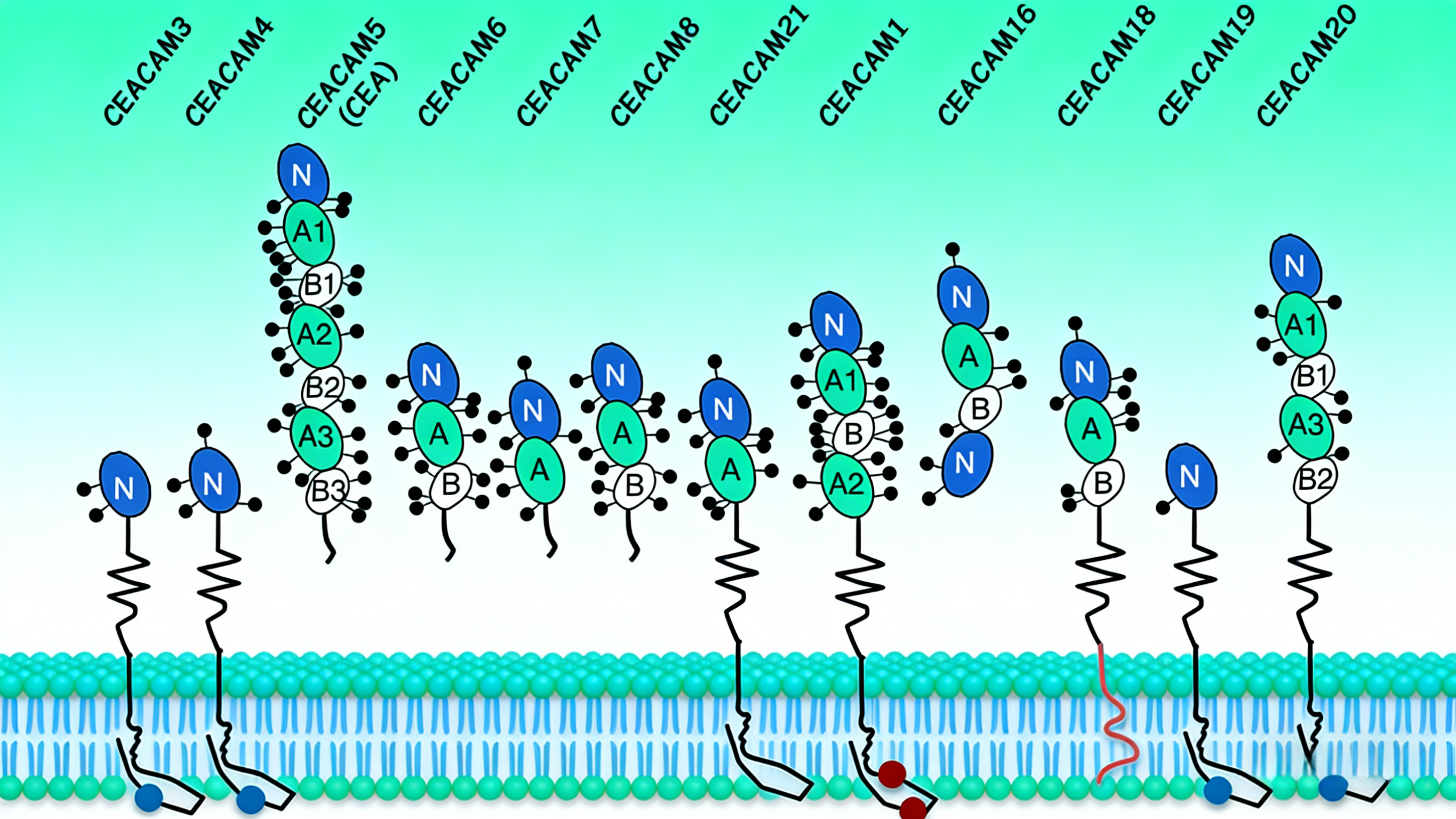
Carcinoembryonic antigen (carcinoembryonic antigen cell adhesion molecule 5, CEA) is a glycosylated cell surface adhesion molecule belonging to the carcinoembryonic antigen cell adhesion molecule family.
- Recent Advances
- Product Information
I. Biological Characteristics of CEACAM-5 and Its Potential as a Therapeutic Target
Carcinoembryonic antigen (CEA, or CEACAM-5) is a glycosylated cell surface adhesion molecule belonging to the carcinoembryonic antigen cell adhesion molecule family. CEACAM-5 is primarily anchored to the cell membrane and participates in various physiological processes, including intercellular interactions, signal transduction, and cell differentiation. In multiple epithelial-derived malignancies, such as lung adenocarcinoma, colorectal cancer, gastric cancer, and pancreatic cancer, CEACAM-5 exhibits significant upregulation, making it a widely recognized tumor-associated antigen. Particularly in non-small cell lung cancer (NSCLC), its expression shows notable subtype heterogeneity: levels are generally higher in lung adenocarcinoma than in squamous cell carcinoma. This expression pattern provides a biological basis for precision therapy targeting specific patient populations.
II. Research Tool: Value of CEACAM-5/CD66e (499-685) His Tag Protein
In the development of CEACAM-5-targeted therapies (e.g., antibody-drug conjugates) and in-depth functional studies, high-quality recombinant antigens are critical research tools. The CEACAM-5/CD66e (499-685) His Tag protein offers the following advantages:
1. Functional Domains: This recombinant protein contains a key functional fragment (amino acids 499-685) of the extracellular region of human CEACAM-5, retaining antigenic epitopes suitable for validating binding activity with therapeutic antibodies.
2. High Purity and Standardization: The C-terminal His tag facilitates efficient and standardized purification via immobilized metal ion affinity chromatography, ensuring high purity and low endotoxin levels. This makes it a reliable standard for antibody screening, immunoassay development, and drug mechanism studies.
3. Core Applications:
- Antibody Screening and Affinity Measurement: Used as a coating antigen for high-throughput screening or evaluating the specificity and affinity of monoclonal antibodies and ADC antibody components targeting CEACAM-5.
- Diagnostic Reagent Development: Serves as a standard antigen for developing immunoassays to detect soluble serum CEA or tissue CEACAM-5 expression, aiding patient stratification.
- Biological Function Research: Investigates CEACAM-5-mediated intercellular interactions and their impact on tumor cell behavior.
III. CEACAM-5-Targeted ADC Drugs and Clinical Development
Based on CEACAM-5's tumor-specific expression, an antibody-drug conjugate (ADC) was developed, consisting of a humanized anti-CEACAM-5 monoclonal antibody, a cleavable linker, and the cytotoxic payload DM4 (a maytansine derivative). This drug aims to deliver potent cytotoxic agents specifically to CEACAM-5-expressing tumor cells.
In clinical development, non-squamous NSCLC with high CEACAM-5 expression was selected as the indication. Given that immune checkpoint inhibitors have become the first-line standard for driver gene-negative NSCLC, the ADC's development focused on later-line therapy and combination with first-line treatments. Early clinical trials explored its potential in combination with PD-1 inhibitors and platinum-based chemotherapy for first-line use.
IV. Clinical Results and Challenges
Despite promising preclinical and early clinical data, the pivotal Phase III trial (for second-line treatment) failed to meet its primary endpoints.
1. Early Clinical Signals: In Phase I/II dose-finding studies, the ADC showed limited objective response rates in pretreated non-squamous NSCLC patients, particularly in the CEACAM-5 high-expression subgroup, with response rates only slightly higher than those of the comparator chemotherapy drug docetaxel.
2. Phase III Results: The Phase III study in non-squamous NSCLC patients after first-line therapy did not demonstrate statistically significant improvement in one of the dual primary endpoints (progression-free survival), despite a trend toward overall survival benefit. This led to the trial's termination.
3. Potential Challenges: The failure may stem from multiple factors. First, soluble CEA in blood could neutralize some ADC molecules, reducing targeted delivery efficiency and increasing toxicity risks. Second, the choice of cytotoxic payload (DM4), linker stability, and drug-antibody ratio may have affected the therapeutic window. Additionally, CEACAM-5 expression heterogeneity and internalization efficiency in the tumor microenvironment are critical variables.
V. Summary and Future Perspectives
The exploration of CEACAM-5-targeted ADCs in NSCLC highlights the complexity of translating highly expressed tumor-associated antigens into successful therapies. Tools like the CEACAM-5/CD66e (499-685) His Tag protein play vital roles in target validation and early drug development. Although the current ADC's Phase III trial faced setbacks, it has generated valuable data and experience.
VI. Which Manufacturers Provide CEACAM-5/CD66e (499-685) His Tag Protein?
Nanjing U-APEX Biotech's CEACAM-5/CD66e (499-685) His Tag Protein, Human (Catalog No.: UA011367) is a high-purity, high-activity recombinant protein fragment of human CEACAM-5 (also known as CD66e). Produced in a mammalian expression system, it contains the key functional region of CEACAM-5's extracellular domain (amino acids 499-685) with a C-terminal His tag for purification and detection. CEACAM-5 is a significant tumor marker overexpressed in colorectal, gastric, pancreatic, and other epithelial cancers, making it a hotspot for diagnostics, imaging, and targeted therapies (e.g., anti-CEACAM-5 ADCs). This product is ideal for antibody screening, diagnostic reagent development, and target binding studies.
| Core Advantages |
|---|
| High Purity and Critical Epitopes: Expressed in mammalian cells for proper folding and glycosylation (CEACAM-5 is highly glycosylated). The product includes essential antigenic epitopes, with >95% purity after affinity chromatography, making it ideal for developing high-specificity antibodies or assays. |
| High Immunogenicity and Specificity: The 499-685 region contains epitopes with strong immunogenicity and low cross-reactivity with other CEACAM family members (e.g., CEACAM1, CEACAM6), facilitating the development of high-affinity, high-specificity antibodies critical for precision diagnostics and targeted therapies. |
| His Tag for Convenience: The C-terminal His tag enables rapid purification via nickel columns and detection/fixation methods, enhancing experimental flexibility. |
| Strict Quality Control: Standardized production and rigorous quality control ensure consistent purity, glycosylation, and antigenicity across batches, supporting project continuity. |
Nanjing U-APEX Biotech specializes in providing high-quality, highly specific antigen tools for tumor diagnostics, antibody drugs, and targeted therapies. For detailed technical parameters, epitope information, or application support regarding CEACAM-5/CD66e (499-685) His Tag Protein, Human (Catalog No.: UA011367), please feel free to contact us.
Disclaimer: This article partially utilizes artificial intelligence assistance in its creation. If any content involves copyright or intellectual property issues, please let us know and we promise to verify and remove it as soon as possible.
Purchase recombinant protein, choose Nanjing UA-Bio
UA protein focuses on providing various protein reagents, raw materials, and services required for drug research and development, cell therapy, gene therapy, and basic scientific research, including drug target proteins, immune checkpoint proteins, cytokines, tool enzymes, customized protein expression, and full-length transmembrane protein development. Youai is committed to providing customers with high-quality products and professional services, and building a High-tech Biological Enterprise with International Competitiveness.







 Business license (three certificates in one)