




Targeting key regulatory components of immune cell activation: Construction and application of CD3E&CD3D heterodimeric Fc fusion proteins


The T cell antigen receptor is the key molecule mediating adaptive cellular immune responses, and its function relies on tight binding with the CD3 complex.
- Recent Advances
- Product Information
I. Core Signaling Module in T Cell Antigen Receptor Complex: CD3E/CD3D Heterodimer
The T cell antigen receptor is a key molecule mediating adaptive cellular immune responses, and its function depends on tight binding with the CD3 complex. The CD3 complex consists of multiple transmembrane protein subunits, among which the heterodimer formed by CD3ε and CD3δ chains (CD3E&CD3D Heterodimer) plays an indispensable role in the initiation and regulation of TCR signal transduction. This heterodimer not only participates in stabilizing the overall structure of the TCR-CD3 complex but also contains immunoreceptor tyrosine-based activation motifs (ITAMs) in its intracellular region, which serve as the initial sites for recruiting and activating downstream kinases (such as ZAP-70). It is the primary signaling hub in the T cell activation cascade. Therefore, research on the CD3E/CD3D heterodimer is of fundamental significance for deeply understanding the molecular mechanisms of T cell activation and developing T cell-targeted immunomodulatory therapies.
II. Engineering Strategy: Constructing CD3E&CD3D Heterodimer Fc Fusion Protein
To obtain structurally stable and functionally defined CD3E/CD3D heterodimer research tools, recombinant protein engineering technology has become an efficient strategy for in vitro construction. The core design concept involves fusing the extracellular domains of CD3ε and CD3δ chains with specific protein scaffolds or tags through genetic engineering.
1. Heterodimerization and Structural Stability: To ensure that the recombinant protein accurately mimics the natural CD3E/CD3D heterodimer conformation, "knob-into-hole" or similar heterodimerization domains are often used. In this construction strategy, two different subtypes of llama-derived Fc fragments are fused with the extracellular domains of CD3ε and CD3δ, respectively. Due to the natural high selectivity for pairing between these two Fc subtypes, they efficiently drive and stabilize the formation of a 1:1 heterodimer complex between CD3ε and CD3δ chains, effectively avoiding homodimer formation and ensuring the authenticity of the recombinant protein's structure and function.
2. Introduction of Functional Tags: Incorporating llama-derived Fc tags offers multiple advantages. First, the Fc tag serves as a universal affinity purification tag, enabling efficient one-step purification of the recombinant protein using protein A or protein G chromatography columns, greatly simplifying downstream processes. Second, the presence of the Fc tag significantly extends the recombinant protein's half-life in vitro and may confer additional biological properties (such as binding to Fcγ receptors) for specific research purposes. Third, the tag can also function as a detection label, facilitating analysis via Western Blot, ELISA, or flow cytometry using anti-Fc antibodies.
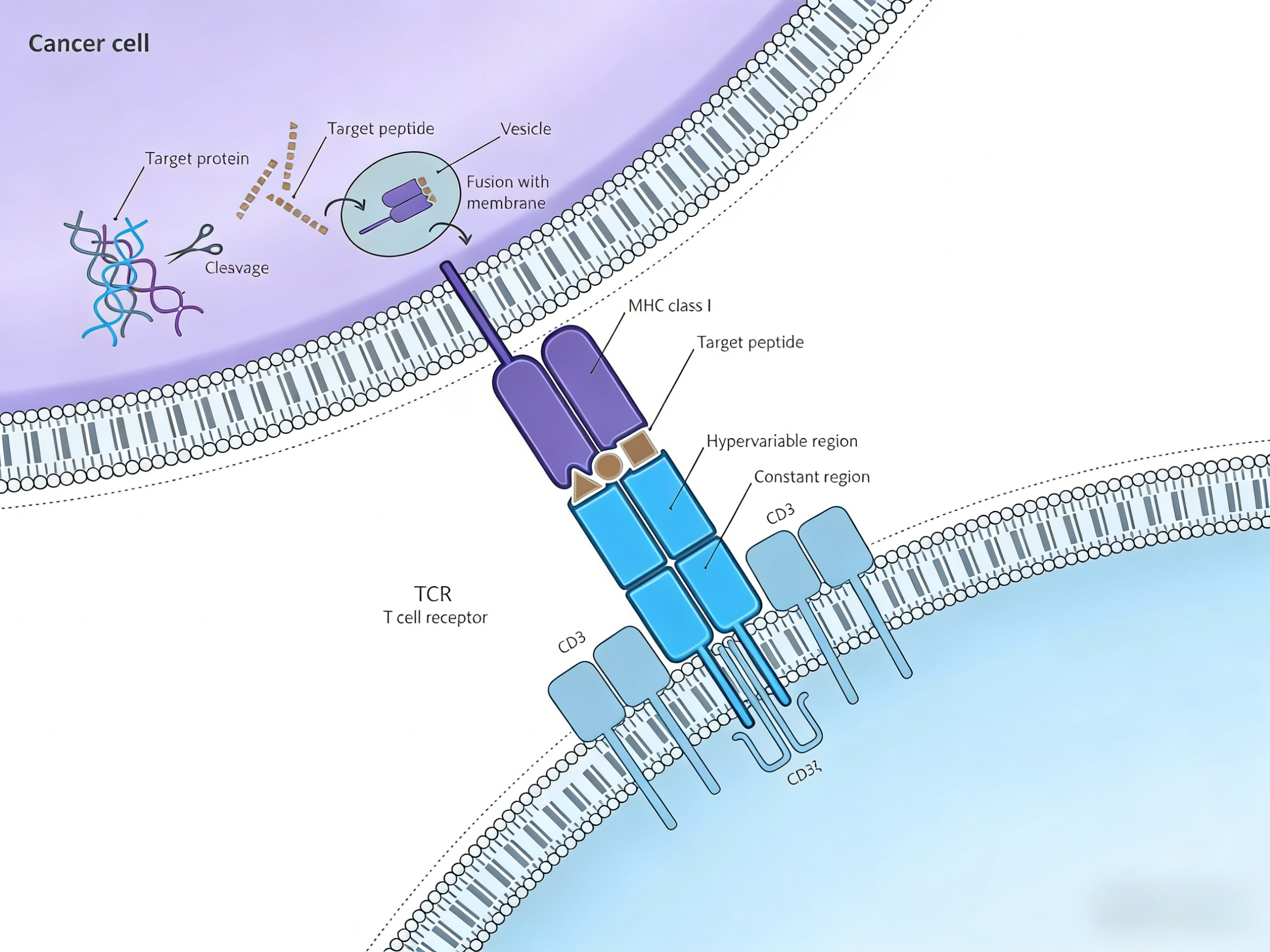
III. Main Applications of CD3E&CD3D Heterodimer Fc Fusion Protein
This engineered protein provides a versatile tool molecule for T cell immunology research and drug development.
1. Research on T Cell Activation Mechanisms: As a key component of TCR signaling, this recombinant heterodimer protein can be used to investigate the assembly mechanism of the TCR-CD3 complex, how extracellular stimulation signals are transmitted across the membrane to intracellular ITAM motifs, and the specific contributions of different CD3 subunits in signal initiation.
2. Development and Evaluation of Therapeutic Antibodies and Bispecific Molecules: CD3 is one of the core targets for constructing T cell-redirecting bispecific antibodies. This recombinant protein serves as an important in vitro screening and validation tool for assessing the binding affinity, specificity, and potency of candidate antibodies or bispecific molecules with the native CD3 complex (particularly the CD3E/CD3D site), accelerating the optimization of lead molecules.
3. Diagnostic Reagent Development: Specific antibodies or detection methods targeting the CD3E/CD3D heterodimer can be used for diagnosing immunology-related diseases or immune cell typing. This recombinant protein can serve as an immunogen for producing detection antibodies or as a positive control and calibrator for establishing standard detection methods.
4. Protein-Protein Interaction Studies: Using this purified heterodimer protein, interactions with other immune-related proteins (such as TCR, costimulatory molecules, kinases, etc.) can be studied through surface plasmon resonance, bio-layer interferometry, or co-immunoprecipitation, mapping a more precise early T cell activation interaction network.
IV. Summary and Outlook
The successful construction of the CD3E&CD3D heterodimer Fc fusion protein provides a structurally defined and functionally reliable tool for T cell biology research. Its ingenious heterologous Fc dimerization design not only solves the stability challenges of recombinant heterodimer protein expression but also endows it with practical features for purification and detection. In the future, such functional recombinant protein tools that precisely mimic the structure of native immune complexes will continue to deepen our understanding of immune cell signal transduction and provide an indispensable molecular foundation and technical support for developing next-generation immunodiagnostic technologies and therapeutic drugs.
V. Which Manufacturers Provide CD3E&CD3D Heterodimer Llama Fc&Llama Fc Tag Protein?
Nanjing U-Protein independently developed the CD3E&CD3D Heterodimer Llama Fc&Llama Fc Tag Protein, Human (Catalog No.: UA011373), a uniquely designed and highly specialized T cell receptor (TCR) complex subunit protein representing the cutting-edge level of T cell therapy research tools. This product innovatively fuses the extracellular domains of human CD3ε (CD3E) and CD3δ (CD3D) with llama immunoglobulin Fc fragments, respectively. Through its unique heterodimerization design, it achieves CD3E-CD3D heterodimer formation with zero cross-reactivity to human IgG Fc receptors (e.g., FcγR), making it an ideal high-purity target for the development of bispecific T cell engagers (BiTEs) and other therapies.
| Core Product Advantages |
|---|
| Zero FcγR Cross-Reactivity for Pure Target Evaluation: This is the most innovative advantage of this product. Using llama (Llama) Fc fragments instead of human Fc ensures that this protein completely avoids binding to human Fcγ receptors (FcγR). When evaluating CD3-targeting bispecific antibodies or drugs, it completely eliminates nonspecific activation or background signals caused by drug Fc binding to effector cell FcγRs, enabling precise and pure evaluation of the true affinity and function of the drug's "target end" (i.e., the CD3-binding arm) at the molecular level. |
| Accurate Simulation of Native Heterodimer Conformation: This product is co-expressed and purified to form a CD3ε-CD3δ heterodimer consistent with that in the native TCR-CD3 complex, rather than a mixture of monomers. This provides drug developers with a high-quality target protein with physiologically accurate conformation and intact antigen epitopes. |
Designed Specifically for T Cell-Redirecting Therapy Development:
|
| Superior Process and Purity: The production of this complex heterodimer requires highly advanced processes. Nanjing U-Protein, with its advanced heterodimer expression and purification platform, ensures high purity, correct subunit ratios, and excellent batch-to-batch consistency. |
Nanjing U-Protein is committed to providing innovative protein tools that address practical R&D challenges and offer high predictive value for the field of tumor immunotherapy. For detailed structural design principles, comparative data with conventional human Fc fusion proteins, or application consultations for specific drug evaluation protocols regarding the CD3E&CD3D Heterodimer Llama Fc&Llama Fc Tag Protein, Human (Catalog No.: UA011373), please feel free to contact us.
This article is reviewed and published by the technical expert team of UA
Disclaimer: This article partially utilizes artificial intelligence assistance in its creation. If any content involves copyright or intellectual property issues, please let us know and we promise to verify and remove it as soon as possible.
Purchase recombinant protein, choose Nanjing UA-Bio
UA protein focuses on providing various protein reagents, raw materials, and services required for drug research and development, cell therapy, gene therapy, and basic scientific research, including drug target proteins, immune checkpoint proteins, cytokines, tool enzymes, customized protein expression, and full-length transmembrane protein development. Youai is committed to providing customers with high-quality products and professional services, and building a High-tech Biological Enterprise with International Competitiveness.







 Business license (three certificates in one)